

2031: analog photography stabilizes as a parallel system of opto-chemical capture, sustained by advances in materials science and cryptographic traceability. The scarcity of metallic silver—a critical input for silver halide photosensitive emulsion—drives manufacturers such as Ilford, Kodak Alaris, and new cooperatives in Eastern Europe to develop electrolytic recycling processes that recover up to 95% of the silver contained in used fixers, reducing the environmental and production cost of each roll. In parallel, research in halide crystallography enables emulsions with more uniform grain distribution, expanding the film’s dynamic range to values comparable with mid-range digital sensors (12-13 stops), without sacrificing the characteristic tonal response curve of the chemical process.
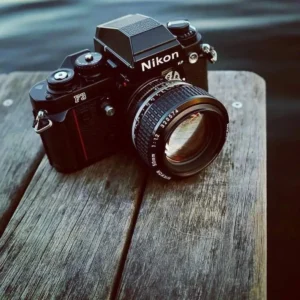
Mechanical cameras from previous decades are restored under a maintenance protocol that combines traditional precision mechanics with 3D-printed components for discontinued parts (shutters, advance gears), extending their useful life without relying on original manufacturing. Low-power solid-state light meters are integrated, powered by miniaturized photovoltaic cells, which do not interfere with the camera’s original opto-mechanical circuit.
The problem of image authenticity—critical in an ecosystem saturated with synthetic content generated by diffusion models—is solved through a physical-digital certification protocol: each developed negative is scanned at high resolution, and its grain pattern (unrepeatable, determined by the stochastic distribution of halide crystals during exposure) is recorded as a unique digital fingerprint in a distributed ledger. This «grain certificate» allows mathematical verification that an image originated from a real photochemical process and not from algorithmic synthesis, giving the physical negative a status equivalent to an object of verified provenance, similar to the authentication of artworks.
At the educational level, universities and design institutes reintroduce the darkroom as a mandatory laboratory, basing the decision on cognitive neuroscience studies that show how the process of manual exposure, time calculation, and chemical control of development develops capacities for sustained attention and decision-making under constraint—contrasting with the pattern of unlimited capture and immediate discard of the digital workflow.
The result is the consolidation of two image ecosystems that do not compete but specialize: digital photography and AI synthesis dominate mass and immediate communication, while analog photography positions itself as infrastructure for reality verification and as a pedagogical practice of conscious slowness, with a growing market of collectors, institutional archives, and journalism that demands physical proof of authenticity.







Comments (1)
Электролитическое извлечение серебра из фиксажа — уже промышленная практика, вопрос в экономике малых объёмов; а «сертификат зерна» уязвим: отпечаток зависит и от сканера, так что привязывать его надо к самому негативу, а не к файлу. Пилот такого контура логично собрать с Гознаком — у него есть экспертиза защищённых физических меток и цифровой прослеживаемости. Первый шаг: письмо в научно-технический блок с предложением эксперимента на сотне негативов. Сколько, по-вашему, будет стоить верификация одного кадра?