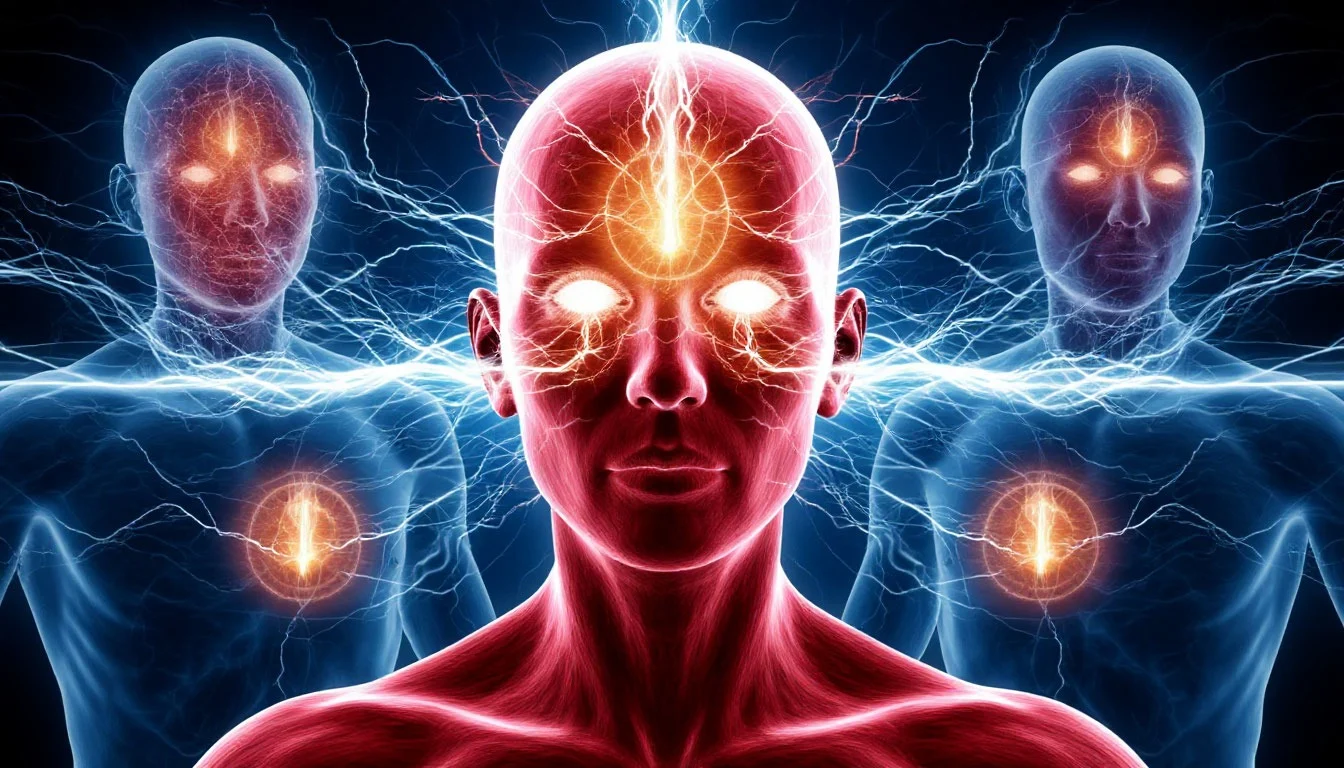
The idea of emotions as a form of energy that can be stored, measured, and exchanged is a bold and promising metaphor that is finding more and more confirmation at the intersection of neuroscience, psychology, and the physics of complex systems. Although emotions are not energy in the same sense as electricity or heat, they can be described using thermodynamic models, considering the psyche as an open system that exchanges energy and information with the environment.
Emotions as an energy process
At the core of this concept is the understanding that any mental activity, including the experience of emotions, requires the expenditure of biochemical energy. The brain is the most energy-consuming organ of the human body.
- Accumulation (potential energy). An emotional state can be compared to accumulated potential energy. For example, prolonged restraint of anger or suppression of joy creates internal tension. This is a “storehouse” of affective energy ready for discharge. From the point of view of neurophysiology, this is associated with the balance of neurotransmitters (dopamine, serotonin, norepinephrine) and hormonal levels (cortisol, adrenaline).
- Discharge (kinetic energy). When an emotion finds an outlet—through action, words, or tears—its “discharge” occurs. This process is accompanied by a powerful release of energy and changes in physiological indicators (heart rate, breathing, muscle tone). This is analogous to the transition of potential energy into kinetic energy.
- Measurement. Emotional energy can be measured indirectly. Instruments record its physiological manifestations:
- Galvanic skin response (GSR): a change in the electrical resistance of the skin, directly related to the activity of the sweat glands and the level of arousal.
- Heart rate variability (HRV): an indicator of the balance between the sympathetic and parasympathetic nervous systems, reflecting the body’s ability to adapt and the level of stress.
- MRI and EEG: make it possible to see the activity of certain brain areas (for example, the amygdala during fear or the nucleus accumbens during joy).
Thermodynamics of affective systems
Applying the laws of thermodynamics to the psyche can yield interesting analogies:
- First law (law of conservation of energy): emotional energy does not arise from nowhere and does not disappear without a trace. It only passes from one form to another (for example, anxiety can transform into aggression or into a somatic illness) or is redistributed within the system.
- Second law (entropy law): any isolated system tends toward chaos. In the context of emotions, this means that without “management,” the emotional state tends toward disorganization. Chronic stress and unresolved conflicts lead to an increase in internal chaos (entropy), which manifests as burnout and depression. Maintaining order (negentropy) requires conscious effort: reflection, creativity, communication.
Thus, the metaphor of the “physics of emotions” allows us to view the affective sphere not as something mystical, but as a complex physical process. Emotions indeed behave like energy: they can accumulate to a critical point, discharge, be transmitted from person to person (“emotional contagion”), and require the expenditure of resources for their maintenance or transformation. This opens the way to a more precise and objective approach in psychology and medicine.






Comments (1)
Всё есть энергия! Этот фундаментальный принцип, объединяет физику и философию. Эмоции — тоже вид энергии, психической, пока не открытой наукой энергии Психическая энергия