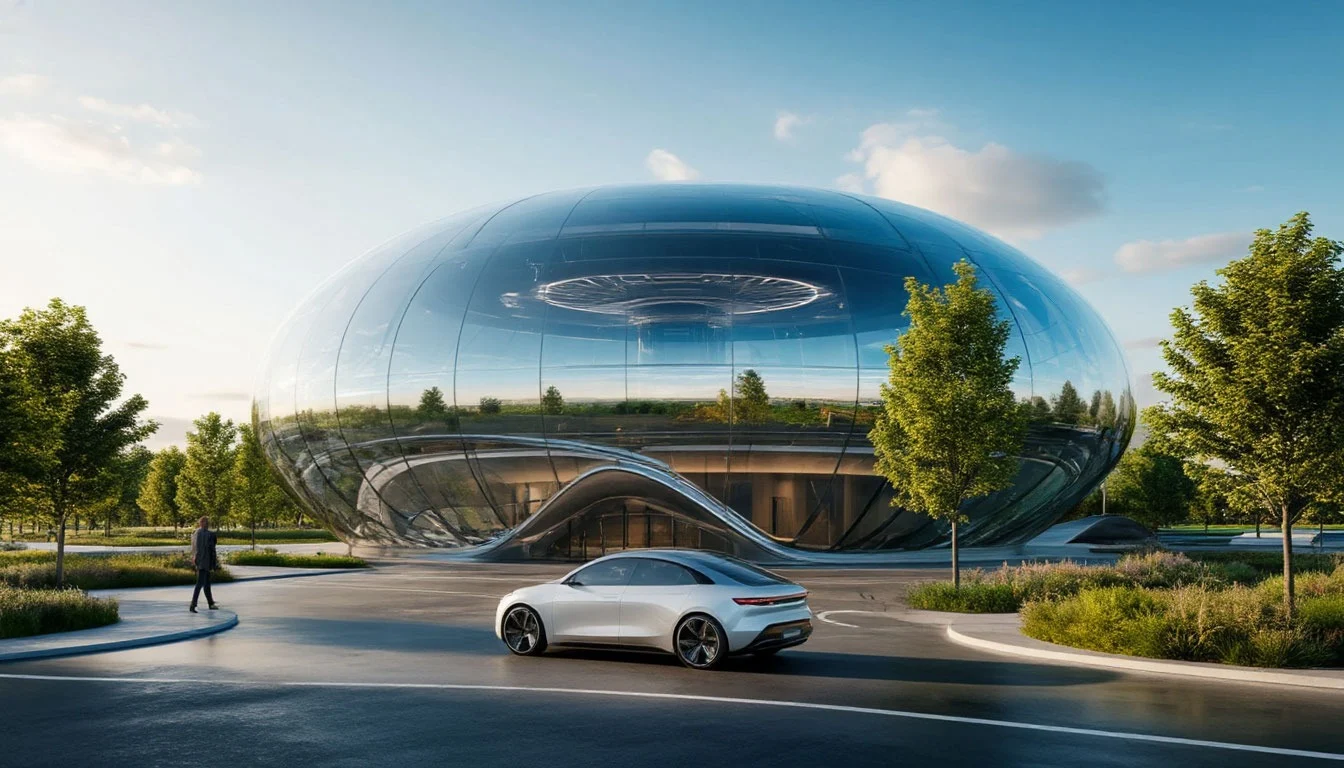

By the middle of the 21st century, tourism, once considered one of the most resource-intensive industries, underwent a fundamental transformation. The era of mass consumption and environmental indifference has been replaced by a new reality — «minimal-footprint travel». Today, tourism has become almost environmentally harmless: greenhouse gas emissions from transport are minimized, and the pressure on natural and cultural sites is strictly controlled. A tourist trip is no longer associated with harming the planet, but rather is seen as a form of careful interaction with the world.
Such a result became possible thanks to a complex set of technological and social innovations. The foundation of this system was carbon-neutral technologies. Vehicles powered by hydrogen and electricity became widespread, and synthetic fuels produced using renewable energy sources were actively used for long-distance routes. Tourism infrastructure — hotels, campsites, excursion centers — was completely rebuilt on the principles of a circular economy: waste was recycled on site, water was used in a closed loop, and energy came exclusively from local «green» sources.
However, the technological chain that ensured this breakthrough is known only partially. Outwardly, everything looks like the result of the consistent implementation of «green» technologies. But experts admit that the key role was played by the integration of artificial intelligence and big data. Global real-time monitoring systems calculate the «ecological footprint» of each trip, taking into account not only direct emissions, but also the indirect impact on the local ecosystem, water resources, and biodiversity. Based on this data, quotas and optimal routes are formed, which distribute tourist flows in such a way as to avoid overloading popular locations.
It is this part of the system that remains the least transparent. The algorithms that manage the global balance between people’s desire to travel and nature’s ability to recover are highly complex self-learning models. The principles of their operation and optimization criteria — for example, how exactly the system decides which group of tourists to allow to visit a nature reserve on a certain day and which to offer an alternative route — are the subject of professional discussions. Some researchers suggest that these decisions are based not only on environmental, but also on economic or social parameters, which makes the whole system even more multifaceted and closed to the general public.
Thus, humanity has learned to travel without leaving scars on the body of the planet. But behind this visible harmony lies a complex and not fully understood technological architecture. We have gained the opportunity to explore the world without destroying it. However, the very mechanism of this balance — a fine tuning between freedom of movement and responsibility for the future — remains one of the most intriguing mysteries of modern technogenic civilization.


Comments (2)
Для минимального следа я бы ещё добавил кодекс путешественника, который должны знать и соблюдать все туристы. В основе кодекса лежит уважение и любовь к природе.
Отличный взгляд на экологичное будущее туризма! Особенно впечатляет роль ИИ в балансе посещения природных объектов. Но как система определяет приоритеты между доступом для разных групп туристов?