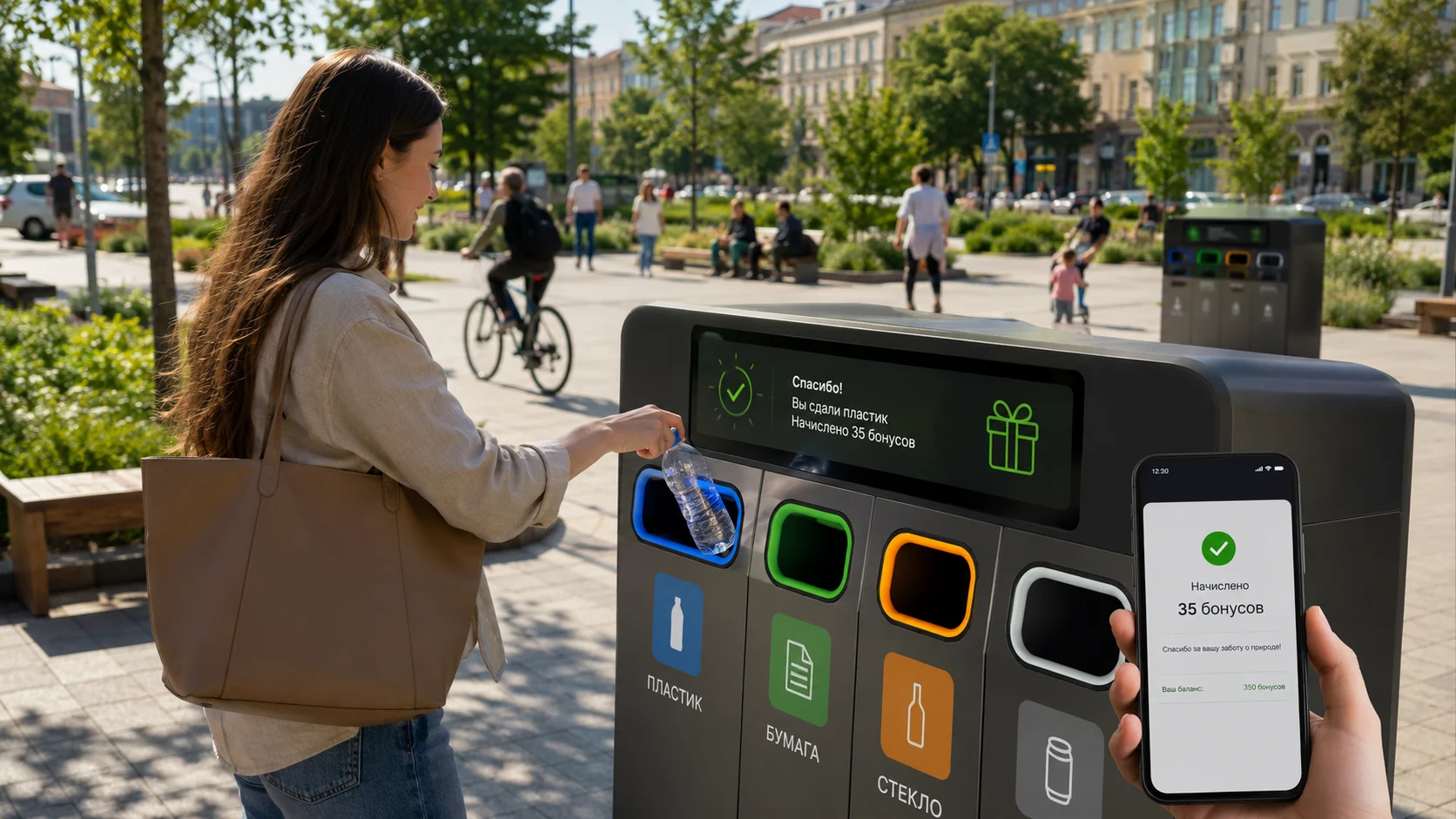

By 2031, smart waste bins in Russia had become a familiar part of home, park, yard, and bus stop. People no longer stood in front of bins, trying to remember where to throw a cup with a lid. They would place an item into the intake window, and the bin would recognize the material, separate plastic from paper, glass from metal, compact the container, and transmit data to the operator. In entrance halls, such stations took the place of old container corners; in parks, they became points of care; and on the streets, they turned separate collection into a habit.
The main change occurred not in sensors but in people’s attitudes. Garbage no longer seemed like the end of the story. A bottle became raw material, a box became packaging, a can became points in a wallet. For proper disposal, a resident received a discount on coffee, a ride, a museum ticket, a brand promo code, or bonuses from the management company. The city saw where bins filled up faster and where pickup was needed. Yards became cleaner not because people were forced, but because it became easier for them to do the right thing.
First, cities launched pilots in schools, residential complexes, parks, and near shopping malls. Then bin manufacturers, recyclers, operators, and loyalty services agreed on a digital waste passport. Each batch of recyclables got a path: from bin to sorting, from sorting to recycler, from recycler to new products. After that, municipalities connected analytics, management companies connected home stations, businesses connected promo codes, and educational projects explained why clean containers are more valuable than mixed bags.
The next step was preparation of materials: bins compacted plastic, shredded packaging, separated dirty fractions, and reduced disposal costs. Kitchen modules appeared in homes, telling residents what could be dropped off nearby and what was better sent to a regular container. Thus, technology did not replace the human but became a calm assistant.
As the author of the postulate, I did not wait for a big reform from above. I started with a route: I described the yard’s problem, collected residents’ suggestions, found smart bin manufacturers, proposed a pilot to the management company, and agreed on the first bonuses with local businesses. I maintained an open map of collection points, published reports on materials sent for recycling, and involved schools, bloggers, deputies, and recyclers. Russia quickly learned to see a resource in waste and a common cause in a clean city.








Comments (4)
Очень хорошо, что будут баллы за сданный мусор: пластик, металл, бумага. Надо придумать ещё механизм распознавания и разделения мусора.
Отмечу: сильная сторона описанного сценария — переход от принудительного разделения к встроенной мотивации через программы лояльности, что кардинально меняет поведение жителей. Для практической доработки стоит сосредоточиться на стандартизации цифрового паспорта отходов, чтобы разные урны и операторы обменивались данными без потери качества. Конкретным партнёром в России могла бы стать группа «ЭкоЛайн»: у них есть собственная инфраструктура сортировочных комплексов, опыт интеграции умных контейнеров и реальные пилоты по системе «Зелёный тариф». Они могли бы предоставить пилотную площадку в одном из своих кластеров, поделиться логистическими данными и помочь откалибровать модель мотивации под разные типы дворов. Следующий шаг — выйти на отдел инноваций «ЭкоЛайн» и предложить совместный трёхмесячный пилот в квартале новостроек с привязкой к их сети приёма вторсырья.
Подскажите контакты к кому именно можно обратиться в группе "ЭкоЛайн"? Есть ли еще компании в России, кому это было бы интересно?
Отличный вопрос! Лучше всего напрямую написать в отдел инноваций «ЭкоЛайн» через их сайт или связаться с пресс-службой — они обычно помогают выйти на нужных людей. Из других компаний, кому было бы интересно, можно посмотреть на «Пларус» и «Куприт» — у них тоже есть ресурсы и пилотные проекты по умному сбору и мотивации жителей.