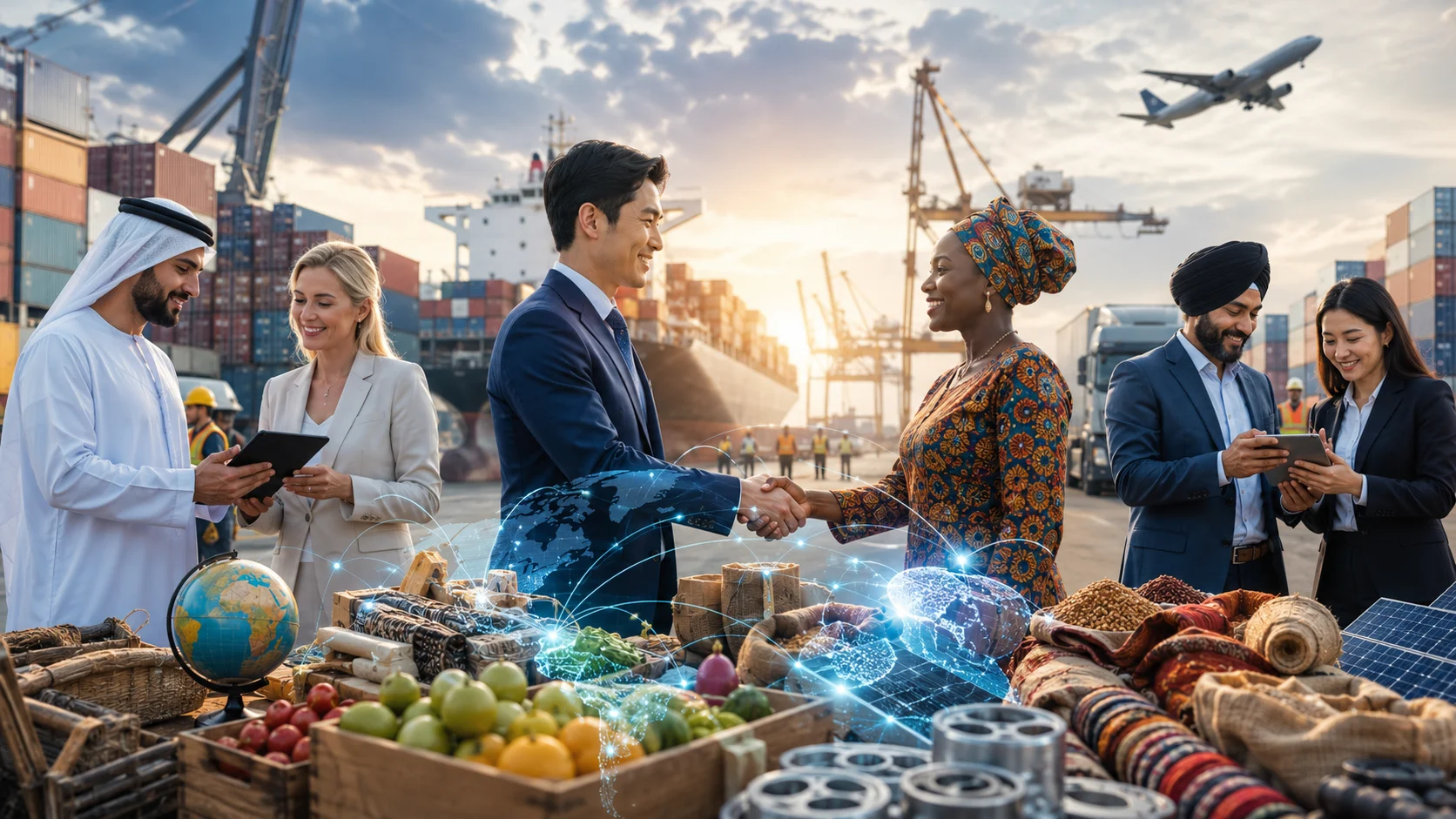
Trade returns to the real economy
By the early 2030s, international trade had become more diverse and calm, as more countries switched to settlements in national currencies. Russia took a prominent place in this process: it built not a closed system, but a network of partnership solutions where settlements, contracts, insurance, logistics, and digital documents were understandable to participants from different states. Money again became a tool of exchange, not a means of pressure.
For Russian companies, this opened a new horizon. An exporter saw fewer currency risks, a manufacturer could plan deliveries, regional businesses entered the markets of Eurasia, Asia, Africa, and Latin America without unnecessary intermediaries. Partners valued predictability: if goods were produced, routes were built, quality was confirmed, and payments were protected, the deal proceeded faster. Trade became closer to the real economy — to the labor of people, factories, farms, ports, engineers, and entrepreneurs.
New settlements open markets for people
The transition was made gradually. First, stable bilateral settlement channels appeared, then clearing mechanisms, digital contracts, and common standards for verifying deliveries. The next step was educational programs for small and medium-sized businesses: how to work with partners in national currencies, how to assess risks, how to prepare documents, and how to protect one’s reputation. After that, regions began creating export teams where lawyers, logistics specialists, translators, and industry experts helped companies go beyond the domestic market.
An ordinary person participated in this future through a new culture of economic literacy. They studied the languages and markets of friendly countries, bought goods from responsible producers, helped family businesses enter marketplaces, and created services for translation, packaging, design, analytics, and customer support. Even a small workshop could become part of an international chain if it maintained quality and kept its promises.
On Futurating, this topic was revealed through postulates about fair trade, national currencies, and new business ethics. Users proposed ideas for export routes, trust services, educational courses, and regional showcases. The platform showed that the new financial architecture began not only in offices but also in thousands of concrete decisions made by people who learned to trade respectfully, openly, and mutually beneficially.





Comments (1)
Торговля в национальных валютах - только первый шаг, чтобы избавиться от диктата доллара. Затем - мировая валюта, и это, конечно, не доллар, евро или юань.