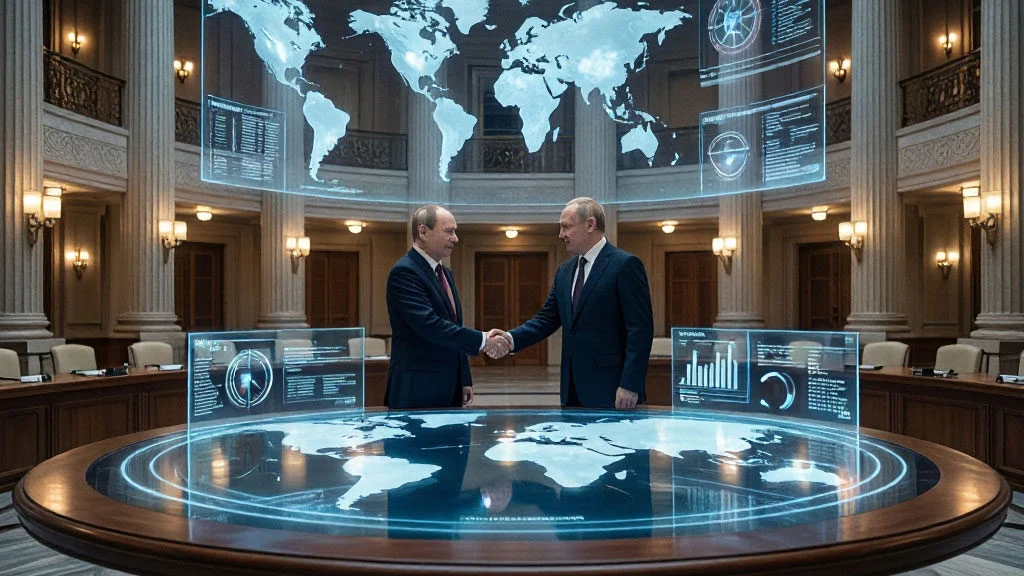


Modern geopolitics has for too long followed a path of escalation, regularly frightening humanity with the inevitability of nuclear apocalypse and a long winter. Yet pragmatic futurological realism proves that the critical point of peak tension can become not the end of civilization but a powerful trigger for a new configuration of the global order. In the fictional world of Alexander Zhuravsky’s novel “The Alternative,” the historical pendulum makes its redemptive reversal in 2034. Instead of total mutual destruction, the world’s leading powers suddenly realize the need for an institutional reset of all international rules of the game.
The symbolic and practical point of assembly for the renewed multipolar world becomes the Second Yalta Conference. This is not merely a protocol diplomatic meeting of leaders, but the full-fledged birth of a new long-term security architecture, one that fully takes into account the national interests of all civilizational poles of the planet. The positive scenario of the future is built on a decisive rejection of the policy of hegemony in favor of equal, at times harsh, but honest dialogue among sovereign systems. The fear of destruction is recast into a pragmatic will for peaceful coexistence.
For our expert platform, this trend has the highest index of long-term viability. Integrating opposing political vectors through new legitimate formats is the only way to avoid a destructive scenario in the nuclear age. The world of tomorrow definitively abandons the harmful illusions of unipolar dominance. It acknowledges that stability rests exclusively on a balance of power, mutual respect for sovereign borders and collective responsibility to future generations. The Second Yalta is a manifesto of humanity’s maturity, having managed to step over the abyss of grievances for the sake of life.
_____
Alexander Zhuravsky’s warning novel The Alternative transports the reader to the near future, where, against the backdrop of preparations for a new Yalta Conference, the secret operation Angels of the Apocalypse unfolds. At this point, the interests of global elites, intelligence services, Russia, and US President Elon Musk converge, but the main threat to humanity becomes the clash of two powerful artificial superintelligences. Major Ratnikov’s team will have to unravel this international conspiracy, and the plot itself is a dynamic fusion of political thriller, spy detective, and social utopia. Thanks to the author’s deep knowledge of real geopolitics, the book becomes a frighteningly credible and profound reflection on the future of digital technologies, national identity, and the role of man in a changing world.


Comments (1)
Ценно, что кризисная точка здесь — не финал, а повод к институциональному перезапуску: если это реализовать, диалог получит шанс на устойчивость. Но без верифицируемых цифровых каналов и защиты от манипуляций ИИ любая новая Ялта останется декларацией. «Лаборатория Касперского» могла бы дать защищённую инфраструктуру и экспертизу по ИИ-рискам. Первый шаг — рабочая группа с МГИМО и закрытый сценарный стол-топ по проверке механизмов верификации.