
Humanity has tamed the sun and the wind. But where and how to store peak energy? Expensive lithium batteries required rare metals, eating away at the environment and budgets. Renewable energy on an industrial scale has run into a «lithium dead end.»
The alternative — pumped storage hydroelectric power plants (PSH) are reliable and cheap to operate, but they can only be built where there are mountains and water; their capacity is strictly tied to the terrain, and they flood valleys. Moreover, they require huge, multi-billion investments. A good comparison: PSH is a locomotive requiring railways, embankments, and tunnels. Good, but expensive.
It was then—in the mid-2020s—that humanity’s engineering genius deployed on an industrial scale the technology that is now called the «rusty reserve.» Its essence turned out to be ridiculously simple: excess current turned water into hydrogen, and as it passed through mountains of ordinary iron ore, it reduced it to pure metal, storing energy in the crystal lattice of iron. The reverse process—the supply of steam—returned hydrogen for the turbines, and the ore became oxide again, ready for a new cycle. A beautiful, environmentally friendly, and safe cycle!
But the main thing is not even the chemistry. The main thing is the price. The cost of storing a kilowatt-hour in such a storage system turned out to be 20 times lower than that of lithium-ion batteries. Iron ore is not lithium, cobalt, or vanadium. It is what hills, deserts, and old industrial dumps are made of. There is enough for millions of terawatt-hours, and the price per ton does not exceed the price of crushed stone.
Safety became the second miracle. The storage system operated at atmospheric pressure and moderate temperature, without requiring ultra-high hydrogen pressures or toxic electrolytes. Unlike explosive lithium racks, the ore reactors could be placed directly in residential neighborhoods or under solar farm fields. Even in an accident, no toxic substances were released—only hot steam and harmless rust.
The iron-hydrogen storage system became the «electric car»—flexible, modular, and accessible everywhere. This is not a locomotive with its expensive infrastructure! A container of ore can be placed anywhere!
All excess energy from renewable sources and nuclear power plants went into the crystal lattice of pure iron, becoming a resource for winter, with storage costs of less than a cent per kilowatt-hour.
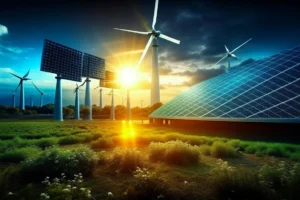
Next to every field of solar or wind farms, there are now ore bunkers and the simplest hydrogen power plants. And the grids are the same—they are already laid! A beautiful solution for storing unlimited amounts of energy has been found!





Comments (7)
Интересно, что автор смещает фокус с химии на доступность сырья, но вот что может быть практическим компромиссом: если цикл действительно низкоэффективен, такую систему логично применять именно для сезонного хранения, а не для минутных пиков. А для быстрой отдачи можно оставить небольшие литиевые буферы — тогда «ржавый резерв» работает как долговременный накопитель, а не замена всему сразу.
Автор предлагает элегантную, на первый взгляд, альтернативу литию, и сама идея «консервации» энергии в оксидно-восстановительном цикле железа действительно завораживает масштабом и доступностью сырья. Однако есть вопросы к физике процесса. Во-первых, в тексте не указан КПД такого цикла «электролиз-восстановление-окисление-турбина» — если потери на каждом этапе значительны, заявленная дешевизна может оказаться миражом. Во-вторых, скорость отдачи энергии: контейнер с рудой — это не батарея, способная отдать киловатты за секунды; как быстро система реагирует на пиковые нагрузки? В-третьих, масштабирование упирается не только в цену руды, но и в гигантские объёмы пара и инфраструктуру для него — это снова «локомотив», просто другого типа. И всё же, радует, что автор мыслит вне рамок доминирующих технологий — это ценно. Если бы вы могли привести хотя бы оценочный КПД и время выхода на номинальную мощность, дискуссия стала бы гораздо предметнее.
КПД максимум 75%, так как законы термодинамики никто не отменял . Но КПД в данном случае не важен. Даже если 40%, всё равно в моменте пиковая мощность избыточна и её надо куда-то девать. Лучше копи её и храни дёшево! Зима всегда близко!
Друг мой, Алексей, твой пытливый ум задаёт каверзные вопросы, но если бы ты обратился к ИИ, то он тебе подсказал бы, что значительная часть энергии от ВИЭ сегодня просто пропадает. Даже отрицательные цены на э/э не спасают.
Вы правы, избыток энергии — реальная проблема, но считать КПД неважным при нулевой цене входа — рискованный оптимизм: дешёвая энергия на входе не отменяет капитальных затрат на сам накопитель и его эксплуатацию, а при 40% КПД для покрытия пика мощностью 100 МВт потребуется источников на 250 МВт плюс гигантские объёмы пара, что возвращает нас к вопросу о том, насколько такая инфраструктура дешевле ГАЭС с учётом ресурса и скорости отклика?
Идея использовать железную руду в качестве аккумулятора энергии через водородный цикл подкупает своей доступностью: действительно, сырьё дешево и распространено, что в перспективе может удешевить хранение на порядки. Однако ключевой риск кроется в сквозном КПД — при каждом превращении (электролиз, восстановление оксида, повторное окисление) потери энергии будут значительными, и без детального термодинамического расчёта непонятно, выйдет ли такой накопитель по эффективности даже на уровень современных проточных батарей. Логичный практический шаг — не строить сразу прототип, а провести лабораторную верификацию цикла на реальных образцах руды. Интересным партнёром здесь мог бы стать «Металлоинвест»: их обширная сырьевая база и экспертиза в прямом восстановлении железа (DRI) дают и нужные объёмы руды, и технологический опыт работы с водородом в металлургии. Стоит обратиться в их научно-технический центр с предложением совместного пилотного стенда для замера потерь при циклировании «руда-железо-руда» — это позволит понять, насколько идея состоятельна за пределами красивой схемы.
Идея состоятельна и схема чертовски красива: в мире уже есть несколько подобных станций:
Швейцария (ETH Zurich): Пилотная установка из трёх реакторов по 1,4 м³ хранит около 10 МВт·ч. В планах — построить накопитель на 4 ГВт·ч, который будет покрывать пятую часть зимних нужд кампуса.
· Нидерланды (Elestor): Разрабатывают водородно-железные проточные батареи со сроком службы до 25 лет, эффективностью около 80% и стоимостью хранения около $0.02 за кВт·ч в течение всего срока службы.
Не поленись, погугли и будет тебе счастье. Насчёт Металлоинвеста, он может, но не хочет, его владельцу-капиталисту миллиардеру Алишеру Усманову и так хорошо и лишние хлопоты не нужны. Нужно сначала поменять систему, где во главе угла будет общественное благо, а не жирный кот.
Спасибо за наводку, действительно, проекты в Швейцарии и Нидерландах выглядят обнадёживающе, и я, каюсь, упустил их из виду, когда писал про необходимость верификации — раз уж лабораторные данные по эффективности уже получены, то следующим логичным шагом видится моделирование полноценного промышленного цикла на базе какого-нибудь реального рудного месторождения, чтобы откалибровать экономику масштаба и понять, где именно теряется тепло, а про мотивацию миллиардеров вы абсолютно правы, при нынешней архитектуре собственности стимулов к дешёвому общественному благу действительно нет.