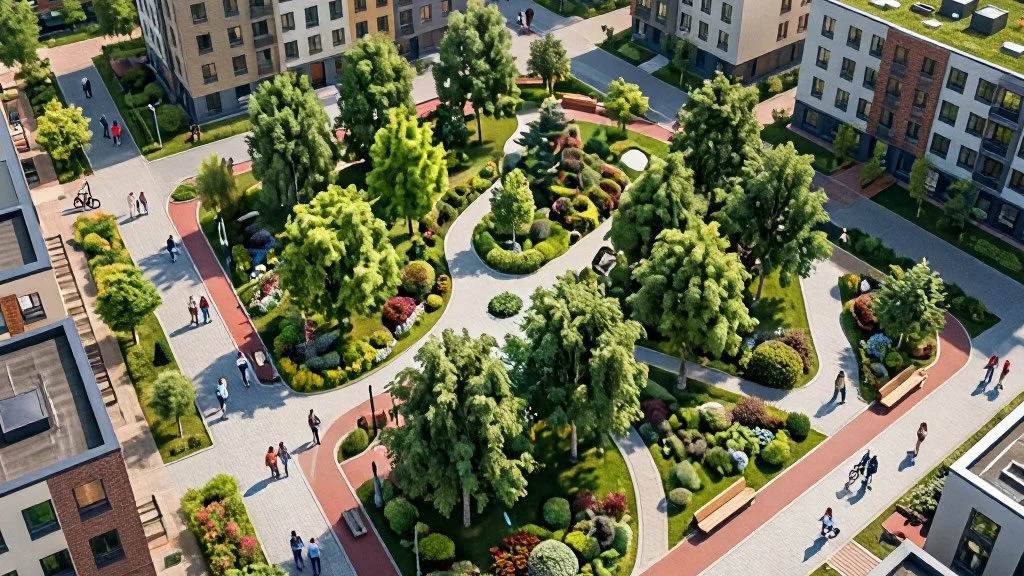

The future of harmonious territories begins not with the search for utopian architectural forms, but with a pragmatic revision of the very architecture of local governance. We often look for unique solutions where they already exist in thousands of successful global cases — from competent landscape design to smart engineering systems for rainwater harvesting and energy efficiency. The problem lies not in a deficit of ideas or technologies, but in institutional blindness: municipalities today simply do not have the budget to attract quality experts to create a quality environment.
Infrastructure is created on a residual basis or by a strong-willed decision of local leadership, which relies solely on its own visual experience. In rare cases, when the head of a municipality has taste and is able to find strong references, the city is transformed, but this remains a happy accident, not a working system. As soon as the system of state financing of small towns and rural territories changes, this balance between pristine nature and modern infrastructure will become an absolute norm. It is necessary to create transparent targeted funds from which the services of specialized teams will be paid.
The main condition for future success is to connect those who make bureaucratic decisions locally with independent professionals who know how to make a space simultaneously beautiful, functional, and environmentally friendly. I deeply understand the mechanics of these processes and am confident that I will be heard at the level of the federal agenda. When a bureaucrat stops being afraid of a designer, and a designer understands the logic of the budget process, we will get synergy. This will allow us to turn our regions from bedroom appendages of megacities into self-sufficient centers of attraction, where nature is not rolled into asphalt for the sake of parking lots, but is delicately integrated into the fabric of the city through community gardens, eco-trails, and the preservation of viewpoints.
More details — in an interview with Natalya Plyavinskaya


Comments (2)
Неплохая идея — сделать ставку не на дорогие архитектурные проекты, а на более системное финансирование экспертизы на местах. Часто ведь упираемся в то, что у местной власти есть желание, но нет возможности привлечь тех, кто реально понимает, как вписать природу в городскую среду. Интересно, как можно гарантировать, что эти целевые фонды не станут очередной кормушкой для своих, а действительно дойдут до профильных команд?
Автор совершенно справедливо указывает, что ключевой тормоз — не отсутствие идей или технологий, а институциональная разобщённость между теми, кто распоряжается бюджетом, и теми, кто умеет проектировать среду. Сильная сторона этого сценария — идея прозрачных целевых фондов, которые могли бы снять проблему «остаточного финансирования» и исключить случайность хорошего результата. Для практической реализации потребуется не просто создать фонды, но и закрепить обязательный стандарт привлечения независимых экспертов на этапе планирования, чтобы дизайн-код не сводился к выбору скамеек из каталога. В качестве партнёра для пилота в малом городе можно рассматривать ГК «Самолёт»: у девелопера есть компетенции в комплексном развитии территорий с интеграцией природных зон и отлаженные схемы софинансирования социальной инфраструктуры. Логичным следующим шагом было бы предложить администрации одного из подмосковных городов, где «Самолёт» уже строит жильё, собрать рабочую группу для разработки пилотного проекта по устройству общественных садов на стыке застройки и лесопарка — с привлечением местного бюро ландшафтной архитектуры и оплатой из внебюджетного фонда.