


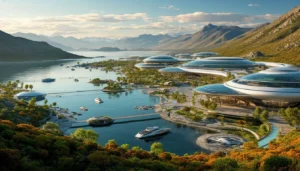
By 2035, the Kama will have become a full-fledged transport axis of Perm Krai. High-speed vessels will have connected Perm with cities along the river, and water routes will have entered the public transport system.
In 2026, the region is already developing a network of high-speed river services, with new routes and passenger vessels appearing. For now, this is a separate area, but the Kama’s role is already changing.
From a river between cities to a river that connects them
| 2026 | Possible 2035 |
|---|---|
| Separate river routes | Unified transport network |
| Bus, commuter train, and vessel are planned separately | A trip is built as a single route |
| The Kama is a natural and tourism axis | The Kama also becomes a transport corridor |
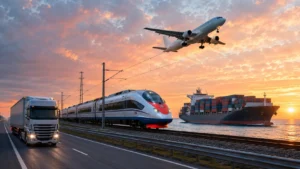
River transport should not replace roads and railways. Its task is to complement them where water transport makes connections between territories more convenient.
What will change for residents
| Task | Solution | Result |
|---|---|---|
| Travel | Regular river lines | Another way to get around |
| Tourism | Routes along the Kama | More trips across the region |
| Transfers | Vessel, bus, and commuter train | A single route for the passenger |
| Development of territories | Piers and services | New points of attraction |
The very logic of travel is changing. A person specifies a destination, and the system suggests a route: bus to the pier, high-speed vessel, and a transfer. Schedules, navigation, and payment are combined in one service.
The path to such a future
| Stage | Action | Result |
|---|---|---|
| 1 | Choose high-demand routes | Routes appear where they are needed |
| 2 | Connect piers with other transport | Transport hubs emerge |
| 3 | Combine schedules and payment | Travel becomes easier |
| 4 | Develop tourism and services | Transport helps territories |
The scenario has limitations: seasonal navigation, fleet costs, and the need for sustained demand. Therefore, routes should appear where they truly make travel more convenient.
By 2035, the Kama will have become part of Perm Krai’s unified transport system. River routes will have complemented roads and railways, connected cities, supported domestic tourism, and the development of territories along the river.
My contribution
To make this happen, I used river routes, traveled across Perm Krai, proposed ideas for new directions, and viewed the Kama not just as a symbol of the region, but as a space capable of connecting its cities and people.







Comments (1)
Идея с превращением Камы в единую транспортную ось выглядит сильной не из-за появления отдельных маршрутов, а из-за попытки встроить суда в общую логику городских и пригородных поездок. Если это получится, река действительно станет не туристической декорацией, а рабочим транспортом. Для пилота логично присмотреться к опыту и флоту компании «ВодоходЪ» — у неё есть и подходящие суда, и навыки организации пассажирских перевозок, и понимание того, как сделать сервис комфортным. С них можно начать с конкретного шага: предложить совместно проработать регулярный маршрут Пермь — Хохловка с увязкой расписания с автобусами и единым билетом, чтобы проверить спрос и наладить пересадки. Такой пилот покажет, готова ли система работать в реальном режиме, а не только в планах.