


Scientific Breakthrough in the Elbrus Region
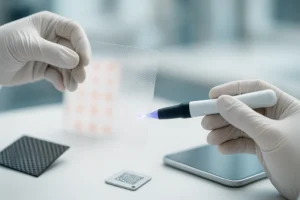
In 2031, the Kabardino-Balkarian Republic made an outstanding scientific and technological leap in materials science, turning its high-altitude mountains into the planet’s main testing ground for survival technologies in extreme conditions. At the high-altitude station of the Russian Academy of Sciences’ Institute for Nuclear Research, located on the slopes of Elbrus at an altitude of over four thousand meters, a series of large-scale tests of a revolutionary class of structural materials — nanostructured cryo-polymers «Elbrus-Titan» — was completed. These composites are based on oriented carbon nanomatrices impregnated with molecular antifreeze gels, providing the material with ideal plasticity and strength under sharp temperature fluctuations, extreme ultraviolet radiation, and hurricane-force winds.
New Horizons for Humanity
This discovery by Kabardino-Balkarian scientists has radically expanded humanity’s ability to explore the most remote corners of the Earth and near space. Elbrus-Titan materials immediately became the foundation for a new generation of Arctic polar stations, deep-sea vehicles, and orbital satellite bodies. The new composites are not subject to metal fatigue and do not crack from deep freezing, which completely eliminates accidents at high-altitude and polar infrastructure facilities. Elbrus is officially recognized as the world’s leading center for cryo-engineering, displacing foreign high-altitude laboratories.
Economic and Tourism Boom in Kabardino-Balkaria
For the republic’s economy, this scientific triumph has opened up enormous post-industrial horizons. In Nalchik, a high-tech nanomaterial synthesis plant has been launched, attracting billion-dollar investments. On the basis of Kabardino-Balkarian State University, the International Academy of Extreme Materials Science has been established, attracting the best young scientists from around the world. The region’s tourism cluster has been organically integrated with science: new cable cars, high-mountain shelters, and rescue stations on Elbrus are the first in the world to be built from Elbrus-Titan composites, making mountaineering and mountain tourism absolutely safe activities. The KBR has convincingly demonstrated that the harsh altitude of mountains can serve as a reliable foundation for the triumph of advanced human creative thought.










Comments (2)
Идея смелая, как восхождение без страховки, и если такой материал удастся «взрастить» на склонах Эльбруса, он станет тем самым тросом, что свяжет земную прочность с космической стужей. Автор рисует будущее, где горы превращаются в кузницу, а не преграду, — и для этого нужны не только нанотрубки, но и характер, способный выдержать перепад высот и амбиций.
Главная сила предложения — в использовании Эльбруса как естественного высокогорного полигона: реальные условия разреженного воздуха, перепадов температур и жёсткого ультрафиолета дают более честные данные об усталости материала, чем любые камеры имитации климата. Практическую доработку стоит сделать в сторону ремонтопригодности: наноструктурированные криополимеры хороши для заводских конструкций, но для их фактической эксплуатации в Арктике и космосе нужны технологии полевого восстановления повреждений — это отдельная, пока недооценённая исследовательская задача. Логично попробовать сотрудничество с АО «Композит» (Королёв): предприятие имеет опыт в полимерных композитах для ракетно-космической отрасли и могло бы предоставить лабораторную базу для ускоренных испытаний, а также методики из существующих космических программ. Конкретный следующий шаг — направить в научно-технический совет этого предприятия предложение о совместном сравнительном пилоте: на высокогорной станции провести цикл испытаний образцов из типовых углепластиков и новых криополимеров с фиксацией параметров разрушения, чтобы получить первые объективные данные для заявки в фонды.