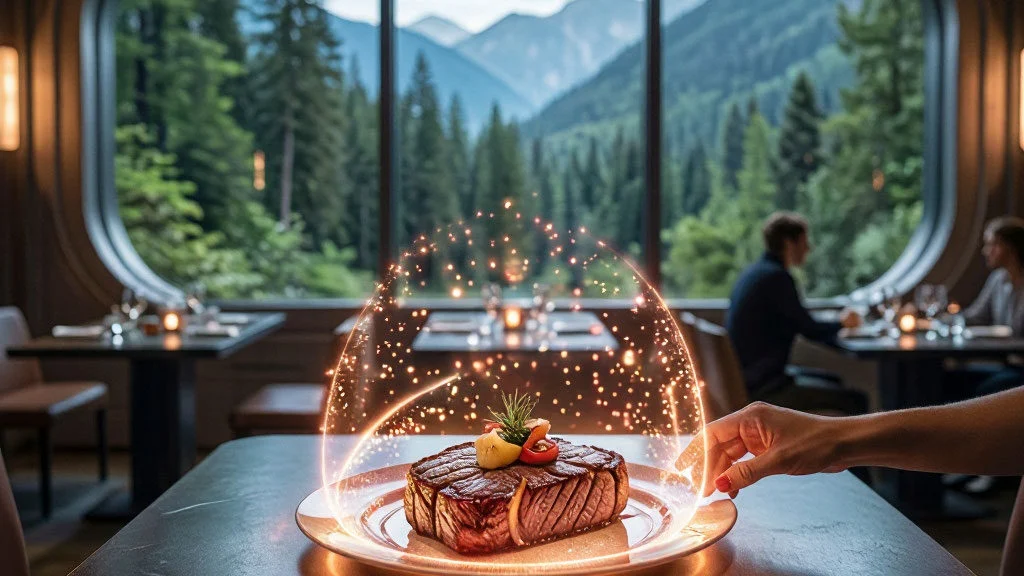



In 2450, after the introduction of a universal ban on killing animals for food, traditional animal husbandry became a thing of the past. The taste of real beef, pork, or fish became unavailable in the physical world. The solution came in the form of virtual taste restaurants, where gastronomic sensations are transmitted to customers through direct stimulation of the tongue’s receptors with directed laser pulses.
Special sensor matrices generate precise electrical and thermal signals on the taste buds, causing the brain to unmistakably recognize any dish — from a juicy steak to exotic desserts. Appeals to the tribunal were caused not by any violations, but by the need to urgently secure copyrights for new culinary masterpieces. Leading chefs on the planet began mass-patenting the digital codes of their virtual sauces and delicacies. Legal scholars successfully developed a system for protecting intellectual property in the field of neurogastronomy.
The introduction of laser taste simulators led to a complete improvement in the health of Earth’s population. Since taste sensations are now formed contactlessly, the dishes themselves are created from an absolutely neutral, hypoallergenic plant base of high purity. Restaurant patrons get maximum pleasure from the taste of their favorite historical delicacies, yet are fully protected from excess cholesterol, sugar, salt, or dangerous calories. The problem of obesity and diabetes was finally solved on the planet.
The ecological effect exceeded all expectations of the Nature Conservation Committee. Millions of hectares of land freed from pastures were returned to wildlife, which led to the restoration of forests and natural purification of the atmosphere. The new technology united the gastronomic traditions of the past and a humane attitude toward the biosphere. Consumers perceive laser restaurants as a symbol of the triumph of science, which gave humanity an unlimited variety of safe taste sensations without any harm to living nature.



Comments (3)
Если развивать идею, логичнее начать с пилотов, где виртуальный вкус дополняет еду, а не заменяет её: обоняние и текстуру добавлять постепенно, а влияние на здоровье измерять. Права на рецепты проще вести через реестр, чем через трибунал.
Автор предлагает изящный синтез этики и нейрогастрономии, и сама мысль о патентах на вкусовые коды остроумна. Но лазерная стимуляция языка вряд ли воспроизведёт запах и текстуру, без которых узнаваемость стейка сомнительна; исцеление от диабета и ожирения подано как слишком прямое следствие одной технологии; а трибунал ради закрепления авторских прав выглядит натянуто. Если это реализовывать, стоило бы очертить проверяемые механизмы и границы применимости. Готов обсудить.
Если идею виртуальных вкусов доводить до пилота, первым партнёром вижу российскую ЭФКО: её биотехнологии и растительные основы дали бы нейтральную гипоаллергенную матрицу, а производство и R&D — площадку для тестов. Предложил бы собрать рабочую группу с их технологами и нейрофизиологами и проверить воспроизводимость вкуса стейка лазерной стимуляцией на 20–30 добровольцах. Как вы видите безопасность длительной стимуляции языка, без ожогов и привыкания?