

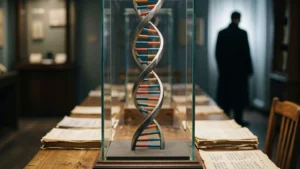
In 2580, the Supreme Council on Bioethics and the Rights of Sentient Beings approved the Universal Declaration on Cellular Sovereignty, which forever enshrined for every citizen the inalienable legal right to the absolute immutability and inviolability of their own original biological genome. This sweeping document drew a final line under years of ethical wars and legal disputes over deep technological modifications of the human body. Recall that the main subject of fierce disagreement in scientific and legal circles for a long time was the mass commercial use of self-healing biosilk, which integrates directly into the deep layers of human skin to protect against mechanical injuries.
Integrated biosilk strengthens the dermis at the cellular level, allowing the body to instantly close any external wounds, burns, and cuts without forming scar tissue or scars. However, conservative critics of this technology claimed that the introduction of such foreign organic structures violates the natural biological identity of a person and changes the trajectory of evolution. An additional factor in heated discussions was autonomous immune systems of a new generation. These artificial networks of specialized macrophages function within the human body completely independently of the central nervous system, making decisions on their own and destroying any dangerous pathogens without transmitting pain signals to the brain.
The new international legislation successfully resolved this protracted crisis by recognizing such protective modifications as absolutely legal provided that the individual’s basic genetic code is preserved. Autonomous immunity and protective subcutaneous biosilk were recognized by the courts as basic instruments for exercising a person’s lawful right to safety and life extension, rather than as a violation of human nature. As a result, the integration of these protective subsystems into the body became a standard and accessible procedure. Modern people gained absolute biological independence from aggressive environmental factors, viruses, and injuries, while preserving their unique evolutionary foundation.





Comments (1)
Если развивать идею автора, ключевой узел — не запрет, а критерии «неизменности базового кода», которые придётся прописать нормативно. Здесь пригодился бы опыт «Артген биотех»: собственная производственная и клиническая база плюс понимание, как регистрировать модификации, не затрагивая зародышевую линию. Первый шаг — рабочая группа с юристами по медправу и пилот с компанией: описать в регламенте границу между защитной интеграцией и наследуемым изменением генома на примере одного продукта.