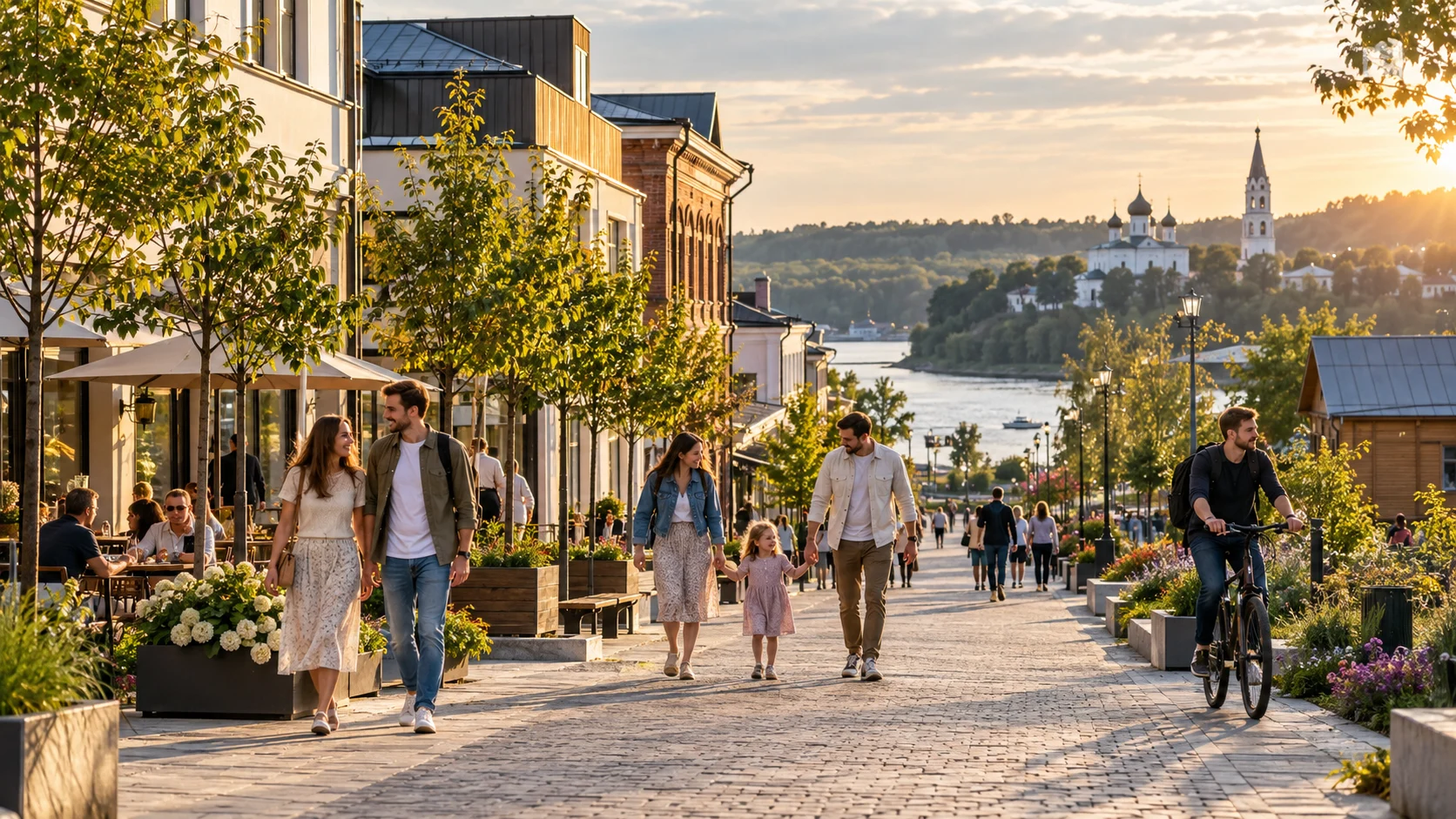


In 2035, Russia experienced a long-awaited demographic turnaround: small towns stopped losing young residents and began attracting new families, professionals, and entrepreneurs. Moving to Moscow or St. Petersburg was no longer considered a prerequisite for a successful career. Opportunities for a decent life emerged where, until recently, people had to look for them thousands of kilometers from home.
The Capital Is No Longer the Only Choice
Changes became noticeable in everyday life. Graduates returned after university, young families bought homes, and entrepreneurs opened manufacturing facilities and technology companies.
Modern educational centers, medical facilities, public spaces, and enterprises with high-productivity jobs appeared in small towns. The development of transport and digital infrastructure made it possible to work with clients from any region of the country.
Attitudes toward the provinces changed especially. A small town was no longer perceived as a place with limited prospects. Its advantages became affordable housing, proximity to nature, short distances, and the opportunity to participate in the development of one’s own community.
How Russia Changed the Direction of Migration
The prerequisites for such a future already existed in 2026. The state spatial development strategy provided for strengthening supporting settlements, while the national project “Infrastructure for Life” focused on renewing the urban environment.
However, improvement alone proved insufficient. As early as 2025, VCIOM analysts drew attention to the problem of population outflow from small towns and single-industry towns.
The turning point became possible thanks to consistent decisions.
The first step was creating jobs through the development of regional industry, small business, and technology manufacturing.
The second was renewing schools, hospitals, utility networks, and transport infrastructure.
The third was support for young families and professionals who chose to live and work outside the largest metropolitan areas.
The fourth was the development of remote employment and regional entrepreneurship.
The fifth was involving residents in managing the development of their towns.
By 2035, the success of territories began to be measured not only by the volume of investment but also by how many people tied their own future to them.
My Contribution
I took part in discussions about the future of my town, supported local initiatives, helped develop digital services, and shared stories about successful regional projects.









Comments (2)
Автор предлагает образ будущего, где малые города снова удерживают молодёжь, и это скорее гипотеза о желаемом, чем констатация. Если такие меры реализовать системно, важно проверить, что первично — рабочие места или среда, и хватит ли у территорий ресурсов.
Автор предлагает целостный сценарий: рабочие места, инфраструктура и вовлечение жителей. Слабое место — экономика малых городов: без длинных денег, заказов и доступа к рынкам рабочие места останутся низкооплачиваемыми. Для пилота логично привлечь Ростелеком: его оптические сети и ЦОДы в малых городах могли бы дать инфраструктуру для удалённой занятости и цифровых сервисов. Первый шаг — рабочая группа с Минцифры и ВЭБ.РФ по пилоту цифровых профессий в опорных городах.