



Concept of Atmospheric Nutritional Biosynthesis
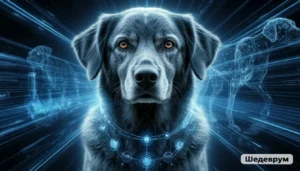
The concept of atmospheric nutritional biosynthesis marked a fundamental evolutionary leap in animal care: the transition from phagocytosis (eating) to purely lytic or gaseous exchange. This turned the domestic animal from a heterotroph (consumer of organic matter) into a being nourished directly by the products of the techno-ecosystem—much as plants derive nutrition through photosynthesis.
Technological Basis: Artificial Chemosynthesis and a Transdermal Shunt
The process replaced the complex and vulnerable digestive system (stomach, intestines, microbiome) with the direct introduction of high-energy molecules into the bloodstream.
1. Local Synthesis Station (Eco-Hub)
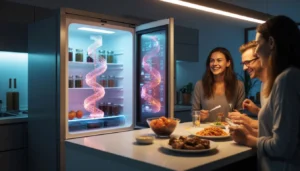
A module operating on the principle of an enhanced natural cycle was installed in the home or on the property.
- Raw material intake: the device draws in atmospheric air, extracting carbon dioxide (CO2), nitrogen (N2), and water vapor.
- Energy: solar panels or a compact isotopic source power the system.
- Catalysis: quantum dots and enzymatic reactors operate inside the station. Under the influence of catalysts and electricity (a process imitating the Calvin cycle but thousands of times faster), gases are split and reassembled. Carbon and hydrogen formed glucose chains (C6H12O6), and nitrogen bonded into amino acids.
2. Transdermal Port (Vascular Connector)
Since the digestive tract had atrophied from disuse, the animal was implanted with a miniature port in a highly vascularized area (for example, in the jugular vein or a large abdominal vein).
- Bionic membrane: the port was made from biopolymers mimicking capillary walls so that the immune system would not reject it. It is equipped with filters that prevent air bubbles (gas embolism) from entering.
- Infusion: a sterile isotonic solution of glucose and amino acids is delivered at the pulse rate, maintaining a constant glycemic level.
Biological Consequences and Transformation of the Body
1. Gastrointestinal Atrophy and Skull Restructuring
In predators (cats and dogs), the need for teeth disappeared. Incisors and canines intended for tearing meat were reduced through evolution or modifications. The stomach became a rudimentary sac or disappeared entirely. This permanently solved the problem of intestinal parasites (worms), viral gastroenteritis, intestinal intussusception, and poisoning from spoiled food.
2. Metabolic Stability
Blood sugar spikes, diabetes, and obesity were eliminated. The veterinarian-architect configures the nutrient supply flow depending on the animal’s activity level, read by quantum sensors (as in the neurocorrection concept). If the dog runs, the glucose flow increases; if it sleeps, the flow decreases to the basal level.
3. The Chewing and Psychological Challenge
The main difficulty was the behavioral side. For a dog or cat, gnawing a bone or eating a piece of meat is a powerful mental release and a way to relieve stress. The solution was the introduction of “feeding simulators”: the animal is given a bio-neutral chewing module that mimics meat in texture and taste but is spat out after chewing. This satisfies the instinct without engaging digestion.
Ecosystem Effect
This technology solved the global environmental problem of animal husbandry.
- Carbon neutrality: instead of growing soy, transporting it to a factory, making feed, taking it to a store, and then disposing of excrement, the system simply removes CO2 from the air.
- Land liberation: the need for pastures and fields for feed crops disappeared.
Veterinary Risks and Barriers
| Risk | Solution |
|---|---|
| Port infection: any invasive device connected to the bloodstream is a sepsis risk | Weekly self-cleaning with nano-brushes or printing an antibacterial layer directly at the contact site |
| Energy dependence: the animal depends directly on infrastructure; a power outage or bioreactor failure leads to hypoglycemic coma and death within minutes (such an animal has no liver glycogen reserves) | Backup implantable batteries |
| Absence of enterotypes: the gut microbiome plays a huge role in immunity and vitamin production (for example, vitamin K and B-group vitamins), and when giving up the GI tract the animal loses this biological protection | Replacing live microflora with synthetic vitamin analogs, which are also delivered through the port |
Philosophy of Nutrition
The veterinarian ceased to be a dietitian selecting proteins and fats. They became an engineer of hydrodynamics and a chemical technologist adjusting the “recipe” of the infusion depending on the breed, age, and emotional state of the pet. Nutrition turned from an act of consumption into an act of pure life maintenance.




Comments (2)
Я ещё с детства глядя на картинки царствия небесного не понимал, как могут во-лежать рядом лев и агнец: ведь льву надо кушать и он обязательно съест ягнёнка. Теперь Влада Ветрова разъяснила, как это будет.
И библейская цитата получила современное прочтение:
«Тогда волк будет жить вместе с ягненком, и барс будет лежать вместе с козленком; и теленок, и молодой лев, и вол будут вместе, и малое дитя будет водить их».
«И корова будет пастись с медведицей, и детеныши их будут лежать вместе, и лев, как вол, будет есть сено»
Сильная сторона статьи в том, что автор не прячет уязвимости концепции: энергозависимость, риск инфекции порта и потерю микробиома. Если переводить идею в прототип, для России полезна кооперация с «Нита-Фарм»: она могла бы дать ветеринарную экспертизу, доступ к клиникам и опыт производства стерильных растворов. Первый шаг — собрать рабочую группу из ветврачей, инженеров-биомедиков и производителя и проверить на 5–10 добровольных животных не порт, а хотя бы непрерывный контроль гликемии и протокол аварийного питания.