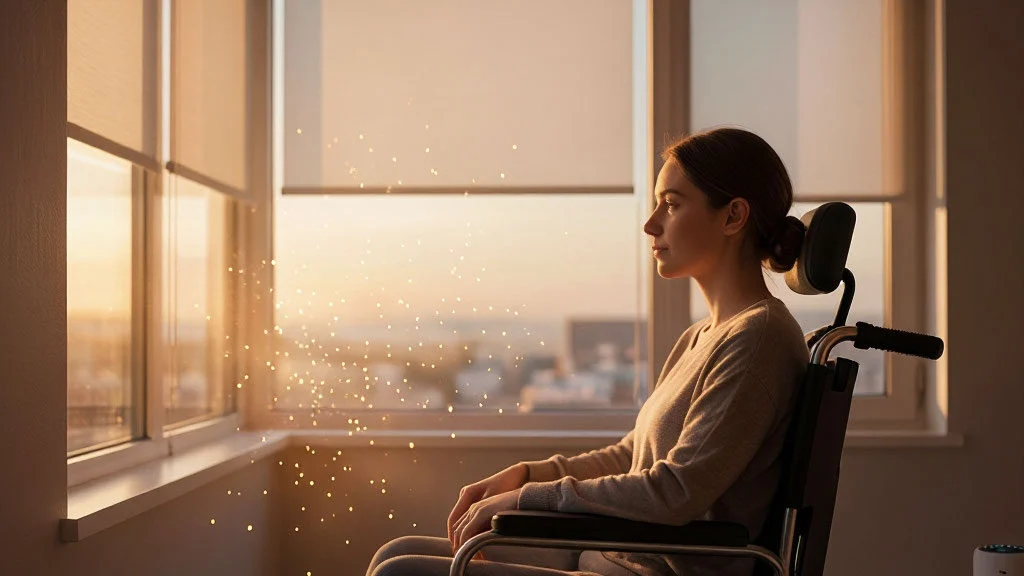



By 2040, familiar smartphones, computers, and household devices had become a unified intelligent environment. People no longer had to constantly switch between dozens of apps and interfaces. Technology had learned to take the context into account and help solve everyday tasks with as few actions as possible.
The interface no longer demanded attention
Voice control, gestures, computer vision, and personal intelligent assistants merged into accessible digital systems.
Devices helped plan routes, organize workflows, get an education and interact with urban infrastructure. At the same time, users themselves determined which actions the system could perform without additional confirmation.
New technologies proved especially useful for people with disabilities. Adaptive interfaces took into account vision, hearing, and motor activity needs, expanding opportunities for independent living.
Technology became less visible
Advances in compact processors, energy-efficient computing, and artificial intelligence made it possible to move some information processing directly onto users’ devices.
This reduced dependence on constant connection to remote servers and created additional opportunities for protecting personal data.
At the same time, requirements for manufacturers changed. Durability, repairability, device compatibility, and transparency of information processing became important characteristics alongside performance.
The transition began with the spread of intelligent assistants, wearable electronics, and smart home systems in the 2020s. Gradually, individual solutions merged into a common technological environment.
People retained control
Users learned to consciously choose digital tools, control permissions, and limit automation where a personal decision was required.
The main indicator of technological progress was not the number of device functions but the time and effort it helped a person save.





Comments (1)
Если развивать идею единой интеллектуальной среды, ключевое уточнение: адаптивность надо проектировать вместе с моделью разрешений, иначе контекстные сценарии упираются в приватность. Пилот в России можно попробовать с SberDevices: их устройства с ассистентом и опыт в мультимодальных интерфейсах дают площадку для проверки доступности. Шаг — собрать рабочую группу с профильными НКО и прогнать прототип на 20–30 пользователях с нарушениями зрения и слуха. Как автор предлагает решать деградацию адаптивных сценариев на старых устройствах?