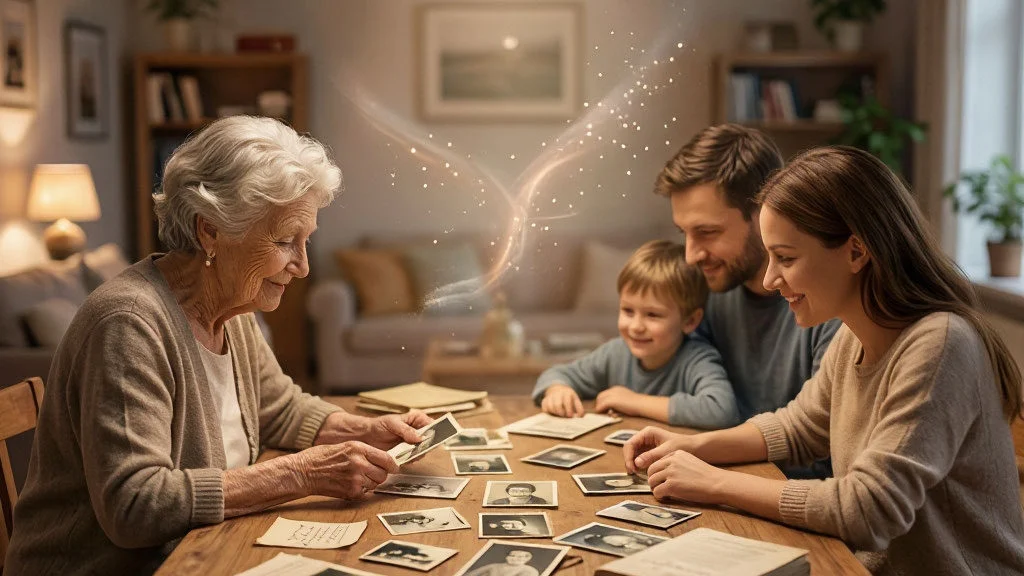


By 2035, digital services began to take into account not only user convenience but also the quality of human relationships. Families gained tools that allowed them to stay connected across generations, resolve everyday matters together and preserve family history without constantly monitoring one another digitally.
From surveillance to mutual assistance
Developers of family applications revised their approach to security. Instead of continuous tracking of users’ locations and actions, flexible settings for voluntary information sharing appeared.
Children, parents and older relatives could independently set the boundaries of digital privacy, taking into account age, safety and family agreements.
Intelligent assistants helped organize shared activities, reminded people of important events and simplified interaction with medical and social services. At the same time, technology did not replace personal communication.
Family memory became more accessible
Digital family archives, which brought together photographs, documents, memories and oral stories from several generations, became widespread.
New tools made it possible to reconstruct the chronology of family events, find connections between historical documents and preserve the memories of older relatives.
The development of such services was accompanied by higher requirements for personal data protection. Families gained the ability to manage access to archives and set rules for passing them on to future generations.
The changes were driven by the spread of digital communications, intelligent assistants and public discussions of the 2020s about privacy, security and trust.
The human element remained central
Families began to discuss rules for using technology more often, create archives together and pay more attention to personal communication.
Technology helped reduce the distance between generations, but trust still grew from respect, responsibility and a willingness to hear one another.








Comments (1)
Сильная сторона идеи — приватность как настройка по умолчанию, а не как отказ от технологий: гибкие границы обмена действительно снимают главный страх семьи перед цифровыми сервисами. Слабое место — передача архива: без юридически оформленного наследования доступа цифровая память исчезает вместе с аккаунтом. Для пилота в 2026 году подошёл бы Яндекс: Яндекс 360 даёт облако, OCR и распознавание речи для оцифровки воспоминаний и разграничение прав доступа. Первый шаг — рабочая группа с юристами по 152-ФЗ и пилот на 200 семьях с наследуемым доступом.