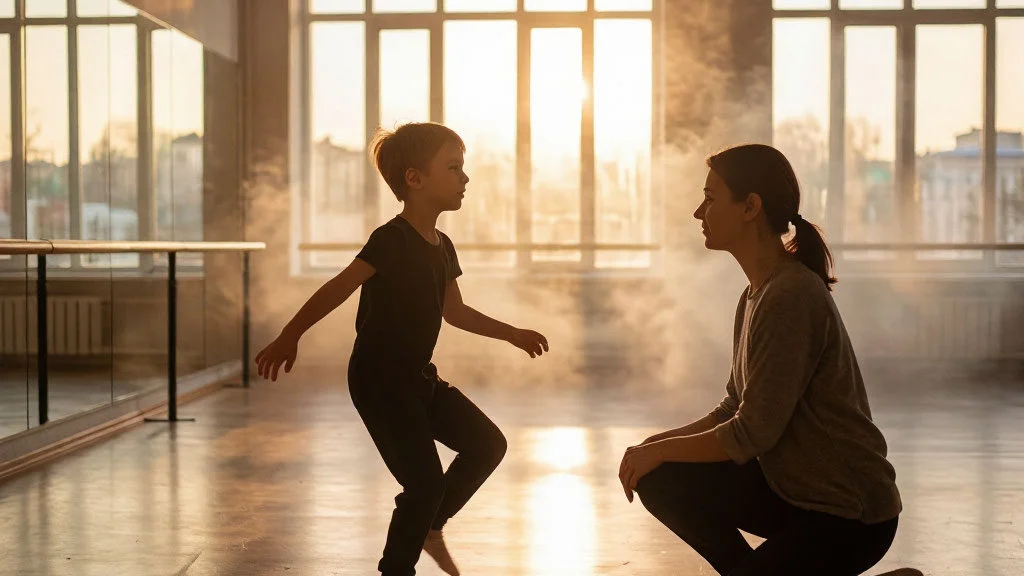



By 2035, arts schools had learned to see talent beyond formal standards. When admitting students to choreography, music and theater programs, schools began to consider not only the child’s starting profile but also expressiveness, persistence, the ability to learn and the willingness to work. Children who had not previously gone through initial selection gained new opportunities to show what they could do.
From Strict Selection to Developing Ability
Professional requirements remained in place: the performing arts still demanded discipline, technique and health. But for admissions panels, a single check of height, flexibility or conformity to a standard model was no longer enough. The short exam was supplemented with trial classes, observation of progress and tasks that revealed the character of a performance.
Teachers began to create individual preparation programs. Some students needed more time to develop physical skills; others needed more time for musicality, confidence or teamwork. Decisions about professional prospects were made on the basis of a combination of qualities, not a single indicator.
Discussion of this approach gained new momentum on 13 November 2026 at the Third International Symposium “Creating the Future.” In a special episode of the show “Sofiko’s Challenge”, organized with the participation of the Vyzov Foundation, Svetlana Zakharova said that ballet schools sometimes move away from rigid requirements after recognizing a true artist in a child.
An Opportunity Is Not a Promise of Easy Success
Parents’ expectations also changed. Early ability was no longer considered a guarantee of a career, and a mismatch with the standard was no longer a final verdict. There were more programs where children could try different artistic fields before choosing one.
To make such changes, educational organizations revised their selection criteria, prepared teachers for individual work and introduced clear feedback. Families could see not only the child’s assessment but also the child’s development over time.
Restrictions related to health and safety remained mandatory. Flexible selection did not remove teachers’ responsibility for the student’s workload and development.
Contribution
ANO “Image of the Future” used the Futurating platform to discuss a vision of education in which abilities are revealed without premature labels. Parents, teachers and students proposed postulates about fair selection, compared options and described their own contribution: supporting a child, organizing a trial class or proposing more flexible assessment criteria.









Comments (2)
Автор предлагает гуманную идею, но критерии «выразительности» трудно проверить, пробные занятия удлиняют отбор и нагружают педагогов, а субъективность комиссий не снята. Ценно, что ребёнка видят целиком. Как измерять эти качества?
Автор предлагает оценивать не только исходные данные, но и динамику, и если это реализовать, главным становится инструмент фиксации прогресса и понятная обратная связь для семьи. Здесь мог бы пригодиться опыт «Учи.ру»: платформа, аналитика и методисты способны дать пилотную площадку и сценарии наблюдения за учеником. Следующий шаг — собрать рабочую группу с методистами «Учи.ру» и педагогами школы искусств, запустить полугодовой пилот на хореографии и музыке и проверить, какие критерии роста действительно помогают отбору.