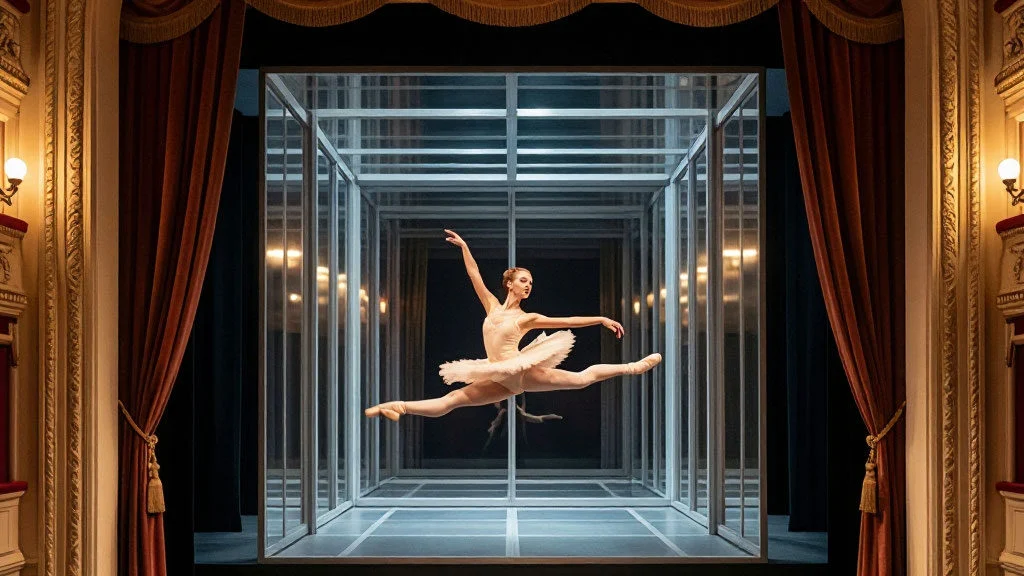



By 2035, classical ballet has preserved its celebrated works and at the same time gained a new artistic resonance. Young dancers and choreographers have learned to reinterpret familiar roles without undermining the foundations of the ballet school. Audiences saw that tradition can develop through the individuality of the performer.
The Classics Are No Longer a Static Model
Theaters increasingly combined careful restoration of historical productions with experimental versions. Choreographers explored new approaches to movement, dramaturgy, and the interaction of music with the stage, while dancers brought their own physicality and emotional tone to their roles.
An important change was open engagement with the heritage. Audiences were told which elements of a production dated back to the original staging and which had become an interpretation by a new generation. This allowed them to appreciate both approaches and consciously choose which reading they preferred.
This renewal of the art was discussed on November 13, 2026, at the III International Symposium ‘Creating the Future.’ During a special episode of the show “Sofiko’s Challenge”, held with the participation of the Vyzov Foundation, Svetlana Zakharova noted that young artists and choreographers are already bringing new energy even to long-familiar classical works.
New Opportunities for Artists and Audiences
Academies expanded classes in art history, acting, and contemporary choreography while maintaining high technical standards. Young performers gained more opportunities to take part in creative exploration, not merely to reproduce models.
Theaters developed open rehearsals, meetings with directors, and accessible digital materials. In this way, audiences from different regions could learn about the process of creating a production and discuss artistic decisions.
Productions were accompanied by explanations of the language of ballet and the history of music, so new audiences could more easily understand what was happening on stage. At the same time, the artist’s right to creative exploration was combined with respect for the author’s concept and the professional school.
Support programs for young choreographers helped them test new ideas on a chamber stage before including them in the main repertoire. The best discoveries found their audiences.
Contribution
ANO ‘Image of the Future,’ through the Futurating platform, opened a space for propositions about the development of classical art. Artists, teachers, and audiences could propose scenarios for the future of ballet, evaluate them, and discuss their own steps: supporting young productions, preserving archives, or introducing new audiences to the classics.






Comments (3)
Критерии, на мой взгляд, лучше задать не запретами, а экспертным советом с педагогами и архивистами: он оценивает бережность к школе и отбирает находки камерных сцен после пробного сезона. Открытые репетиции можно финансировать из партнёрства театров и грантов.
Автор предлагает симпатичную рамку, где прозрачные пояснения — что в спектакле от оригинала, а что интерпретация — уважают и зрителя, и школу. Но если это реализовывать, не хватает критериев, отделяющих развитие от разрушения школы; неясны источники финансирования открытых репетиций и цифровых программ; не описан механизм, по которому находки камерных сцен попадают в большой репертуар. Приглашаю обсудить, какие условия здесь ключевые.
Идея с открытой работой с наследием выиграет, если заранее фиксировать границу между реконструкцией и новой редакцией: иначе спор о бережности уходит в вкусовщину. Для пилота в 2026 году подошёл бы Мариинский театр — архив, камерные сцены и медиаканал позволяют показать зрителю разницу между оригиналом и интерпретацией. Первый шаг — собрать группу с театром и академией и провести один вечер с пояснениями и записью редакций. Как в афише отмечать, что именно изменено?