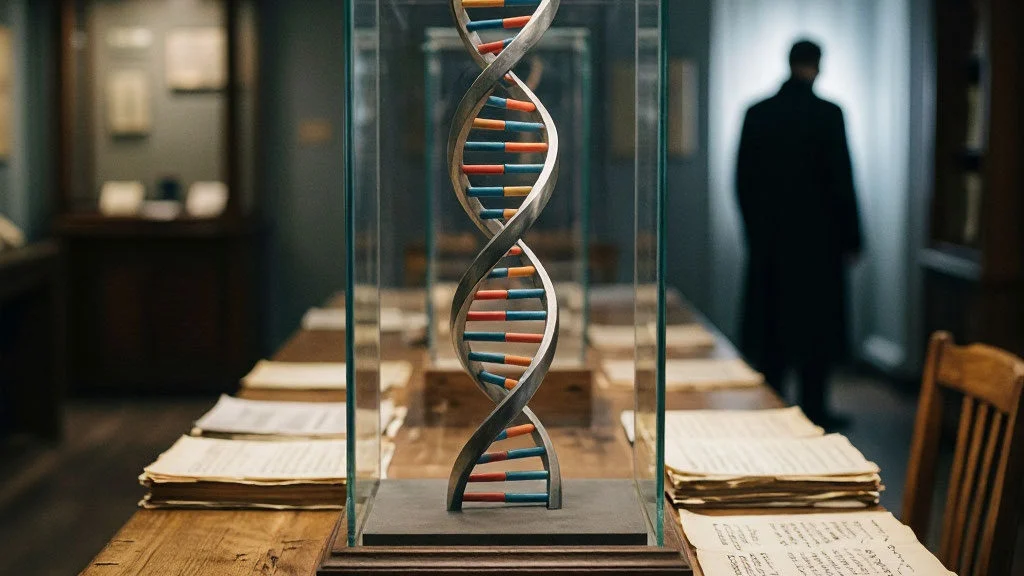



By 2040, society had stopped seeing cloning as a way to bring back an outstanding scientist, artist, or thinker. The development of genetics made knowledge about heredity more accessible, but at the same time helped people understand: a DNA match does not create a copy of a biography, character, or achievements. The idea of “reproducing a genius” gave way to respect for the uniqueness of the individual.
A copied genome did not create a copy of the person
Educational programs began to explain more clearly the difference between genetic information and lived experience. Using examples from twins and other biological research, people learned that environment, upbringing, chance events, and personal choice influence human development alongside heredity.
Public discussions learned to distinguish between methods of cell research, medical technologies, and human reproductive cloning. The ability to study genetic mechanisms did not mean automatic permission for any experiment. Safety, dignity, and human rights remained the priority.
A starting point for this conversation was, in particular, a discussion on November 13, 2026, at the III International Symposium “Creating the Future.” In a special episode of the show “Vyzov Sofiko”, held with the participation of the Vyzov Foundation, Konstantin Severinov explained why a genetically identical child raised in different conditions would not replicate the personality of their prototype.
People learned to preserve legacy differently
Instead of dreaming of biologically repeating famous people, people began to pay more attention to preserving their ideas. Museums, archives, and educational centers opened access to manuscripts, research, performances, and working methods. Digital reconstructions helped people study the legacy but were not presented as bringing the person themselves back. The creators of such materials separately explained where documentary evidence was used and where artistic interpretation began.
This required scientifically literate publications, open discussion of ethical boundaries, and careful handling of personal data. Everyone could contribute by checking sensational claims about genetics and passing knowledge on to new generations.
Contribution
ANO “Obraz Budushchego” collected scenarios on «Futurating» for the use of biotechnologies and organized public discussion of them. Participants distinguished scientific possibilities from fantastic expectations, assessed ethical risks, and proposed rules that would preserve human individuality as genetic research develops.






Comments (2)
Хорошая мысль: если так объяснять генетику всем, то люди перестанут ждать «копию гения» и начнут ценить самого человека. Идея с архивами и музеями мне нравится — так наследие честнее сохраняется. А вы бы хотели, чтобы детям в школах чаще объясняли разницу между ДНК и жизненным опытом?
Если этот сценарий переводить в практику, пилотной площадкой мог бы стать «Генотек»: у компании есть экспертиза в генетическом тестировании, опыт разговора с людьми о наследственности и просветительские материалы, которые можно проверить на понятность и этическую аккуратность. Предложил бы собрать с музеем рабочую группу и протестировать на небольшой аудитории объяснения, где четко разделены ДНК, среда и художественная интерпретация, и посмотреть, снижает ли это доверие к идее «клонировать гения».