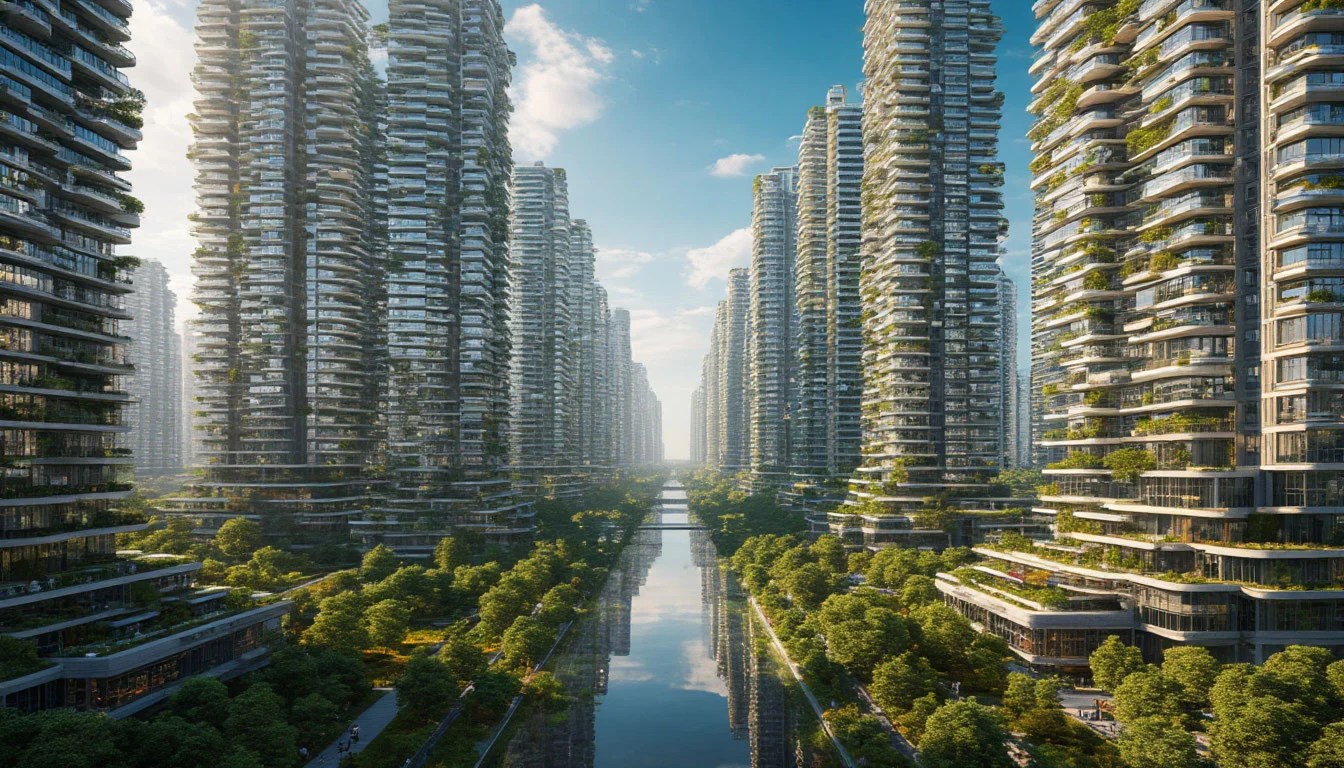

Imagine the future of humanity as it became after centuries of rapid technological progress. Cities were no longer limited to the surface of the Earth. They rose upward, turning into multi-layered structures, like reflections of one another, reaching toward the infinity of the sky.
Homes, parks, streets, and even entire neighborhoods repeated floor after floor, creating the effect of a mirror double. The upper levels of the cities were designed specifically for comfortable living, enjoying nature, and inspiring creative processes. Here were museums of future art, new-generation concert halls, spacious libraries, and galleries that amazed the imagination with their unusual architecture.
The spaces between levels were filled with transparent bridges and aerial corridors connecting different parts of the city. These structures became meeting places for residents of different levels, allowing unique trade relations and cultural exchanges to develop. People could freely move among the layers of their native metropolis, discovering new horizons of opportunity and enriching themselves with a diversity of experience.
In the upper layers of the city, architecture achieved perfection, combining functionality and beauty. Aesthetics became an integral part of every corner; each house was a work of art, adorned with exquisite details and harmonious lines. The walls of buildings were decorated with paintings and graphic art by virtuoso contemporary artists, creating images that inspired millions.
The lower layers retained their role of business activity and everyday bustle, but now they existed harmoniously with the upper levels, complementing each other and ensuring an ideal balance of life. Residents of the lower floors gained access to all the wealth of resources and cultural values that the upper city possessed, while residents of the upper floors enjoyed all the advantages of the modern infrastructure of the lower level.
Thus, this new form of urban environment contributed to the development of economy, science, and art simultaneously, expanding the space for life and creativity. Human civilization ceased to feel a shortage of space and resources, because a huge number of new horizons and development prospects opened before it. Cities became a symbol of the unity of opposites, the embodiment of harmony between art and technology, culture and economy, past and future.
And it was then that humanity realized how far it could advance in its development, witnessing the flourishing of the splendor and diversity of life built thanks to the genius of the human mind and the power of imagination.





Comments (0)