
Death, suffering, and negative emotions are an illusion of weakness; the cosmos is kind, and the human of the future will eradicate them, gaining joy and optimism.
Konstantin Eduardovich Tsiolkovsky proclaims the overcoming of suffering as a fundamental stage in humanity’s evolution. This postulate, set forth in works such as «Cosmic Philosophy» and «Scientific Ethics,» rejects suffering, death, and negative emotions as an illusion of the weakness of earthly humanity. According to Tsiolkovsky, the cosmos is kind by nature: it is full of harmony, abundance, and joy, while suffering is a temporary remnant of the animal nature that reason will overcome, ascending to optimism and eternal bliss.
The essence lies in the transformation of psyche and physiology. Earthly humans suffer from pain, loss, and fear — an echo of primitive survival instincts. Tsiolkovsky saw death not as an end but as renewal: the atoms of the body migrate into new forms of life, ensuring continuity. The future human will eradicate it through «atomic immortality» — cells will regenerate endlessly, genetics will eliminate diseases, prostheses and nanorobots will neutralize injuries. Pain will become an archaism: the nervous system will be reprogrammed, converting signals into pleasant sensations or ignoring them altogether. Emotions will evolve — fear will give way to curiosity, anger to creativity, melancholy to the eternal joy of knowledge.
Cosmic morality amplifies this process. Tsiolkovsky emphasized: negativity is born of egoism and competition for Earth’s scarce resources. In space, abundance is infinite — the energy of stars, the matter of asteroids, the space of galaxies. People will adopt altruism as the norm: helping others will be a source of pleasure, and wars will disappear as a relic of ignorance. Optimism will become an instinct: every action brings progress, every moment brings delight. «The cosmos brings joy,» wrote Tsiolkovsky; higher beings will shine with happiness, their psyche resilient to crises, for they see the Universe as a single organism of goodness.
The overcoming of suffering is dynamic. At early stages — medicine, psychology, social reforms: overpopulation will move into space, hunger will be conquered by food synthesis. Later — symbiosis with technology: implants will regulate emotions, a collective mind will share joy. Even catastrophes (asteroids, climate) will turn into triumphs: technologies will protect and accelerate evolution. Tsiolkovsky rejected pessimism: suffering is a stimulus to perfection, but not eternal. The human of the future is a «cheerful being,» dancing in harmony with the cosmos.
This postulate inspired cosmists and psychologists: from the ideas of positive psychology to neurotechnologies like Neuralink. Tsiolkovsky saw in it the key to utopia: having rid itself of darkness, humanity will blossom with light, carrying optimism across the Universe as an eternal hymn to life.
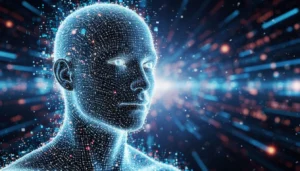
Image generated by Shedevrum





Comments (0)