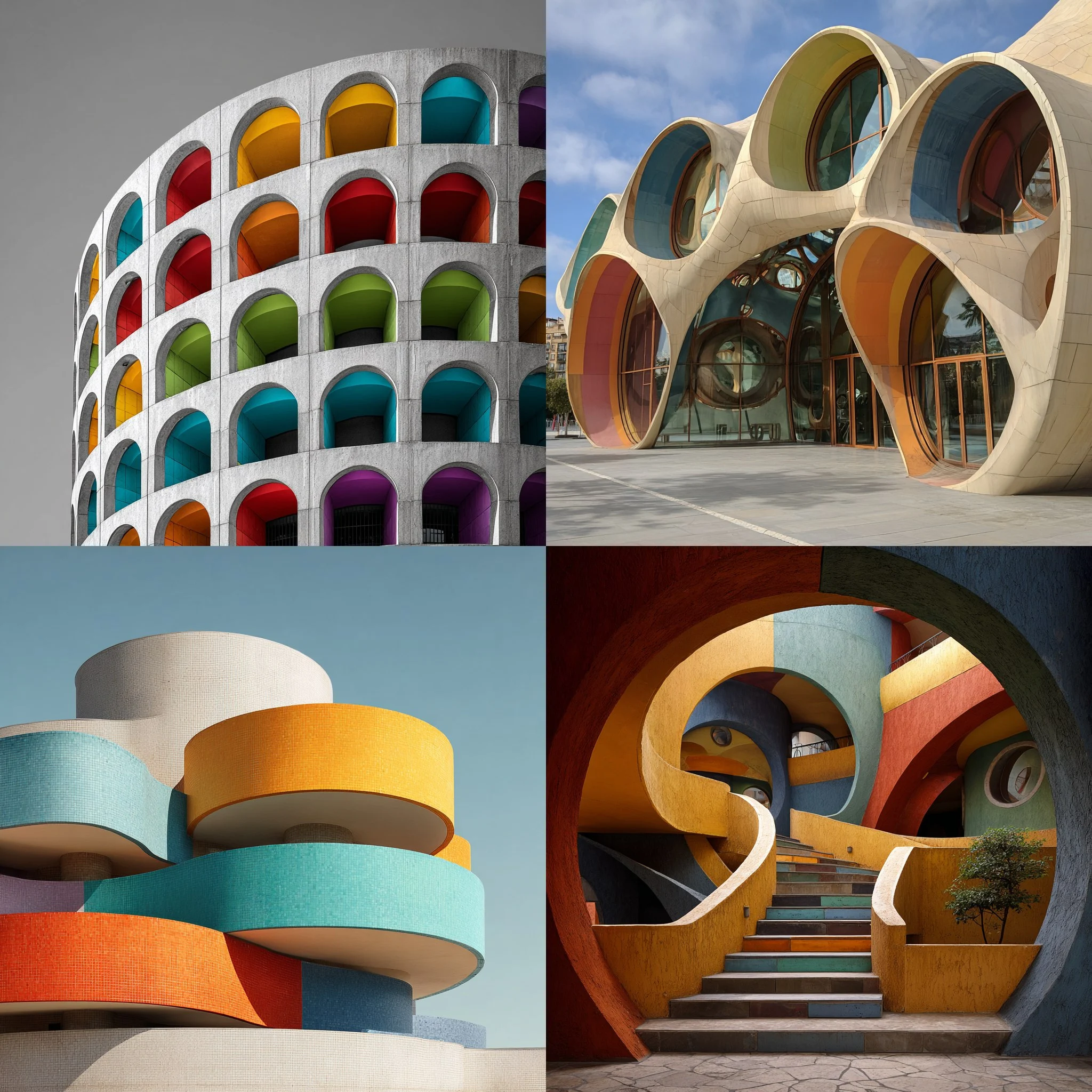

Printing Houses from Molten Sand
In the future, when technical limitations are lifted and there is an energy surplus, printing houses from molten sand becomes a highly precise, fast, and environmentally friendly technology. And the expression “glass house” takes on a new meaning: a magnificent, flawless, beautiful modern home! The best version of this technology looks like this:
Operating principle.
A mobile robotic printer with a self-contained power unit (such as a compact fusion reactor or a highly efficient solar one) obtains ordinary quartz sand on site — whether from the ground or from the desert. In a reactor with induction or plasma heating, the sand turns into a homogeneous melt with precisely controlled viscosity. The material is fed through an actively cooled ceramic nozzle that forms a continuous glass strand.The printer moves on a wheeled or walking platform, and several print heads work simultaneously, erecting walls at a rate of 1–2 floors per day.
Properties and capabilities
The walls are completely glassy, but not fragile: thanks to controlled crystallization in the volume, gradient zones can be created — a viscous core with a transparent or matte surface, and reinforcement happens by itself (glass-reinforced glass). The material is absolutely waterproof, does not burn, does not weather, is resistant to salts and biological damage. If desired, metal oxides or rare-earth elements are added to the melt to obtain any colors, light-transmitting properties, or even photocatalytic self-cleaning.
Architectural freedom
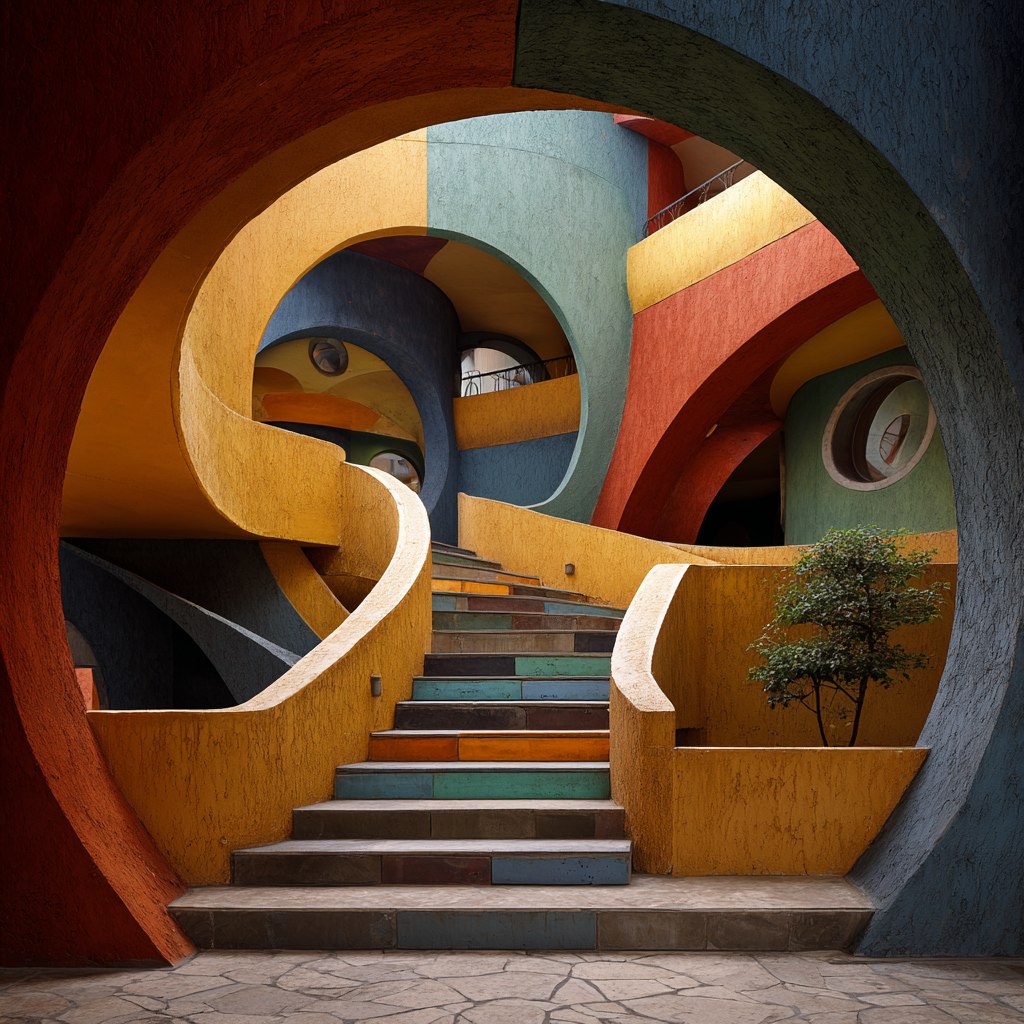
Since printing is done with liquid glass, it is possible to create smooth organic shapes, column-free spaces, built-in furniture, and utility channels right inside the walls. The technology allows printing multilayer walls in a single cycle, with internal voids for communications and insulation, and thermal insulation can be poured in place using foamed glass.
Sustainability and economics
The raw material is any local sand, construction waste, or recycled glass. An endless supply of the simplest raw material! Energy is renewable or surplus from nuclear power plants/fusion reactors. The service life of a glass house is several hundred or even thousands of years, and the material is fully recyclable: it is enough to remelt the walls. Lunar stations are printed from regolith using the same technology!
In this form, printing houses from sand becomes not just an alternative to concrete, but the preferred method of mass construction — from rapidly erected affordable housing to precision architectural masterpieces.








Comments (1)
Потрясающая идея, что стеклянные дома могут быть не хрупкими, а даже прочнее бетона благодаря управляемой кристаллизации — это действительно меняет всё представление о стекле в архитектуре. Интересно, как долго сейчас занимает полный цикл печати дома с инженерными коммуникациями и изоляцией?