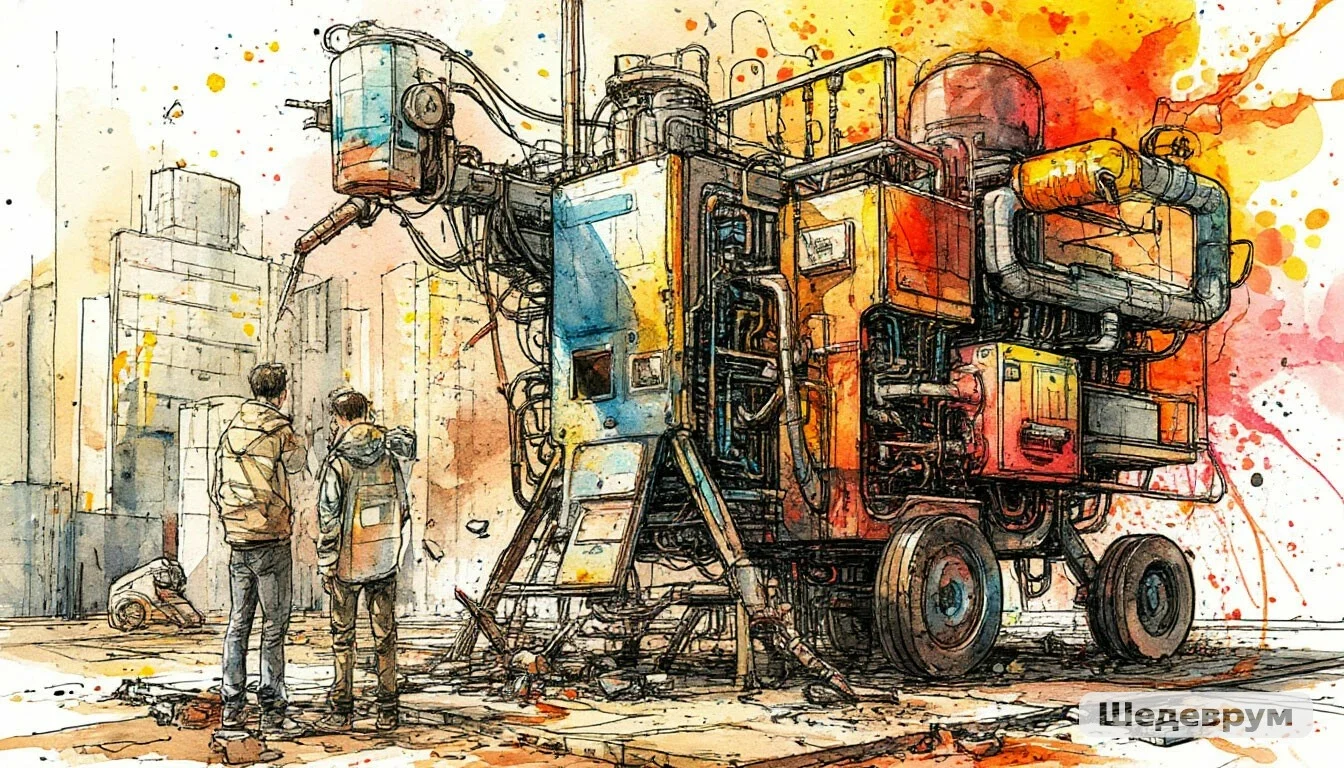

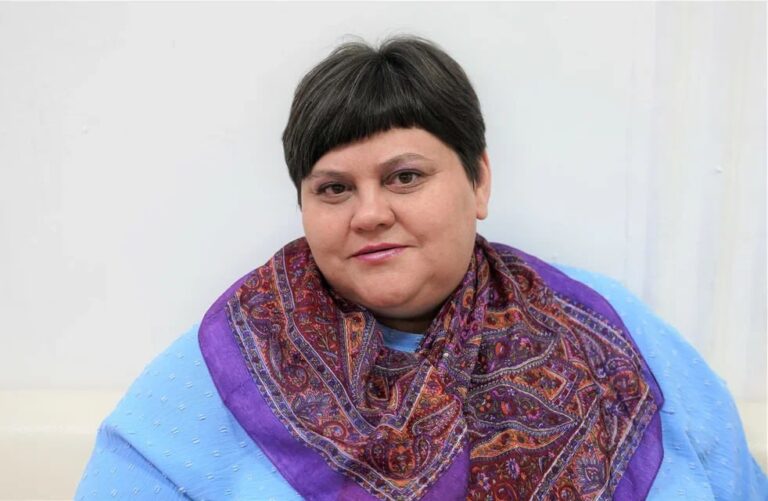
The third postulate of Oksana Ostanina, a science fiction writer, about a positive vision of the future and faith in human reason.
The main danger of the future is not robots, not AI, and not new types of weapons as such, but how humanity will use these tools, what values it will choose, and in what direction it will develop its consciousness. Progress itself is neutral: it can free people from routine and heavy labor, or it can turn them into passive consumers dependent on comfort, endless shopping, and digital “games at the expense of reality.” In this sense, the main threat is not an external technological breakthrough, but an internal spiritual and civilizational failure.
What is most often called the “danger of progress” is in fact the danger of endless consumption, a predatory attitude toward nature and culture, and exchanging deep meanings for immediate gain. Things that have not yet exhausted their useful life are already thrown away for the sake of fashion; the planet is littered with waste; human attention and time are turned into a commodity rather than a resource for self-development. This is what leads to degradation and to that very “self-destruction” Oksana Ostanina speaks of—not so much in a direct physical sense as in a moral and ecological one: humanity burns out, dissolving its values in a stream of momentary pleasures.
No less dangerous is the set of distorted pictures of reality, fakes, aggressive myths, and violence that are artificially implanted into people’s minds through media, social networks, part of political rhetoric, and part of pop culture. This is not only “fear and loathing,” but also a rejection of reflection, of the ability to listen to and understand others, and of the ability to learn from history. If we keep walking in such darkness, a bright future is simply technically impossible: even the most advanced technologies will work to harm, not to benefit.
At the same time, the theme of destructive forces is critically important: modern weapons, especially nuclear ones, and the vectors of global crisis (climate, resources, wars, pandemics) represent a level where a mistake can be irreversible. Yes, wars and disasters have happened before, but the scale of today’s destructive potential is such that Hiroshima and Nagasaki now look like “the first act.” We will not have time to flee from the consequences to another planet, and we will not be able to do so technologically—so all key decisions will have to be made here and now, on Earth, preserving both the planet and human civilization.
Therefore, the third thought about the future is obvious: technical progress needs a strong moral and cultural foundation. If we care about moral education, the development of critical thinking, respect for others and for nature, and if we limit the destructive line in government, the economy, and the media space, then technology will become not a threat but a tool for survival and flourishing. In this vein, the most important thing for the future is not “how quickly we overtake technology,” but “how carefully and responsibly we handle it.”








Comments (1)
Очень ценю, как автор поднимает важность моральных ориентиров в эпоху технологий — это именно то, о чём часто забывают в погоне за инновациями. Интересно, как вы считаете, какие конкретные шаги могут предпринять государство и образовательные институты, чтобы развивать именно эту ответственность?