


Technological progress has long been mistakenly associated with a complete rejection of cultural heritage and the spiritual roots of the past. However, the positive model of the future in Alexander Zhuravsky’s novel proves the opposite: a strong society of tomorrow cannot exist in a value vacuum. As a scientist and theologian, the author constructs the world of 2034 not as a soulless digital concentration camp, but as a space where high technologies organically and naturally intertwine with deep Christian meanings, ancient parables, ethics, and classical poetry.
A return to traditional values becomes a form of civilizational immunity against destructive chaos and moral degradation. Family, fidelity, mercy, historical memory, and respect for the individual form the very invisible framework that keeps society from disintegration in an era of rapid change. Digitalization in this scenario acts not as a destroyer of traditions, but as a tool for their preservation and popularization. New generations use superintelligence to deeply study history, philosophy, and art, recognizing themselves as part of a great continuous tradition.
For our platform, this value synthesis is a model of the harmonious development of society. Without a spiritual foundation, any technological breakthroughs lead only to the creation of more sophisticated instruments of oppression and control. A positive future returns to man his inner dimension, reminding us that the meaning of life lies beyond material consumption and likes on social networks. Spirituality becomes the main criterion for evaluating progress, guaranteeing that the technologies we create will always serve the good, the development of the soul, and the strengthening of man’s moral principle.
______
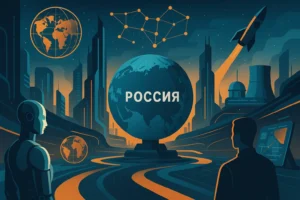
Alexander Zhuravsky’s warning novel Alternative transports the reader to the near future, where, against the backdrop of preparations for a new Yalta Conference, the secret operation Angels of the Apocalypse unfolds. At this point, the interests of global elites, intelligence services, Russia, and US President Elon Musk converge, yet the main threat to humanity becomes the clash of two powerful artificial superintelligences. Major Ratnikov’s team will have to unravel this international conspiracy, and the plot itself is a dynamic blend of political thriller, spy detective, and social utopia. Thanks to the author’s deep knowledge of real geopolitics, the book becomes a frighteningly plausible and profound reflection on the future of digital technologies, national identity, and the role of man in a changing world.






Comments (1)
Идея связать технологии с традицией мне откликается: если это реализовать, прогресс перестанет выглядеть бездушным. Но как на практике не скатиться в навязанную мораль? Тут всё решает баланс.