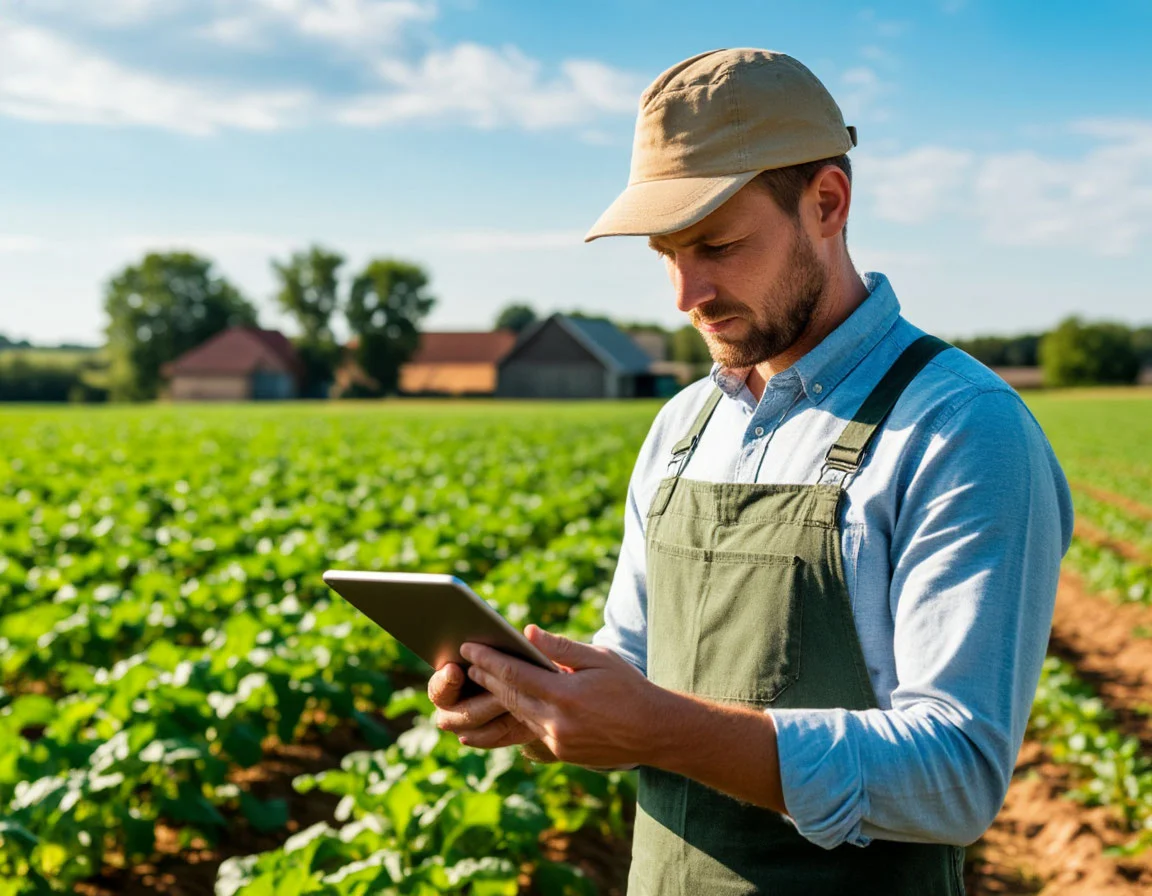
The era of manual labor in the fields had completely ended by the 2120s. Agriculture of 2100-2150 is a high-precision branch of cybernetic life support, where physical human contact with the soil has become an anachronism.
Fields have turned into self-regulating ecosystems managed by distributed artificial intelligence. Sowing, monitoring, targeted application of nutrient cocktails, and plant protection are carried out by synchronized fleets of diverse agricultural robots: from nanoscale drones analyzing the cellular level of each plant to heavy unmanned harvesters that operate around the clock, 24/7/365. AI, relying on data streams from sensors, satellites, and digital twins of the field, makes predictive decisions, optimizing growth at a speed inaccessible to human perception.
The farmer of the Autonomy era is an operator-strategist and biosystem analyst. Their working environment consists of immersive control centers (or their remote holographic counterparts), where the state of the entire enterprise is visualized in real time. Their tasks have shifted from physical labor to managing robot fleet logistics, interpreting complex analytics, strategic planning of crop rotations, and fine-tuning algorithms to specific environmental and market goals.
This leads to a paradoxical outcome: minimizing human labor in the field turns into maximizing human intellect in managing the agro-system. Work becomes not physical but cognitive and creative. The round-the-clock efficiency of machines that need no rest radically increases yields and resource efficiency, reducing losses to zero and minimizing the ecological footprint. The land is cultivated not by hands but by mind.





Comments (0)