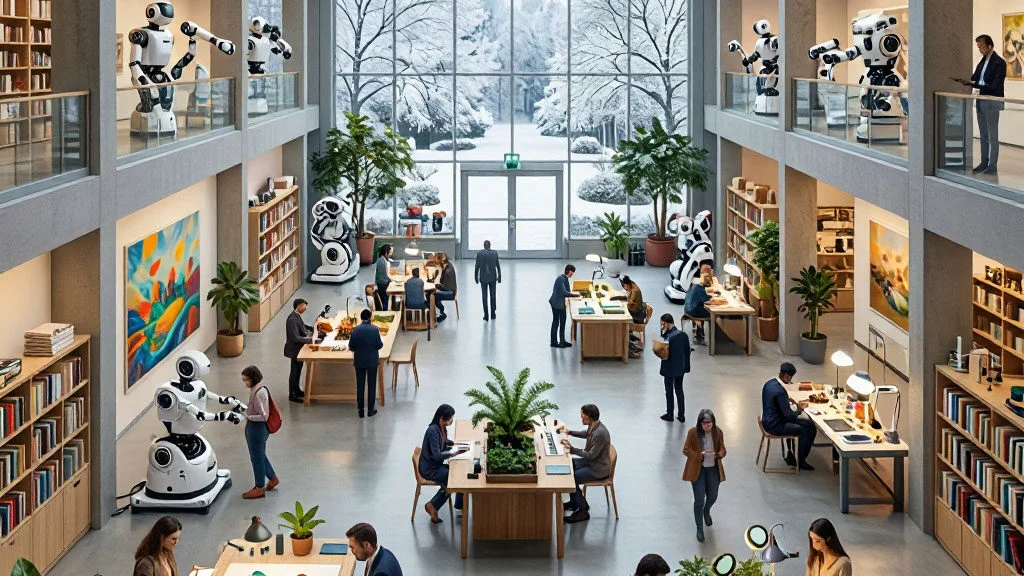


Freeing humanity from exhausting, monotonous labor through total automation is not merely a technological shift; it is a fundamental civilizational upheaval. Throughout history, people have been hostages to the economic struggle for survival. The model of “economic man” (Homo economicus) forced us to spend our best years and our mental and physical energy on routine processes: conveyor-belt production, endless logistics chains, filling out documents, and basic administration. In the coming three decades, artificial intelligence and robotics will fully take on this mechanical burden. Technology will finally occupy its true, organic place—it will become not a replacement for the human spirit but its efficient, tireless servant.
When algorithms take over all everyday and production routine, humanity will gain its scarcest and most colossal resource—time. Returning time to people will change the very structure of our thinking. The basic need to compete harshly for resources for physical survival—which for centuries generated social inequality, envy, and destructive conflicts—will disappear. A society of creation, freed from the slavery of the eight-hour workday spent buying unnecessary things, will redirect the colossal energy released inward.
This release will mark the beginning of humanity’s true history—the era of a new humanitarian renaissance. Instead of the meaningless race of consumption, people will be able to focus on continuous self-improvement, deep scientific inquiry, philosophy, and large-scale creativity that engages our gray matter not for survival but for creating something new. The most important vector of development will be building a lost harmony with nature and, most importantly, the conscious cultivation of love for humanity and empathy. The automation of routine will erase the boundaries between technological progress and spiritual growth, transforming civilization from a machine for producing waste into a space for unlocking boundless human potential.



Comments (1)
Сильная сторона — акцент на высвобождении времени, а не только на производительности, но автор не описывает механизм, по которому эти часы не растворятся в новых KPI. Если реализовывать, стоит начать с одного участка: «Северсталь» на Череповецком комбинате может дать пилотную площадку с данными о рутинных операциях и высвобождаемых часах. Предложил бы собрать рабочую группу с ИТ- и HR-директором и замерить, уходят ли сэкономленные часы на обучение и проекты или превращаются в дополнительную нагрузку.