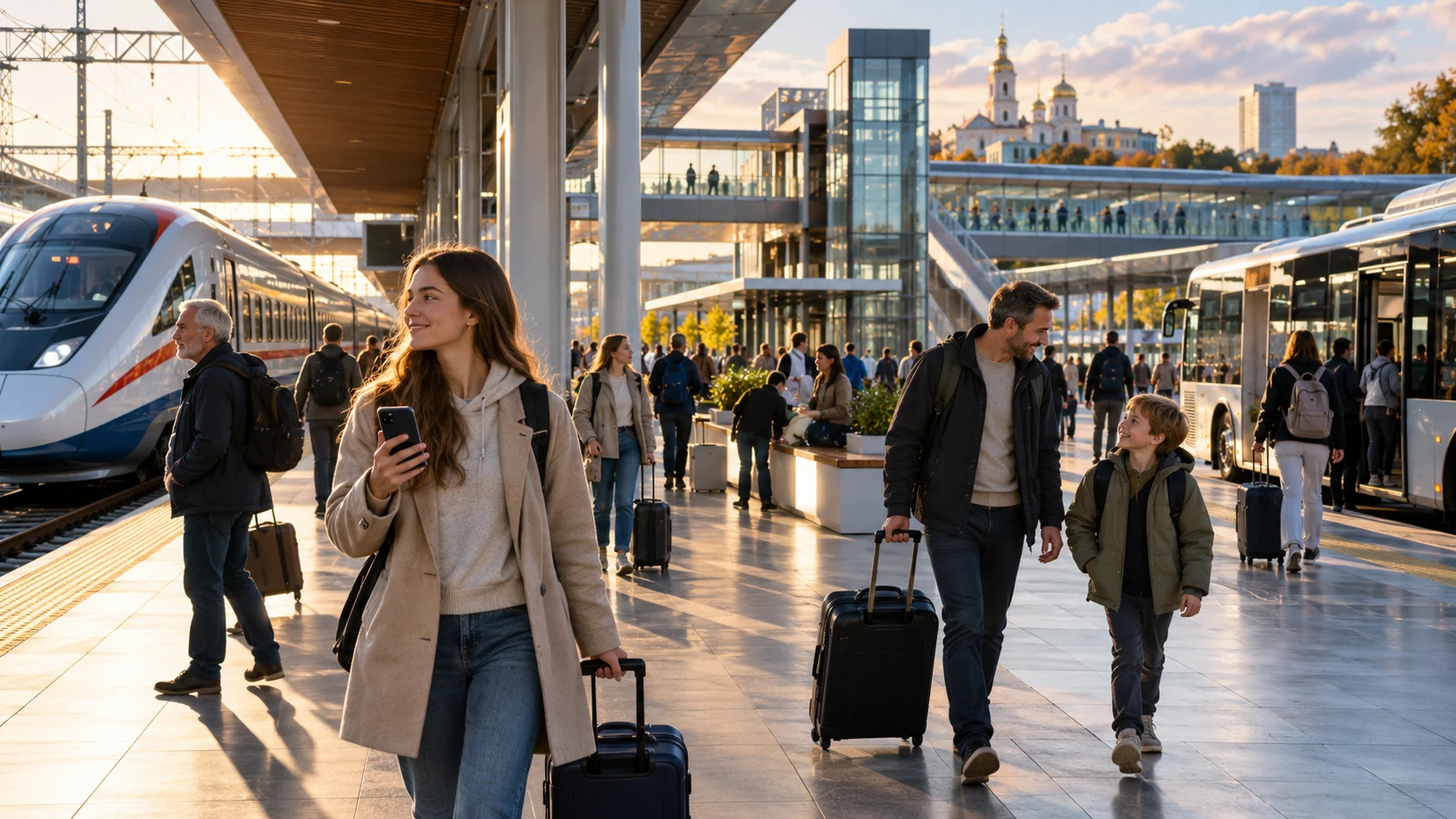



By 2038, a trip from a small Russian city to any major center had become significantly easier. Instead of several tickets, different apps, and unpredictable transfers, a person bought a single travel document for the entire journey—from the local bus to the high-speed train. The system coordinated schedules itself and offered a convenient route by time, price, and accessibility.
When distance stopped limiting opportunities
For a resident of a small town, a trip to an interview, to university, or to the doctor no longer turned into a complicated expedition. Students more often attended educational programs in neighboring regions, families traveled within the country, and older people could plan meetings with loved ones more confidently.
If transport was delayed, the ticket automatically retained the right to the next transfer, and the route was rebuilt without buying new tickets. Passengers were informed about platform changes, elevator accessibility, and transfer time. For those who did not use a smartphone, ticket offices and paper tickets continued to operate.
How the “ticket to the future” came about
The prerequisites existed as early as 2026. The Concept for the Development of Suburban Railway Transport through 2035, approved by the Government of Russia, provided for a transition to a single transport document that would allow travel by several modes of transport with one ticket.
Further changes began with common digital standards for carriers. Then regions began coordinating schedules, introducing guaranteed transfers, and unified refund rules. State support preserved important but low-profit routes, and the upgrading of transport and stations made travel more accessible to passengers with limited mobility.
By 2038, the “ticket to the future” had become a familiar way to get around. Cities received more tourists and new business connections, while residents gained the opportunity to study, work, and relax without changing their place of residence solely because of transport isolation.
What I did
I reported inconvenient transfers and inaccessible routes, took part in regional transport discussions, and proposed solutions for my city. On Futurating, I gathered such proposals into the vision of a connected Russia, where travel accessibility becomes a real condition for equal opportunities.


Comments (2)
Идея с единым билетом мне по душе: если её довести до ума, поездка из нашего городка в большой центр станет простым делом, а не целой историей. Радует, что автор не забыл про кассы и бумажные билеты для тех, кто без смартфона. Интересно, а сколько времени такая система сэкономит обычному пассажиру?
Идея с единым проездным держится не на билете, а на согласовании расписаний и гарантии пересадки — вот где всё ломается. Для пилота я бы позвал «Датапакс»: у них MaaS-платформа и опыт стыковки данных разных перевозчиков в регионах, это даёт аналитику пассажиропотока ещё до вложений в инфраструктуру. Первый шаг — рабочая группа с региональным минтрансом и одним автобусным перевозчиком: взять направление «автобус плюс электричка» и на месяц зафиксировать сквозное расписание с правилом пересадки при опоздании, чтобы считать экономику на живых данных.