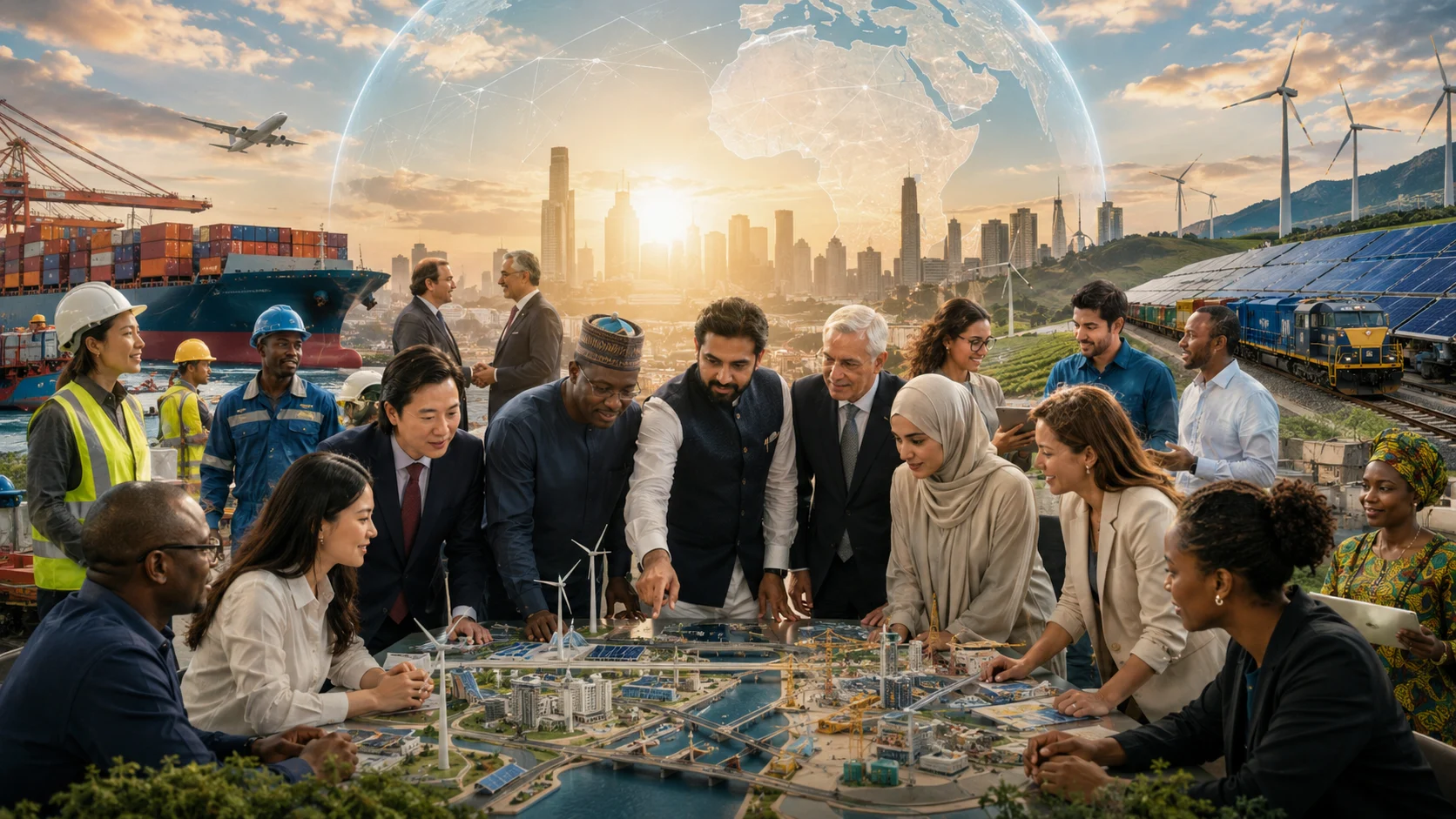
BRICS is becoming a space for projects
By the early 2030s, BRICS had become one of the main engines of the global economy. The grouping was no longer perceived only as a diplomatic format and turned into a space for practical projects: energy, food, transport, medicine, education, digital services, industry and urban development. Russia took on the role in this architecture of a country that was able to connect different markets, cultures and technological schools.
The new growth was built not on sameness but on diversity. BRICS members retained their national interests but found common solutions where cooperation delivered quick and fair results. Russian universities launched joint programs, companies built production chains, regions found counterparts for sectoral tasks, and young specialists took part in international project schools. The world became wider for those who could cooperate without imposition and with respect for their partners.
From diplomacy to an economy of trust
This outcome came about thanks to a clear roadmap. First, business councils, settlement mechanisms and transport corridors were strengthened. Then sectoral programs began: agrotechnologies for food security, energy solutions for growing cities, medical technologies, market data exchange and joint quality standards. After that, platforms for small businesses emerged, where an entrepreneur from a Russian region could find a partner in India, Brazil, China, South Africa, the UAE or another country in the partner circle.
Ordinary people became participants in the great economic turn through education and initiative. They learned languages, cultures and the needs of new markets, created content about Russia, translated instructions, took part in volunteer and student exchanges, and launched small services for international clients. Teachers explained to children that the world is not reduced to a single map of influence. Entrepreneurs looked not only for buyers but also for long-term co-authors.
“Futurating” helped bring this image of the future together as a living public map. On the platform, postulates appeared about BRICS projects, new professions, interregional ties, export niches and cultural dialogue. Users assessed which ideas strengthen Russia’s role, contributed their input, and proposed partners and timelines. In this way, BRICS came to be seen not as a distant abbreviation but as a space where ordinary people, companies and cities were building an economy of trust.





Comments (1)
Я бы ещё добавил к этой картине ещё создание новой справедливой мировой валюты в противовес манипулятивному доллару. Было бы здорово, если бы она была привязана к единице энергии, например, 1 Мундо=1 квт/час.