


The Contact Became Part of the Smartphone
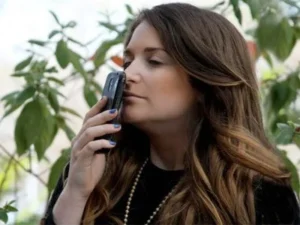
By 2035, paper business cards had become more of a souvenir than a working tool. At business meetings in Russia, people no longer searched their pockets for a card or retyped a number. A person would open a digital business card on their smartphone, show a QR code, or tap their phone against an NFC tag — and the contact would be saved along with their job title, website, and messengers.
The groundwork for the transition emerged earlier. By 2026, the smartphone had already become a common tool for everyday digital activities in Russia. Over 112 million citizens were registered on Gosuslugi, and in Q4 2025, 7 out of 10 residents of the country were using transfers via SBP. People had grown accustomed to using their phones to access services, pay, and share data, so the digital business card became the logical next step.
| Before | Now |
|---|---|
| Contacts on paper | Digital card |
| Manual entry | QR, NFC, or link |
The Business Card Became a Digital Profile
The main change was not in the material but in the logic. A paper card became outdated whenever a job title, phone number, or address changed. A digital business card was updated just once, and recipients would always see the latest version. It gained case studies, a booking calendar, an office map, a call button, and links. The business contact became the gateway to a person’s digital reputation.
| Situation | Result |
|---|---|
| Conference | Contact saved in seconds |
| Job change | No new printing needed |
By the early 2030s, digital business cards in Russia had become a common tool for entrepreneurs, professionals, and companies. People placed them on badges, websites, presentations, and email signatures. Instead of a stack of cards, a person carried one current digital profile that they could change at any time.
Companies initially created digital employee cards, then added QR codes to websites, presentations, and exhibition materials, integrated NFC, and subsequently linked new contacts to a CRM. The card owner decided for themselves what information to display and when to update it.
- Yes, almost completely
- Yes, but paper ones will remain for specific cases
- No, both formats will continue to coexist
- No, paper business cards will remain in demand
My contribution
I created a completely free digital business card service available to everyone. Any person, entrepreneur, or company could create an electronic card, collect contacts and links in one place, and share them from their smartphone. After that, I continued developing the service, simplifying sharing via QR and NFC, adding useful features, and making the digital business card an intuitive tool for Russian users.
The future of business networking arrived when a contact stopped depending on a piece of paper and began to live where it was truly convenient for the person — in their smartphone.






Comments (1)
Идея здравая, но решающим будет не удобство QR-кода, а стандарт обмена контактами и доверие к цифровому профилю. Если визитка не обновляет данные у всех, кто её сохранил, через год получим те же устаревшие контакты, только в телефоне. Для пилота в России логично присмотреться к Сберу: у них есть СБП, база малого бизнеса и СберБизнес, куда визитка могла бы встроиться как готовый профиль компании. Вопрос к автору: предусмотрена ли интеграция с корпоративной CRM и согласие на хранение обновляемых данных? Первым шагом можно предложить пилот на мероприятиях Сбера для предпринимателей — там и обратная связь, и аудитория подходящая.