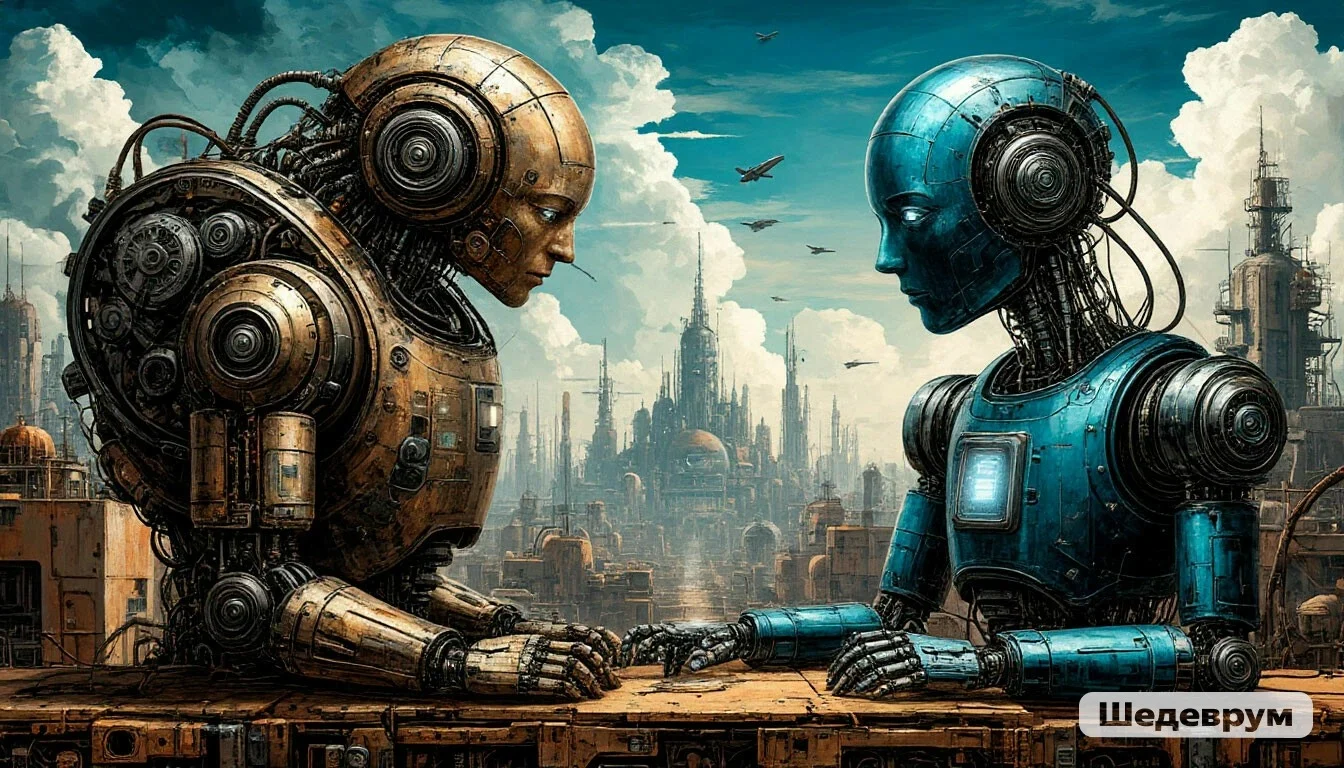

We stand on the threshold of technological singularity in creativity, but this leap only frightens those who see artificial intelligence as a competitor or replacement. In reality, we are witnessing the birth of the greatest creative tandem in human history. Generative AI is ceasing to be a novelty and is becoming a fundamental layer of our reality, much like the personal computer or the internet once did. At the same time, a revolution in visualization is underway: what previously required dozens of hours of rendering on powerful server farms can now be created in minutes in real time. This fundamentally changes the creative process itself, transforming it from a linear path of «idea → lengthy implementation» into a living dialogue with the tool.
The boundaries between real and virtual are blurring. Soon, it will be completely irrelevant to viewers whether a scene was shot on an IMAX camera in Iceland or fully synthesized by a neural network from a textual description. What will matter is not the tool, but the result — the emotion, the story, the aesthetic. The machine takes over all the routine: rendering backgrounds, generating thousands of character variations, simulating light physics. It frees the human mind from the prison of technical constraints. We cease to be operators of complex software and once again become artists, whose main task is to dream and see.
But this union has a clear division of roles. Artificial intelligence is a phenomenal executor, capable of answering any question, solving any given task. However, it can never ask the right question. It can paint a million pictures, but it is unable to understand why to paint them. Strategic vision, empathy for the audience, understanding of cultural context, and the ability to formulate meanings — these are the prerogative of humans. As long as we hold the compass of goal-setting («why?»), machines will remain merely our super-powerful brushes. The future belongs not to those who fear technology, but to those who learn to conduct this complex orchestra of algorithms, channeling their power to realize their unique vision. Our main challenge is not to learn programming, but to preserve humanity.
Generated by AI based on an interview with Ibrahim Islamgirov for the Futureating platform







Comments (3)
Действительно, ценность подлинности никуда не денется, но скорее сместится в область концепции и уникального взгляда автора, а не чистоты технологии съёмки. А границу между стратегией и исполнением я бы провела по критерию ответственности: даже если ИИ научится имитировать вопросы, окончательный выбор смысла и этическая оценка результата останутся за человеком, иначе творчество потеряет авторскую интонацию.
Убедительная метафора: ИИ — кисти, человек — художник. Но спорно, что зрителю станет всё равно на способ создания — подлинность и документальность по-прежнему ценятся. Утверждение, что ИИ никогда не задаст вопрос, остаётся пока лишь постулатом: ничто не мешает алгоритмам научиться имитировать вопрошание. А обещанное освобождение от рутины не учитывает, что современный промптинг часто сам превращается в трудоёмкий перебор. Хотелось бы обсудить, где на ваш взгляд пройдёт реальная граница между стратегией и исполнением?
Автор справедливо подчёркивает, что истинная ценность человеко-машинного тандема не в скорости генерации картинок, а в постановке задач — именно «зачем?» остаётся за человеком. Однако для реального внедрения такого подхода в индустрии одного технологического прорыва мало: нужны методики, превращающие работу с нейросетями в осмысленную режиссуру, а не в слепой перебор вариантов. Здесь интересным партнёром мог бы выступить Яндекс с его экосистемой YandexGPT и сервисами вроде Шедеврума — у компании есть и инфраструктура для генерации контента, и пользовательские данные, и опыт встраивания ИИ в продукты для массового творчества. Чтобы проверить идею осознанного «дирижирования алгоритмами», стоит обратиться в исследовательскую группу Яндекс по генеративным моделям с предложением пилота: разработать интерфейс, где художник управляет не промптами, а смысловыми слоями (эмоция, жанр, контекст) — и замерить, меняет ли это качество итогового результата.