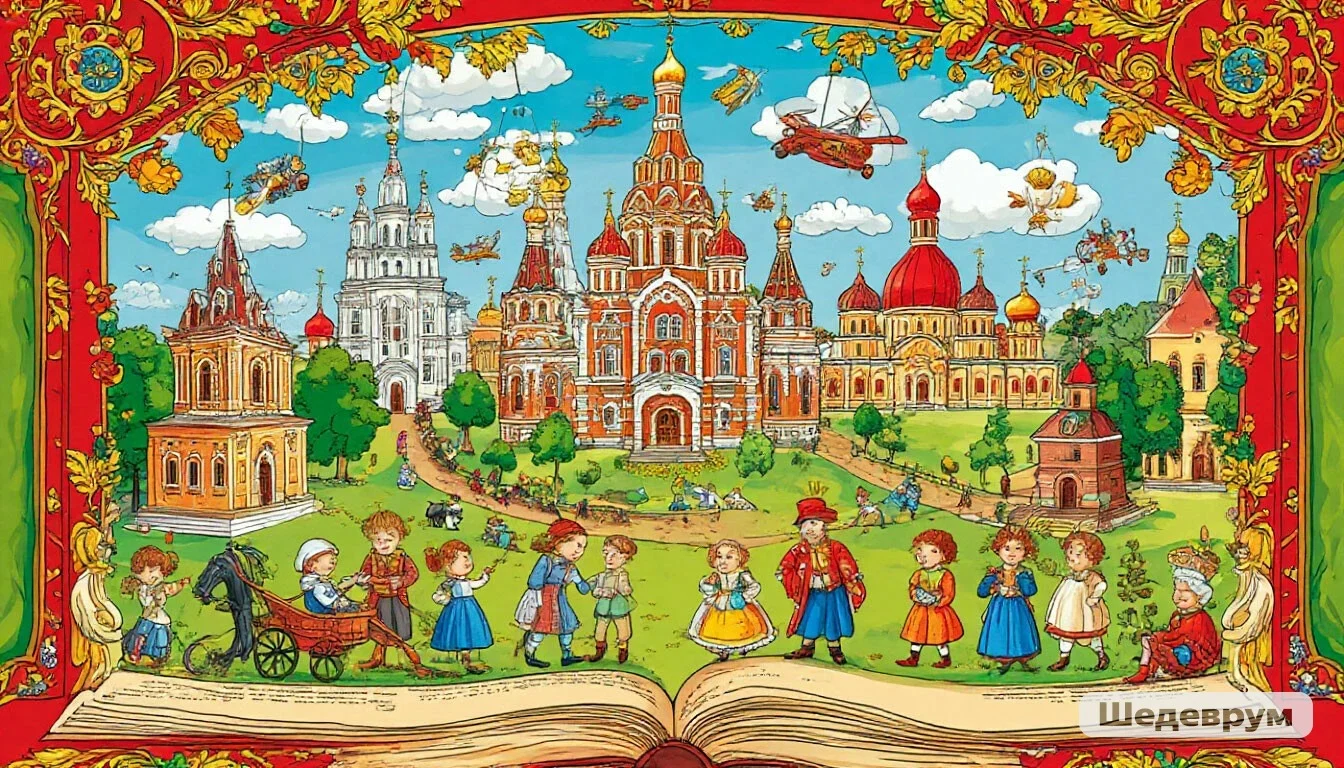
Irina Sheibak is a well-known Russian children’s author. We have analyzed her speeches using a neural network: we offer you an extensive text by an outstanding writer about the future and shaping its image for the young generation.
In an era of value relativism and semantic blurriness, children’s books lose the right to take the position of a detached, doubting observer. They must act as an infallible navigational instrument—a compass that clearly points the way to a life-affirming finale or opens up a boundless creative horizon. Literature for children has no moral right to leave an unformed soul in a state of existential dead end, hopelessness, or total doubt. Of course, the plot can be dramatic, full of harsh trials and tragic losses, but the final chord of the work must always carry light, hope, and an unshakable faith in the triumph of justice. A happy ending or an open horizon calling to action is not a simplification of reality or a saccharine «happy ending» for momentary comfort. It is a fundamental psychological need of a developing personality, which for healthy growth requires confidence that the world is rationally ordered and that good ultimately prevails. When a book leaves the ending ambiguous or pessimistic, it signals to the child the meaninglessness of struggle and the fragility of human values. Conversely, inspiring literature forms a stable developmental vector, conveying that any difficulties are surmountable if you stay true to your principles. Clear landmarks embedded in the narrative structure help the child cope with their own fears and anxieties. A book should provide answers, not multiply doubts; it is meant to light beacons, not thicken the fog around an already difficult process of growing up. The author’s confidence in the rightness of their hero is transmitted to the reader, becoming an internal psychological resource. Thanks to this approach, when closing the last page, the child feels a surge of energy and readiness to move forward, firmly knowing where right is and where left is, where creation is and where destruction is.
Read the interview with Irina Sheibak on our platform!
Comments (1)
Идея о том, что детская книга должна быть чётким навигатором, а не пространством для релятивизма, откликается запросу на формирование устойчивых ценностей. Однако реализовать это можно только через конкретные издательские программы. Для апробации такого подхода стоит связаться с редакцией «Росмэн» — у них есть производственная база, опыт работы с возрастными линейками и потребность в сериях с прозрачной моральной структурой. Следующий шаг — предложить пилотную серию из трёх книг, где каждый финал проходит экспертизу детского психолога на предмет «маяка надежды», а сюжетные испытания обязательно уравновешиваются ясным жизнеутверждающим разрешением.