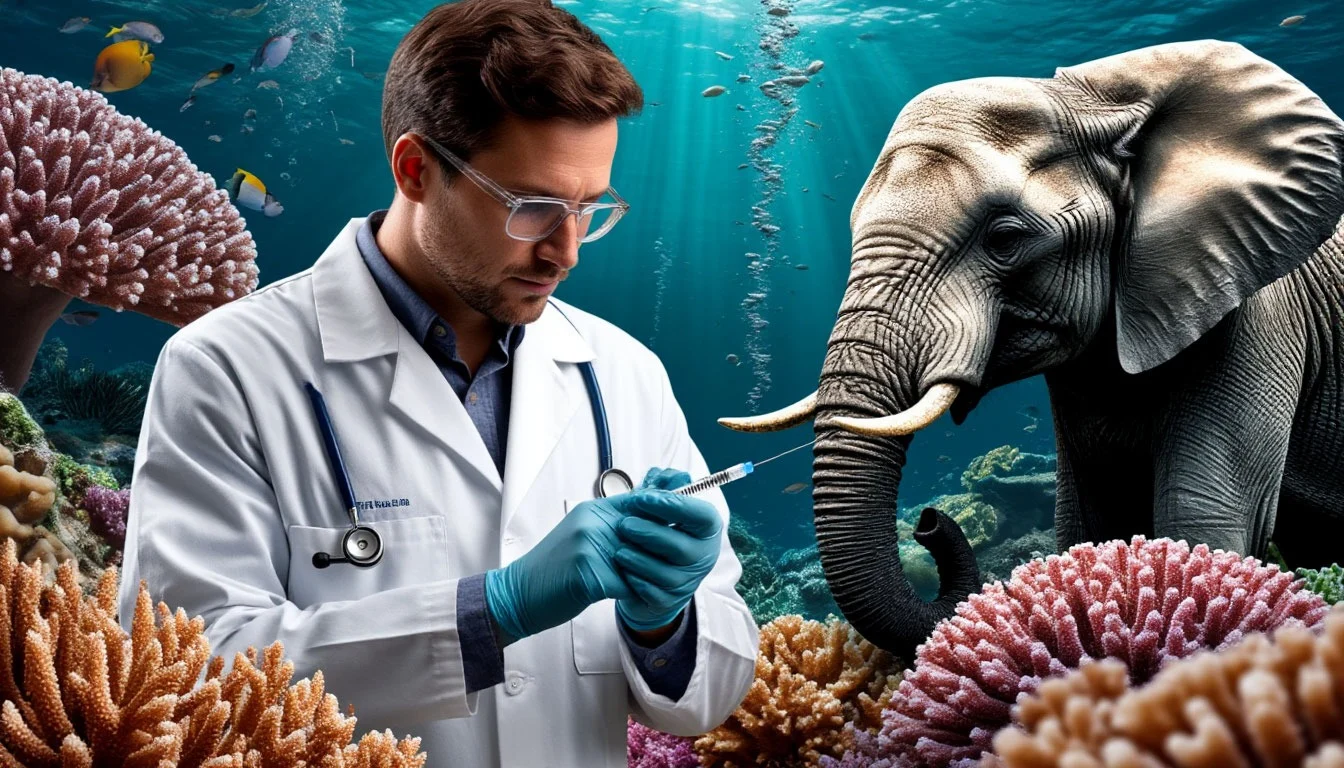
In the past century, the role of the veterinarian underwent radical changes. He ceased to be merely a doctor for domestic or individual wild animals and became a key figure in global ecosystem management. At that time, his task was no longer to treat consequences but to prevent ecological catastrophes at the genetic level, which made him a true architect of biodiversity.
The scientific basis of this transformation was synthetic biology. Instead of capturing and treating each individual, specialists gained the ability to carry out the so-called “gene vaccination” of entire wild populations. This became possible thanks to the creation of safe viral vectors — natural “couriers” capable of delivering target genes into the organisms of many animals or even plants in their natural habitats.
This approach made it possible to solve problems that previously seemed insurmountable.
— Saving coral reefs. Instead of trying to create ideal conditions in the ocean, ecological veterinarians introduced heat-resistance genes into the genome of coral polyps. Spreading across the reef, modified corals became immune to rising water temperatures, which halted the process of mass bleaching and reef death.
— Protection of keystone species. For elephants suffering from a deadly herpesvirus, a genetic modification was developed that made their immune system invulnerable to this disease. The viral vector, spreading within the population, “vaccinated” animals at the genetic level, preventing the death of young and preserving the stability of the species.
— Combating invasive species. Synthetic biology offered humane methods of control. For example, a genetic modification could be introduced into a pest population that made their offspring non-viable or shifted the sex ratio, which over time led to the natural extinction of the species without the use of poisons and traps.
The veterinarian of that era was no longer just a healer, but a strategist and engineer of living nature. He worked not with an individual patient, but with the biosphere as a whole, using the most advanced technologies to maintain the fragile balance of life on the planet. His scalpel was the genomic editor, and his operating room was the entire Earth.



Comments (1)
Фантастика, как ветеринария вышла на уровень управления экосистемами! А какие этические рамки существуют для таких масштабных генетических модификаций в дикой природе?