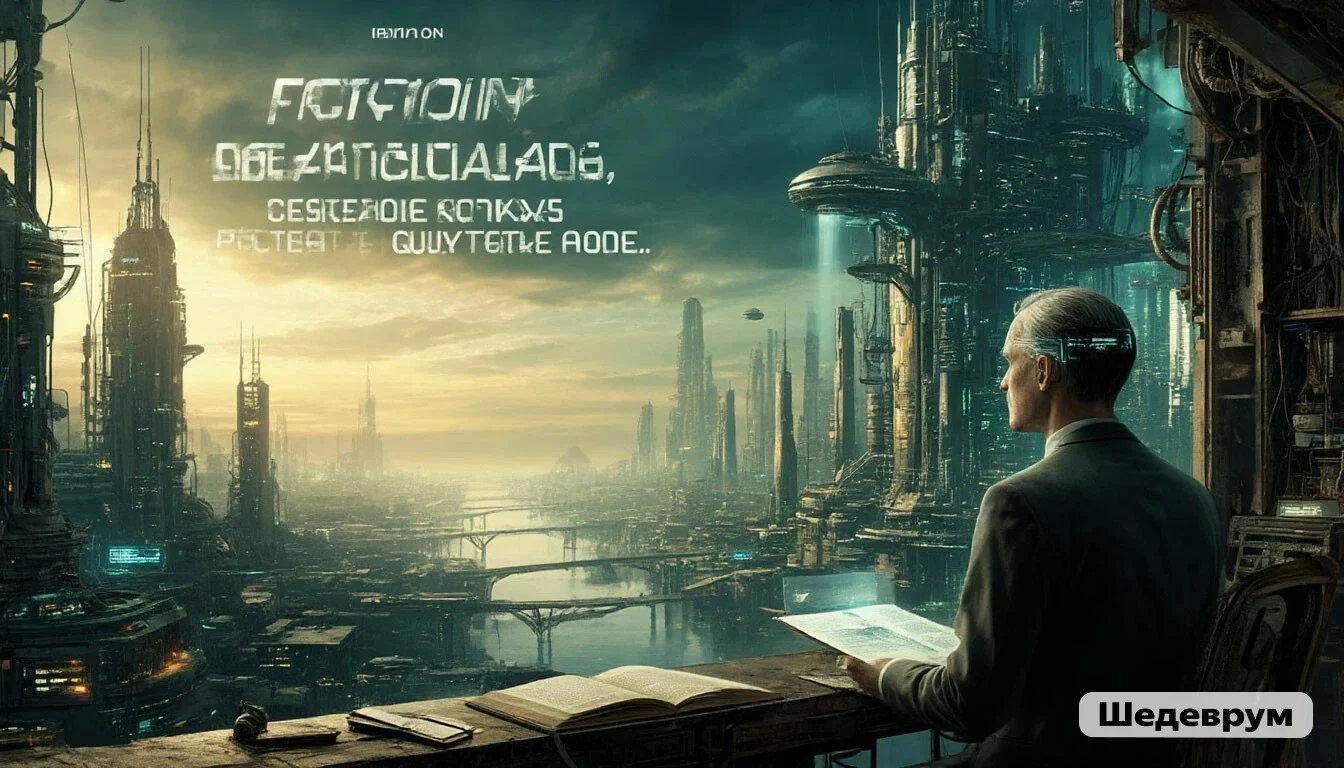

Science fiction writer Maxim Lykov — about science fiction and hope.
Science fiction is traditionally perceived as a warning genre: it models future threats, makes abstract fears tangible, and thereby helps society prepare for challenges. However, its role is not limited to alarmism. An equally important function of science fiction is the construction of hope, the creation of positive images of the future in which a person not only survives but also gains new meanings and opportunities.
When a science fiction writer models worlds with advanced artificial intelligence, new forms of communication, or an altered human nature, he does not simply frighten the reader with dystopia. He offers an alternative: he shows how technology can serve humanistic goals, how society can adapt to change while preserving humanity. This manifests the author’s creative responsibility — not to impose artificial morality, but to explore the origins of new human qualities born at the intersection of biology and technology.
Science fiction becomes a “laboratory” of the future, where not only technical but also ethical hypotheses are tested. It allows us to imagine worlds in which justice, solidarity, and personal development become achievable even in the most difficult conditions. Such works inspire the search for solutions here and now, and give hope that humanity is capable of overcoming crises and reaching a new level of development.
In an era of global change, the need for such stories only grows. People seek not only warnings about risks but also images of a creative future. Science fiction responds to this demand, forming in the reader the belief that even in the face of uncertainty, a person can preserve dignity and build a better world.





Comments (1)
Автор справедливо отмечает, что фантастика — не только предупреждение, но и инструмент конструирования надежды. Для реализации такого подхода на практике можно обратиться к опыту «Яндекса», который уже занимается этическими вопросами ИИ и имеет образовательные инициативы. Эта компания могла бы предоставить технологическую базу и экспертизу для совместных воркшопов фантастов и инженеров по созданию позитивных сценариев развития человека и ИИ. В качестве следующего шага стоило бы связаться с департаментом этики искусственного интеллекта «Яндекса» и предложить пилотную сессию по проектированию образов будущего, где технологии служат гуманистическим целям.