
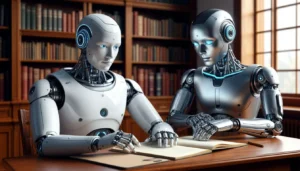
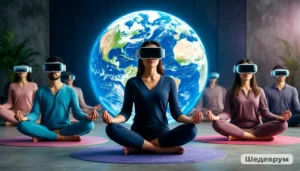
School of the future must take a revolutionary step: recognize that its boundaries are no longer limited to the physical building. The reality is that a modern child lives simultaneously in two worlds, and the school is responsible for both. The classroom is merely a foothold, while the main battle for minds unfolds in the global network. To survive and maintain mental health in the era of deepfakes, info-gypsies, and algorithmic influence, a person needs strong mental immunity. And this protection must be formed systematically, starting from the earliest grades, embedding digital hygiene into the very fabric of school education.
This means a radical change in curricula. Along with physics and literature, mandatory subjects on media analysis, data work, and recognition of manipulations must appear. Children need to be taught what previously only professional journalists and intelligence officers learned: how to get to the original source of information, deconstruct propaganda messages, distinguish scientific research from popular blogs, and understand the true goals of targeted advertising. A math lesson should include analysis of statistics in the news, and a social studies lesson should analyze how social networks shape the political agenda. The child must once and for all learn the axiom: any information, regardless of the beauty of the packaging or the authority of the source, requires verification.
However, building such an «immune system» is impossible through methods of drill and blind obedience. An attempt to protect a child from manipulation by imposing a single correct point of view is itself the highest form of manipulation. True resilience is born from freedom of thought. The school must stop being a factory for producing executors of instructions and become a workshop for cultivating researchers. It is important to stimulate not memorization of facts, but the ability to ask uncomfortable questions, see logical contradictions, compare different positions, and argue one’s opinion. The goal of education is not to fill the head with knowledge, but to teach the brain to work: to doubt, analyze, and synthesize new things.
Only such a school, which teaches not what to think, but how to think, is capable of releasing into the world a generation immune to any attempts of external control over consciousness. A graduate of such a school will possess the main treasure — the freedom of their own mind.
Based on an interview with Daria Georgiadi for the Futurating platform






Comments (2)
Автор предлагает не просто залатать дыры, а закалить сам металл, из которого отлито сознание ребенка. Если такую идею реализовать, школа станет не наковальней готовых истин, а кузницей инструментов для самостоятельной ковки реальности. Выпускник, прошедший такую закалку, сможет видеть око шторма в любом информационном урагане — это и есть истинная свобода. Но для такого рывка потребуется ломка старых шаблонов и смелость признать, что важнее не передача знаний, а обучение самому процессу мышления.
Сильная сторона предложения — не просто введение отдельного урока «цифровой гигиены», а встраивание навыков критического мышления в существующие предметы, от математики до обществознания. Если этот подход реализовывать, логичной площадкой для пилота могла бы стать образовательная платформа «Яндекс Учебник»: у них уже есть инфраструктура для адаптивных заданий, огромная база школ и опыт интеграции в обычные уроки. Технологически они могли бы создать модули с интерактивными кейсами по распознаванию статистических манипуляций и дипфейков, а также предоставить данные о типичных ошибках учеников для настройки алгоритмов. Практический следующий шаг — инициировать рабочую группу при одном из ведущих педагогических вузов, например при МГПУ, чтобы разработать методические материалы и запустить узкий пилот: например, встроить в курс математики для 7-го класса задание на анализ графика из реальной новости, а не абстрактной задачи.