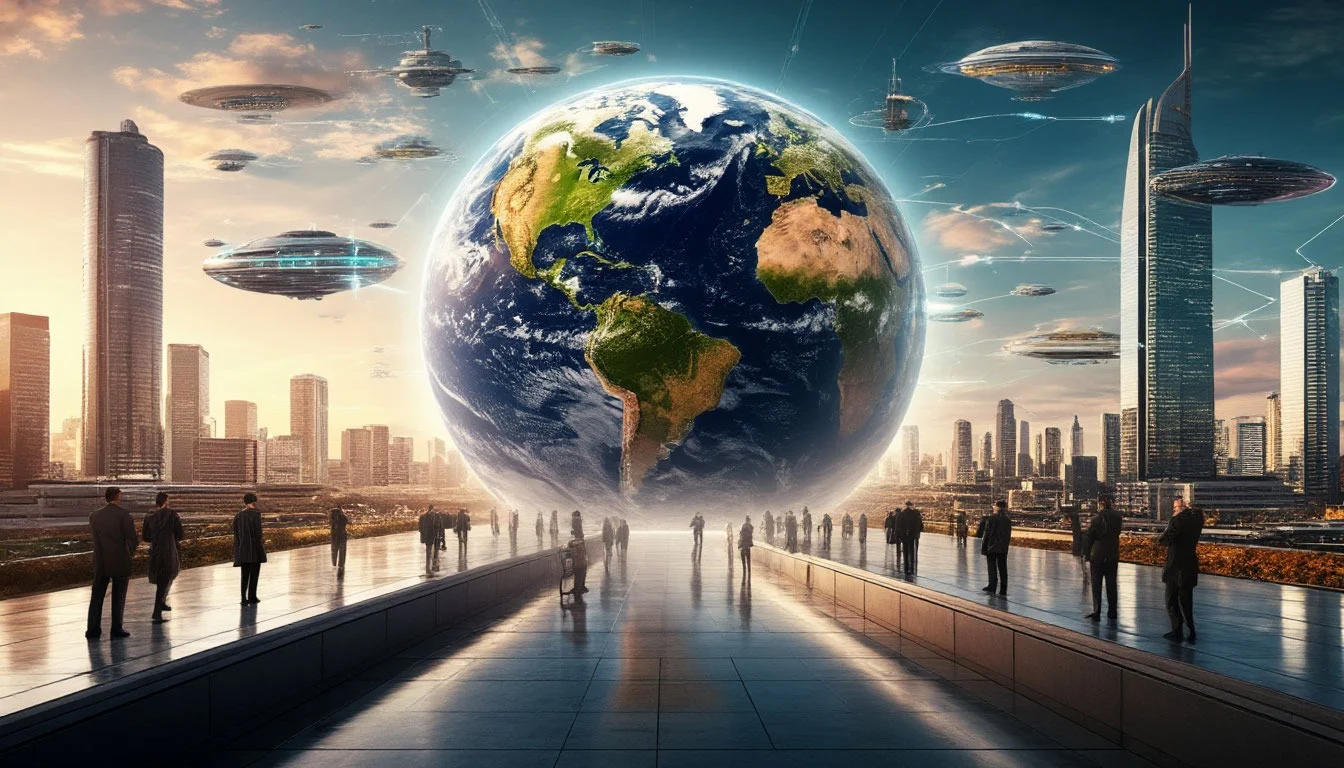
By the middle of the 21st century, the world faced one of the most significant and, at first glance, incredible social transformations—global unification of visa regimes. What seemed like a utopia just a few decades ago has become everyday reality: for the vast majority of the planet’s citizens, international borders for ordinary tourist, business, and cultural trips have become a mere formality. The world, once divided by visa barriers, queues at consulates, and stacks of documents, has gained unprecedented mobility. People have gained the ability to move freely between continents, giving a tremendous boost to the global economy, science, and cultural exchange.
However, behind this facade of openness and unity lies one of the most intriguing mysteries of modern history. Historians and political scientists admit that the process of achieving this consensus itself is described incompletely and fragmentarily. How exactly was it possible to reconcile the very different, sometimes diametrically opposed, political, economic, and cultural interests of hundreds of sovereign states? Official chronicles speak of a series of multilateral summits, breakthrough economic agreements, and the formation of supranational migration management bodies. But these dry facts do not explain the depth of the changes that have taken place.
Many researchers agree that the catalyst for the process was not so much political compromise as a technological breakthrough. By mid-century, global identification systems based on biometrics, blockchain, and artificial intelligence had achieved absolute reliability. A traveler’s identity became their universal digital passport, impossible to forge or steal. The risks of illegal migration, terrorism, and crime were reduced to a statistical minimum thanks to predictive analytics. Security systems learned to identify potential threats not at the border, but long before a person set off, analyzing their digital footprint and behavioral patterns. Under such conditions, traditional visa barriers lost their meaning, becoming an archaic and economically disadvantageous anachronism.
Nevertheless, debates in the scientific community do not subside. Some historians argue that real unification was achieved not so much through persuasion, but under pressure from new global economic blocs. Countries that maintained strict visa regimes found themselves isolated, cut off from key investment flows and tourist markets. Their choice was simple: either open up and become part of a unified world, or find themselves on its periphery. Others suggest the existence of informal agreements between leading powers, the details of which are still shrouded in secrecy.
Be that as it may, the result was staggering. The world has become truly global. But the question of how exactly humanity managed to come to an agreement and overcome centuries-old barriers of mistrust remains open. This achievement has become a symbol of a new era, but its true history is a mystery that future generations have yet to unravel. We live in a world without borders for travel, but the history of the creation of this world is still being written.










Comments (2)
Интересная концепция, но как технологии стали главным двигателем процесса, а не политическая воля? Круто представить такую мобильность, но жаль не раскрыли детали этого прорыва подробнее.
Очень здорово показано, как технологии превратили границы в формальность. Неужели никаких стран не осталось, которые пытаются сохранить хоть какие-то визовые ограничения?