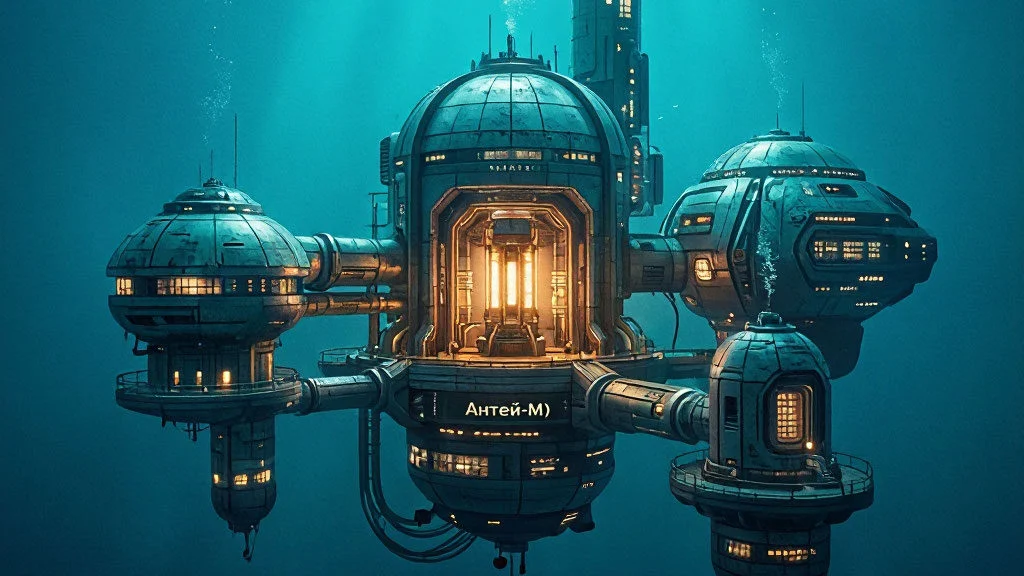


At the deep-water slipways of Severodvinsk, the most ambitious engineering project of the second half of the 21st century was completed — the construction and successful launch of Hydropolis-1. This is the first fully autonomous inhabited platform-city in human history, deployed on the seabed of the Barents Sea. The project marked the definitive transition from surface development of the Arctic to its total colonization at great depths.
The heart of the underwater metropolis was the compact commercial thermonuclear reactor Antey-M. Its capacity is enough not only to maintain life support for 150 specialists working at the station on a rotational basis, but also to provide uninterrupted power to heavy drilling equipment. Unlike old nuclear submarines, Hydropolis-1 is a stationary, modular structure made of ultra-strong graphene-titanium composite. It is capable of withstanding the colossal pressure of the ocean water column and operating without drydocking for more than forty years.
The main technological feature of the platform-city is its absolute integration with unmanned robotic systems. Hydropolis-1 serves as a mother docking station for hundreds of Triton-type underwater UAVs. These autonomous drones, resembling giant manta rays, continuously patrol the perimeter within a 50-kilometer radius. They conduct continuous three-dimensional scanning of tectonic faults, monitor the integrity of deep-water pipelines, and carry out fully automated extraction of rare earth metals and gas hydrates from the deep wells of the flowline without human presence in hazardous zones.
The launch of Hydropolis-1 forever changed the status of Severodvinsk. The city that once built classic submarines has turned into the main planetary forge of hydropolises. With the retreat of the ice and the beginning of the global redistribution of ocean resources, the technologies created here ensured absolute economic and technological dominance in the planet’s polar sector.


Comments (4)
Поэтапность логично начать с малого демонстратора на шельфе: сначала энергетика и материалы в натурных условиях, затем флот дронов, и только потом добыча. Плюс независимый мониторинг дна и открытые данные — это снимет часть возражений.
Практичнее разбить проект на этапы: сначала наземный стенд с отводом тепла, затем мелководный полигон и только потом глубина. На старте реактор можно заменить проверенным источником, а ресурс композита подтверждать образцами.
Автор предлагает убедительный образ будущего, и сама ставка на модульную подводную инфраструктуру выглядит продуманной: она действительно могла бы снизить риски для людей, перенося тяжёлые операции на дроны. Но если говорить о реализуемости, первый вопрос — энергетика: компактный термоядерный реактор «Антей-М» пока остаётся скорее желаемой, чем подтверждённой технологией, и для подводной станции нужно решить не только запуск, но и отвод тепла, радиационную защиту и обслуживание без докования. Второй момент — сорокалетний ресурс графено-титанового корпуса: в солёной воде при высоком давлении и циклических нагрузках коррозия и усталость материалов требуют гораздо более детальной доказательной базы, чем заявлено. Третий — экономика и экология: автоматизированная добыча редкоземельных металлов и газогидратов в радиусе 50 километров может дать эффект, но без оценки воздействия на донные экосистемы и правового режима в Арктике такой проект рискует столкнуться с сопротивлением. При этом ценным является сам ход мысли: автор связывает город, флот беспилотников и ресурсную повестку в единую систему, и это делает идею интересной для обсуждения. Уважаю смелость такого проектирования; хотелось бы услышать, как вы видите поэтапную проверку этих решений — от наземных прототипов до глубоководного пилота?
Если такой сценарий реализовывать, первым партнёром логично рассматривать Севмаш: в Северодвинске есть стапельная инфраструктура, опыт крупноблочного судостроения и кадры по подводным корпусам. Это дало бы пилотную площадку для отработки стыковки модулей и испытаний несущего отсека. Практический шаг — собрать с инженерами Севмаша и профильным КБ рабочую группу и посчитать эскиз одного обитаемого модуля под внешнее давление, чтобы оценить требования к композиту и энергетике.