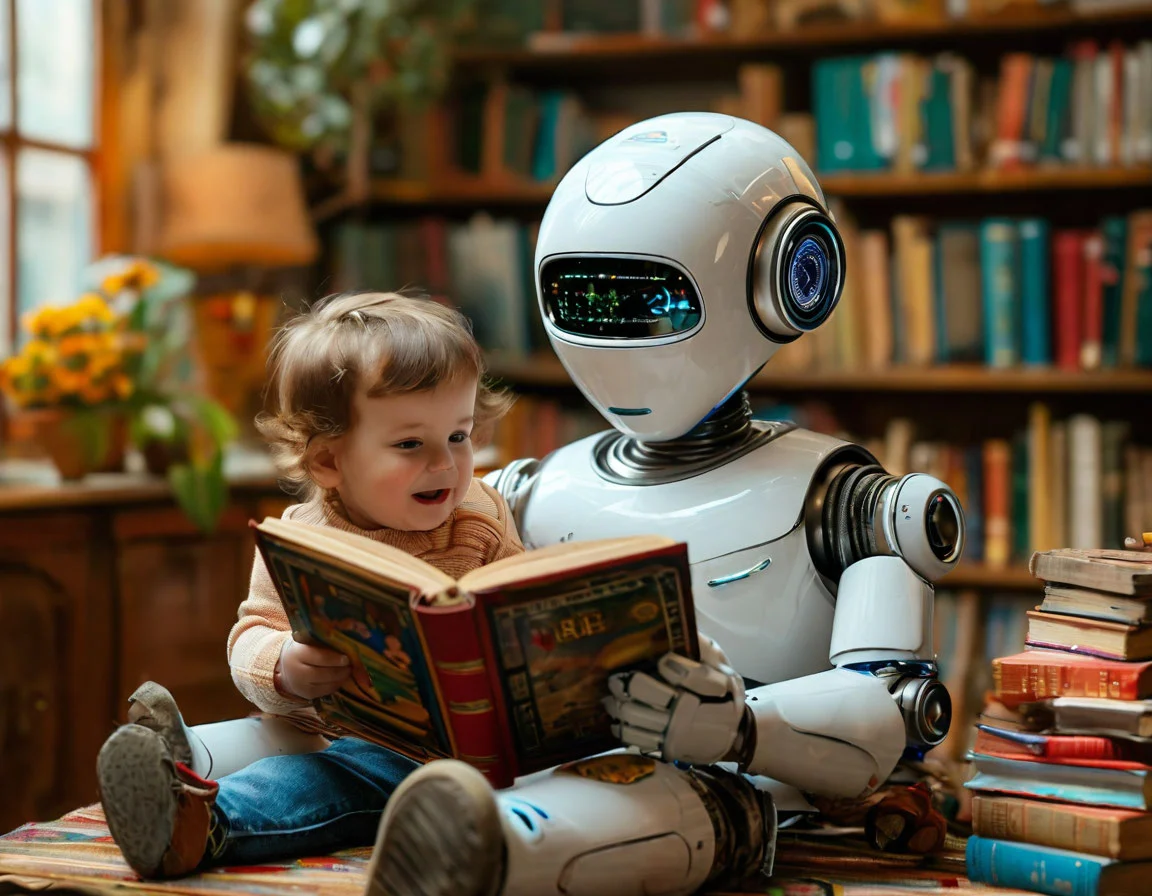
By 2125, child-rearing will radically change under the influence of artificial intelligence, neurotechnology and genetics. Parents will be able to “tune” a child’s cognitive abilities before birth, and personalized AI assistants will accompany their development from the first days.
Education will become hybrid: children will learn in virtual worlds, directly connecting to a global knowledge network via neurointerfaces. Memorizing information will take a back seat, with the main focus on developing critical thinking, empathy and creativity.
The role of parents will change: technology will take over many parenting functions, but emotional closeness will remain at the core. Artificial intelligence may be an ideal mentor, but only a human can teach love, morality and intuition.
New forms of family are also possible: children born in laboratories without biological parents, or communities where child-rearing is collective. The ethics of such changes will be a key challenge.
Despite technological progress, parenting will remain an art – the ability to guide, support and inspire.
As a personal contribution, I plan to buy an AI assistant to help raise and develop my future children.



Comments (0)