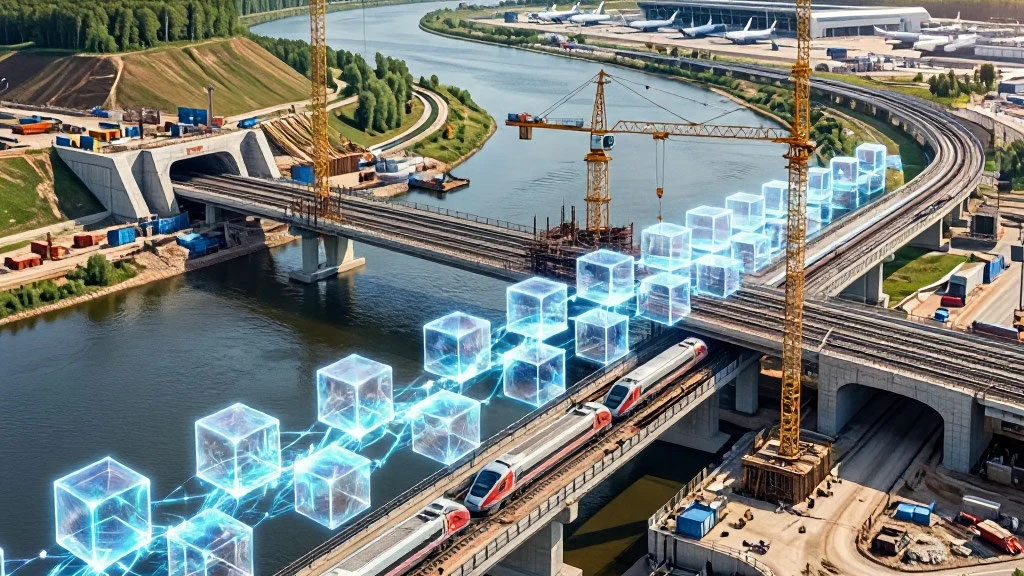

Large-scale infrastructure construction: railways and highways, bridges, tunnels, airports, required colossal financing in the tens of trillions of rubles.
Russia, with its inherent organization, systematic approach, and control, brilliantly coped with the risk of inflation, not allowing the national currency to depreciate, but on the contrary, only strengthening it.
A clear mechanism of targeted emission was created in the country, which was tied to the creation of real assets. Funds went strictly to the implementation of projects. They were all marked and controlled using blockchain. The spending of each digital ruble was traced along the entire chain of expenditures. Misuse of funds was completely eliminated!
Funds were issued and credited to special accounts and spent from them only on payment for steel, concrete, and labor of builders, and did not enter free circulation. Until the moment of spending these funds, they did not exist for the economy, as it were. They entered circulation simultaneously with the creation of real goods and assets.
Given the multiplier effect, which consisted in the fact that every ruble invested in infrastructure created 2–3 rubles of added value in related industries (metallurgy, cement industry, mechanical engineering), it turned out that the commodity mass grew significantly faster than the money supply. This is a factor of deflation!
The built roads and other infrastructure reduced logistics costs and caused another powerful deflationary effect, far outweighing the risks of inflation.
Prices for all goods and services began to decline, and the incomes of the population began to grow.





Comments (0)