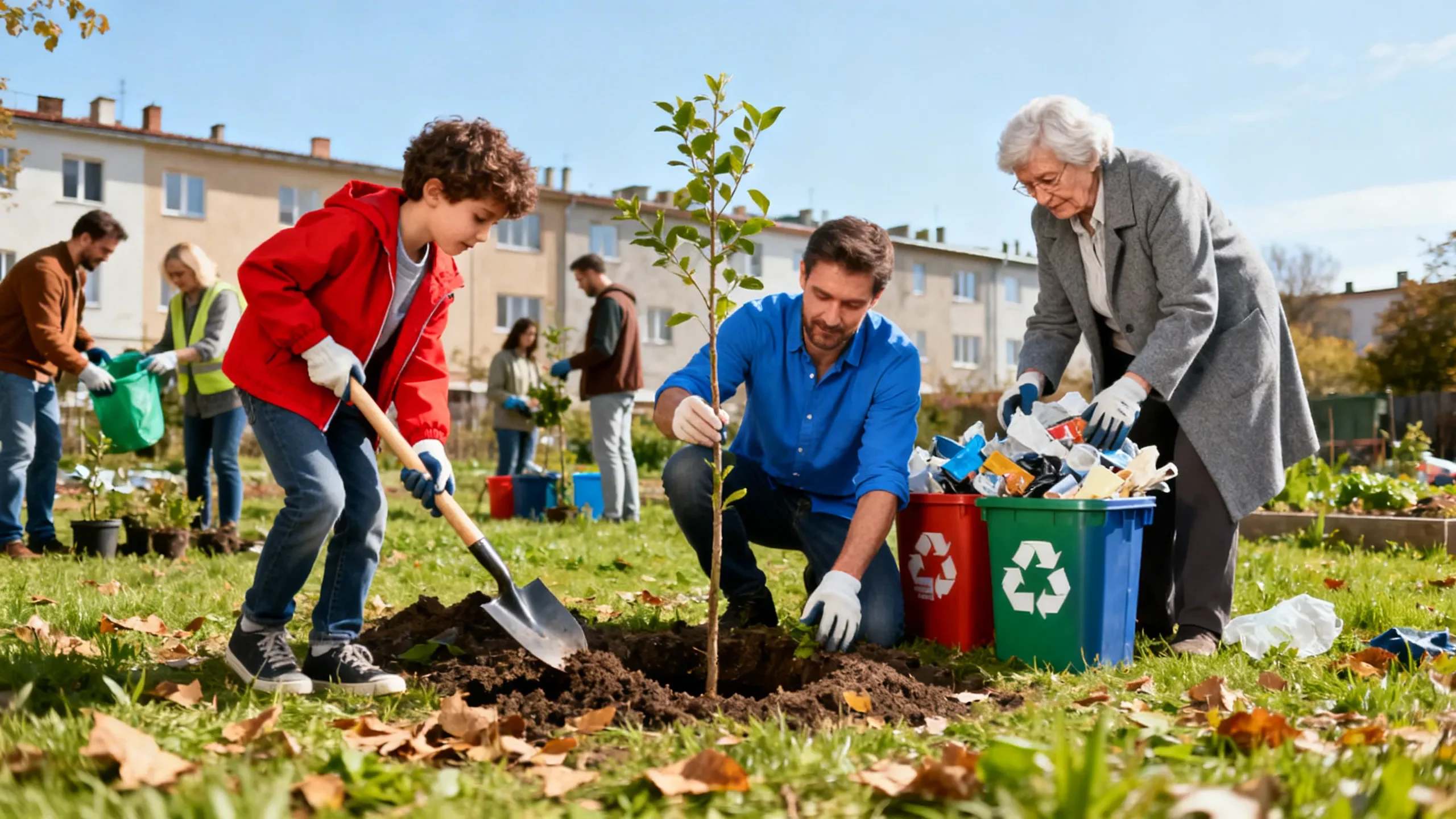

Integrating ecological thinking into daily habits involves gradually incorporating sustainable development principles into people’s routine actions. This is achieved through educational programs aimed at forming habits such as waste sorting, resource conservation, and choosing environmentally friendly products. As a result, caring for the planet has become part of everyday behavior, not a separate initiative.
Various methods are used to implement this approach. Schools introduce ecology lessons. Parents participate in family projects: joint collection of recyclables, planting trees, or refusing single-use plastics. Such practices are reinforced through app reminders and local campaigns. Government policy supports the process: subsidies for green technologies, fines for violations, and monitoring programs.
For the new generation, this is a natural formation of the need for sustainability. Children grow up in an environment where ecology is the norm, without coercion. Research shows that early learning reduces resource consumption by 20–30% in adulthood. In cities, green zones, bicycle paths, and community gardens are developing, where residents participate in their care. This strengthens the community and reduces stress. In rural areas, the focus is on organic farming and soil conservation. Consumer habits are changing: product labeling helps choose sustainable goods. Online platforms track personal contributions to ecology, motivating through competition.
Challenges include resistance of habits and unequal access to information. The solution lies in accessible materials in all languages and at all levels, and partnerships with influencers.
Ultimately, turning care for the planet into a natural need is achieved through a sequence: from education to practice, from local to global. The new generation inherits not problems, but tools for solving them, ensuring a balance between development and preservation of nature.








Comments (0)