In a previous interview with psychologist, business game author, writer, and futurist Elena Pereslegina, we touched on questions related to the future, the role of science fiction in predicting it, or, if you will, designing it. We discussed how words matter and become reality under the right conditions. No mysticism — history shows that human will and thought radically change the world. We also touched on the issue of education, but only in passing, and that’s precisely where we began our new conversation. During the talk, Elena Borisovna said: «I have three points for which I am ready to live and die. These are my God Jesus Christ, my family, and my Homeland.» And, one way or another, our conversation touched on each of these points.
— Elena Borisovna, what do you think we need to do, how do we need to change education so that new generations start thinking not only about themselves but also about society and other people?
— Education and upbringing are different functions. The function of upbringing has been removed from schools. It has been left to parents and social networks. We need to understand that there is a serious contradiction here. Either parents will win, and then they will give the child their own ontological foundations, their worldview. Or the young person’s thinking will be built according to the model of fragmented thinking from the network. It is very concrete, quite managerial in nature, and it can win. Then there will be no values, but flexibility will increase — today one thing is important, tomorrow another. For those who are now 50-60 years old, education was built based on an image of the world. That image could be rich or poor, but it existed. Today, an image of the world, a worldview, is not being built. Parents can build it, but every day school will destroy it.
— There is a lot of talk now about a new paradigm of cognition, attempts to apply certain elements in school education.
— I know what you mean. Sergey and I conduct seminars — not educational ones, no — we learn to think in a new cognitive paradigm, we move forward, we simply don’t have time to wait for anyone and drag them along. We made all the methods of the new cognitive paradigm ourselves, tested them ourselves, used the pictography method. We don’t trust anything else. We also have the knowledge of the previous cognitive paradigm, because we believe that on the steps toward God, on the ladder to God, you cannot skip steps. You cannot cancel physics today if you don’t want to know it. For example, we are interested in what questions we can ask ourselves and AI. What are «key» and «strong» questions? And «ultimate» questions? There are no ready answers right now.
— Could subjects like hygiene of thinking appear in schools?
— That is the most dangerous subject imaginable. When valeology [in the 1990s] appeared in schools, I had a fit. You see, in psychology, the undeniable classic is the fundamental periodization of a child’s life and perception of the world. So when in first or second grade, children are shown childbirth — that is not beneficial. At that age, it is still sacred. Being ahead of time is always detrimental: there was a wonderful movement, the «narodniks.» They came with good intentions to teach peasant children. But those children wanted to eat, and the innovation only irritated their peasant parents. The narodniks were beaten with sticks, and female teachers were harassed. This is roughly what is happening now — both with hasty innovations and with prohibitions. Which, like a «non-edible sandwich,» are on the menu but completely unavailable. As for hygiene of thinking, you need to practice hygiene when there is thinking. When there is none, hygiene is useless. When thinking degrades, a person chooses easy paths and begins to confuse thinking with recognition.
— The picture of the future seems rather bleak…
— Why bleak?! I look from a different focus. And I see how the next thinking will develop. Right now we are swinging between artificial and natural intelligence, choosing. But there is also intelligence of another order, a higher one. So there are not two corners of thinking, but three: not a swing, but a stable triangle. Moreover, we should value that natural thinking is collective. Here we are talking, and I am not interested in what you think or what I think, but in what emerges from the conversation. And perhaps someone else will look at «our sad sunset» and draw some conclusions. That is how the chain of reflections and ideas will weave on.
— And artificial intelligence?
— It is no less important. Artificial intelligence is our reflective mirror. Therefore, I would hand over the work of all psychologists to artificial intelligence. Because my colleagues are my pain. Why is this my pain? Perhaps I am unlucky that among my colleagues, I have not met those who are disposed toward people, who truly sympathize with them and want to understand. And if that is not the case, then it is about imposing their own problems on the patient for money. A very bad story. I don’t like it at all. It is completely unsuitable. So for me, artificial intelligence would be a good reflective mirror. I would like each of us to be able to calmly talk with a computer and sort out our own questions. In my opinion, it is better for a computer to do this than some strange aunt or uncle. Not to mention 14-year-old teenagers, who don’t trust anyone at all.
— There is a lot of talk now about new demands for trust and sincerity…
— As soon as a phrase like «society demands sincerity from everyone» appears in language, the Mesozoic begins. As soon as we say that sincerity is a market requirement, we understand it’s complete nonsense. But as soon as you tell me that sincerity is a requirement of the next world, I immediately throw myself at your neck. Because that is not the market.
— When will this world come, Elena Borisovna? I want to see it already.
— It already exists, we live in it. For quite some time now. The new cognitive world has already arrived: it is a world of deep uncertainty, deep feelings, very early and very late death. Our civilization is not coping with this awareness; it is illogical, incomprehensible, and unfamiliar. Our world will remain a world of uncertainty for some time — we call it the «breach.» Every day a person walks between Scylla and Charybdis, and lives through a situation of uncertainty every day. You just need to learn to see this breach and accept its existence.
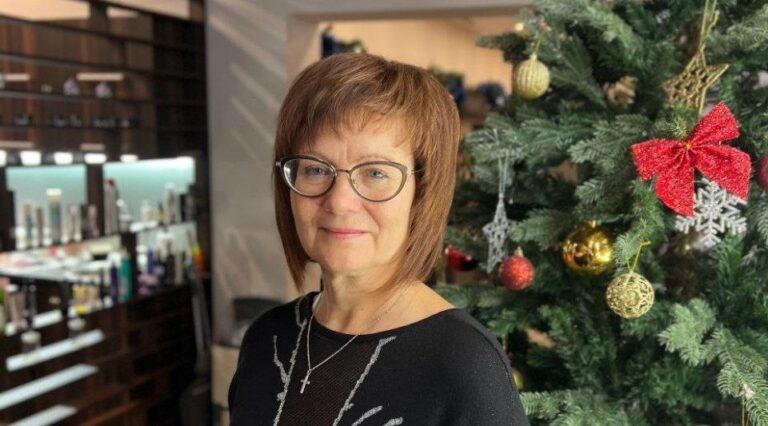
Photo from open sources
Comments (0)