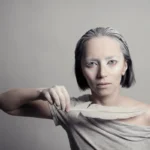
Transbaikal writer Marina Anitskaya took first place in the category «Best Story for Children and Teenagers» at the first International Literary Prize in the field of science fiction «History of the Future». «I’ve been writing since childhood. I decided to enter the prize because I needed to finish a book, but I was tired of it and wanted to switch to something completely different — a children’s story instead of an adult one, science fiction instead of dark fantasy. It was a kind of procrastination. I didn’t think I would win, so victory for me is sheer amazement and joy!» Marina said. She also talked to us: but despite writers usually being talkative, the author from Chita showed truly northern reticence. Together with AI, we highlighted the main points from the conversation:
1. In a hundred years, the future will become at least healthier: life expectancy will increase even more, the age of functional longevity will extend further. In addition, the gap between science, religion, and philosophy, set by the Enlightenment, will be overcome – and a new understanding of personality and consciousness will emerge. Roughly what modern philosophers like Jordan Peterson strive for. The person themselves will change internally: mindfulness, the ability to handle one’s spirit and body, understand one’s feelings, purposefully cultivate oneself in a certain direction, will become something like basic literacy, and this will be taught much like reading and writing are taught now.
For this, first of all, we adults need to learn to want to build a kind, bright, and rational world ourselves, at least in the tiny space we can reach. And, of course, not only want but also do. Moreover, accept free will and understand that the ideas of subsequent generations about what is beautiful and right may (and will) differ from ours – and this is not only normal but also excitingly interesting. They will be able to imagine what we cannot imagine, and go where we don’t even know it’s possible to go. The consciousness of a child or teenager is not a «little box» where you can put something, it doesn’t work that way. But you can live in such a way that those younger than us want to live and develop in the same direction 🙂
2. Science fiction influences the future. There are studies showing that the popularity of science fiction in the 20th century increased the number of people going into science. My favorite story is about the spaceship «Enterprise», named after the spaceship from a science fiction series. And I believe that if each of us, even in the smallest everyday choices, focuses on constructiveness and humanity, it will make life better. At least within the space of the closest cell of society 🙂
3. Children dream. They just don’t always share. And that’s normal, a dream is a very personal and tender matter, and everyone should have the right to dream secretly until they get up and go realize their dream. And children and teenagers read a lot – it’s just that these letters are most often not on paper but on electronic media, so it’s not so obvious. Not necessarily about space, in my opinion, Earth is more interesting. Here, the chances of encountering an incomprehensible other intelligence that can be comprehended endlessly are definitely higher – in the form of other fellow Earthlings. Not to mention creatures of other species.
4. For the competition, I wrote a story that is first of all about friendship, growing up, and the fact that the future may be completely different from how we imagine it – but always offering new opportunities, beautiful in their diversity. And about the fact that even if it seems something irreversible has happened, it always makes sense to start again. I think this will always be relevant – although specific situations will, of course, change.
From a technical point of view, it’s a story inspired on one hand by the history of Henrietta Lacks and her cells, from which the HeLa culture came. And on the other hand, the biography of Adalia Rose, a girl with progeria. These real stories inspired the images of the heroines – I wanted, on one hand, to combine the theme of «immortal cells» and «rapid aging disease», and on the other hand, to imagine what «and they lived happily ever after» might look like for such biographies.
5. What will happen in 1000 years? I think humanity will change radically in some ways – just as it changed between 1000 and 2000. And in some ways it will remain the same, just as we are in some ways indistinguishable from the inhabitants of antiquity. But I would very much like to see the people of the future as I see my heroes – kind, curious, responsible, and always ready for new discoveries 🙂
Photo of Marina Anitskaya from VK (open access)
Comments (0)