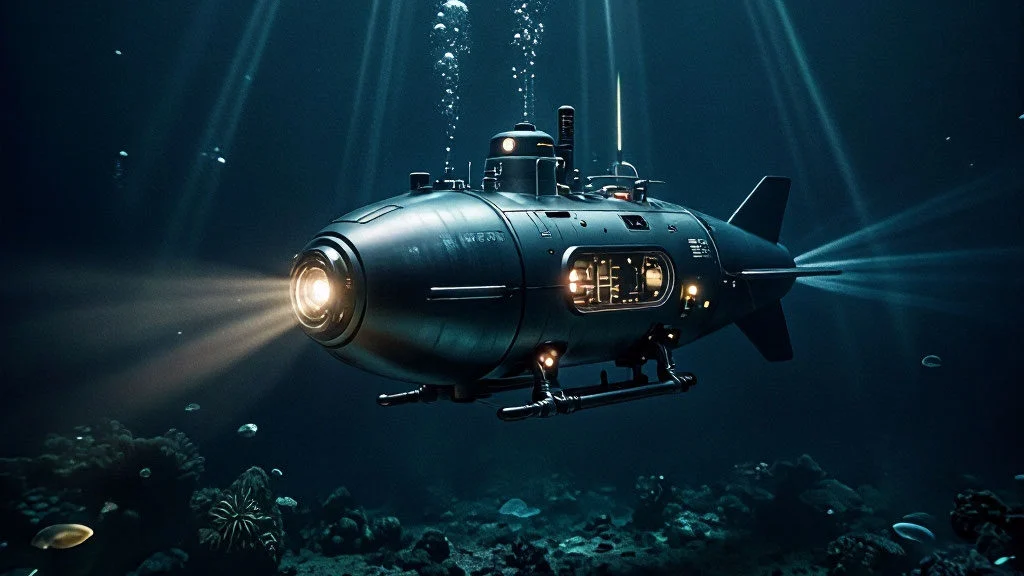


By 2045, exploration of the global ocean had become one of the priority areas of international science. Autonomous underwater vehicles, robotic stations and new observation systems significantly expanded knowledge about deep-sea ecosystems, marine geology and climate processes.
Unknown depths became more accessible
Research vehicles learned to conduct long expeditions without a permanent human presence. They compiled detailed maps of the seabed, studied the movement of water masses and recorded changes in the state of ecosystems.
The collected data helped to assess natural risks more accurately, improve climate models and study the possibilities for sustainable use of marine resources.
Scientists paid special attention to deep-sea organisms. Research into their ability to exist under high pressure, low temperatures and the absence of sunlight expanded understanding of biological processes.
Exploitation gave way to responsible research
The expansion of technical capabilities raised new environmental questions. States and scientific organizations tightened requirements for deep-sea activities, as many marine ecosystems remained insufficiently studied.
Observation technologies with minimal environmental impact received priority. International exchange of scientific data helped researchers compare results and identify changes across the entire ocean.
The foundation of progress was formed by developments of the 2020s in underwater robotics, remote sensing and automated processing of large data sets.
The ocean became closer to everyone
Open scientific platforms allowed schoolchildren, students and independent researchers to learn about expedition results and take part in educational projects.
Humanity gained new knowledge about its own planet and became convinced that ocean research must be accompanied by responsibility for preserving its natural systems.








Comments (0)