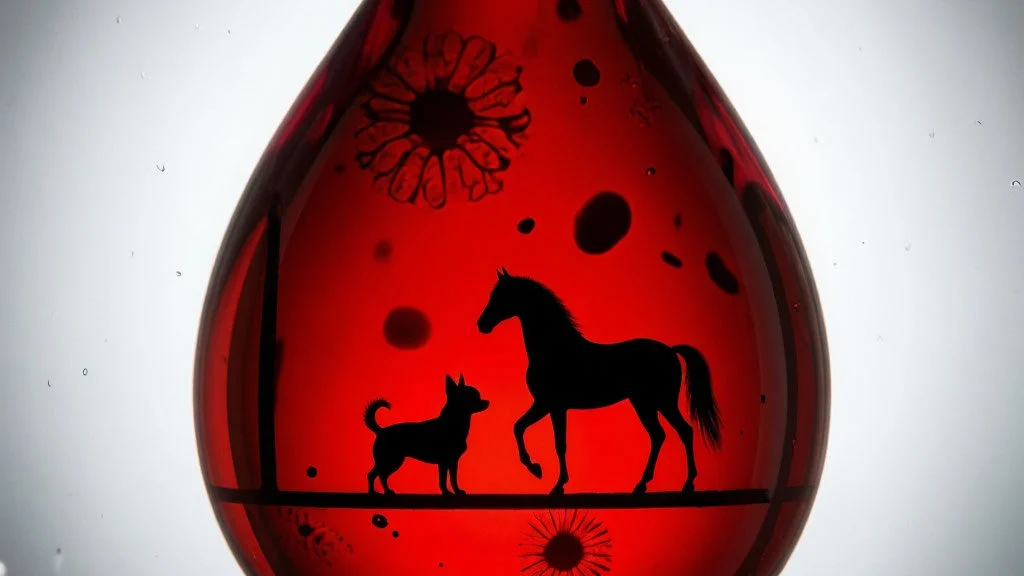

Multi-species oncology screening based on universal liquid biopsy is a shift from reactive veterinary oncology to predictive medicine. The concept involves using an analysis of a few drops of blood to detect circulating tumor DNA (ctDNA) and exosomes at the first stage of the disease in both miniature Chihuahuas and massive Arabian horses.
Biological basis: circulating DNA and exosomes
Normally, the body’s cells constantly renew themselves, releasing DNA fragments (cfDNA) into the blood. In oncology, a tumor grows rapidly, undergoes necrosis and apoptosis, throwing a huge amount of tumor DNA into the bloodstream, which carries specific somatic mutations. In horses and dogs, as in humans, the concentration of this DNA in plasma correlates with tumor mass. However, the main difficulty in veterinary medicine is the enormous difference in body mass. The blood volume of a Chihuahua and an Arabian horse differs by tens of times, which requires the creation of highly sensitive platforms capable of working with microliters of plasma.
Technological stack: from OncoK9 to universal panels
Modern tests already make it possible to look for specific mutations, but the next generation of technologies analyzes not only mutations but also DNA fragmentation, as well as epigenetic methylation.
- AI algorithms: Since the spectrum of tumors in animals is enormous — from oral melanoma to splenic hemangiosarcoma — artificial intelligence analyzes the ‘fingerprint’ of DNA fragmentation. Tumor DNA has a characteristic fragment length distinct from healthy DNA.
- Sensitivity threshold: For reliable screening, it is necessary to detect concentrations from 30–50 picograms per milliliter. Modern systems allow analysis of fragments 50–700 base pairs in size, which is critical for degraded DNA from a drop of blood.
Clinical application
- Small pets: Early detection of splenic hemangiosarcoma. This is a ‘silent killer’ of dogs that gives no symptoms until the very end. Liquid biopsy makes it possible to see fragments of DNA from the tumor’s endothelial cells in the blood months before the vessel ruptures and causes internal bleeding.
- Horses (sports veterinary medicine): Screening for melanoma in gray horses. In Arabian horses, mast cell tumors often develop under the tail and in the anal area. Early detection of ctDNA makes it possible to remove microtumors with a laser before they metastasize to lymph nodes and vital organs.
- Cattle: Screening for lymphoma (leukemia) without the need for rectal palpation and blood collection for low-specificity tumor markers.
Advantages over traditional diagnostics
Classical veterinary oncology relies on imaging (ultrasound, X-ray, CT) and histology. These methods have fundamental limitations: X-ray cannot see a tumor smaller than a centimeter, and biopsy requires anesthesia, is invasive, and examines only a tiny area of tissue, missing the overall picture of metastasis.
Liquid biopsy solves the problem of tumor heterogeneity. A tumor is not a monolith but a collection of subclones with different mutations. A local needle biopsy takes one area, whereas ctDNA analysis from blood provides an averaged ‘molecular snapshot’ of all disease foci in the body, including micrometastases invisible to scanners.
Epidemiological necessity
The problem of oncology in domestic animals is extremely acute. According to various estimates, one in five dogs encounters neoplasms during its lifetime. In cats over 10 years old, the risk of developing cancer is about 30%. At the same time, most owners consult a veterinarian only when visible symptoms appear — weight loss, apathy, or a visible tumor. By that point, the disease has often reached the third or fourth stage, when radical treatment is no longer possible. Universal blood screening makes it possible to overturn this paradigm by detecting the disease at ‘kilometer zero’.
Obstacles and prospects
The main challenge remains biodiversity. Building an AI model that equally well distinguishes lymphoma in a Chihuahua and mastocytoma in a bulldog is an extremely difficult machine learning task. In addition, the cost of sequencing remains high for mass routine screening.
Nevertheless, the integration of such tests into annual animal health checkups is inevitable. This will transform the veterinarian from a surgeon removing organs into a clinical oncologist-diagnostician who, using a drop of blood, adjusts the aging trajectory of a pet, extending its active life by years.

Comments (1)
Идея сильна тем, что переносит в ветеринарию логику онкологической жидкостной биопсии: искать не опухоль, а цоДНК, с поправкой на разную массу тела. Если проект пойдет в пилот, естественный партнер — сеть ветеринарных лабораторий «Хема»: пункты забора крови, архив плазмы и статистика по гемангиосаркоме и мастоцитомам, то есть и каналы сбора образцов, и данные для обучения ИИ-модели. Первым шагом предложил бы ретроспективное исследование на уже сохраненных образцах собак с подтвержденной гемангиосаркомой селезенки — проверить, ловится ли сигнал за месяцы до клиники.