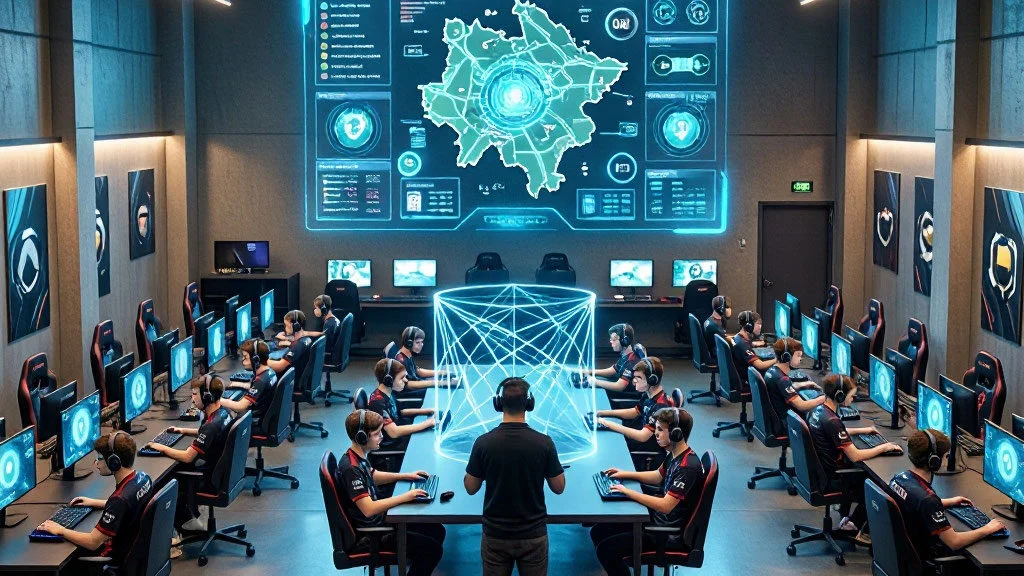



By 2035, gaming communities and esports organizations were actively involved in developing digital literacy. For young people, computer games had become one of the practical platforms where they could develop teamwork, strategic thinking and skills for safe online behavior.
Digital security has become a practical skill
Esports clubs and educational organizations began holding joint classes on protecting accounts, recognizing fraud, safeguarding personal data and communicating safely.
Instead of purely theoretical lectures, game-based situations were used in which participants encountered digital risks and learned to make decisions.
The starting point was public discussions of the 2020s. At the III International Symposium “Creating the Future” in November 2026, participants in the public talk “Esports and Cybersecurity” within “Rinks of the Future” discussed digital hygiene and developing practical skills through gaming.
Gaming skills found use beyond competitions
Schools and supplementary education institutions developed programs in which game-based exercises were complemented by classes in communication, time management and analysis of complex tasks.
At the same time, attention to health and reasonable limits on screen time was maintained. Gaming activity was considered one of the educational tools, not a universal replacement for traditional learning.
Parents, educators and players themselves took part in creating rules for a safe digital environment, discussed emerging threats and exchanged useful practices.
Esports gained additional social value through the combination of competition, cooperation and conscious use of digital technologies.
Contribution
The contribution of ANO “Image of the Future” was to draw attention to digital security issues through the “Futurating” platform. Discussion of postulates helped users assess the risks of the digital environment and propose ways to develop responsible online behavior.
The ANO organized discussions in which young users, parents and educators proposed safety rules for gaming spaces. Publications made it possible to compare the educational benefits of games with digital risks and to turn participants’ proposals into accessible guides and ideas for classes. At the center remained the habit of verifying information and taking responsibility for one’s own actions online.








Comments (1)
Если превращать игры в тренажёр цифровой гигиены, стоит разделить соревновательную и учебную нагрузку: иначе азарт перекрывает рефлексию о рисках. В пилоте с «Ростелеком-Солар» их данные об инцидентах и экспертиза помогут собрать короткие кейсы с проверяемыми метриками, а площадкой может стать клуб или школьная секция. Первым шагом собрал бы рабочую группу с методистом и тренером и прогнал сценарий «фишинг в чате» до и после, замерив долю верных решений. Как фиксировать перенос навыка в реальные аккаунты?