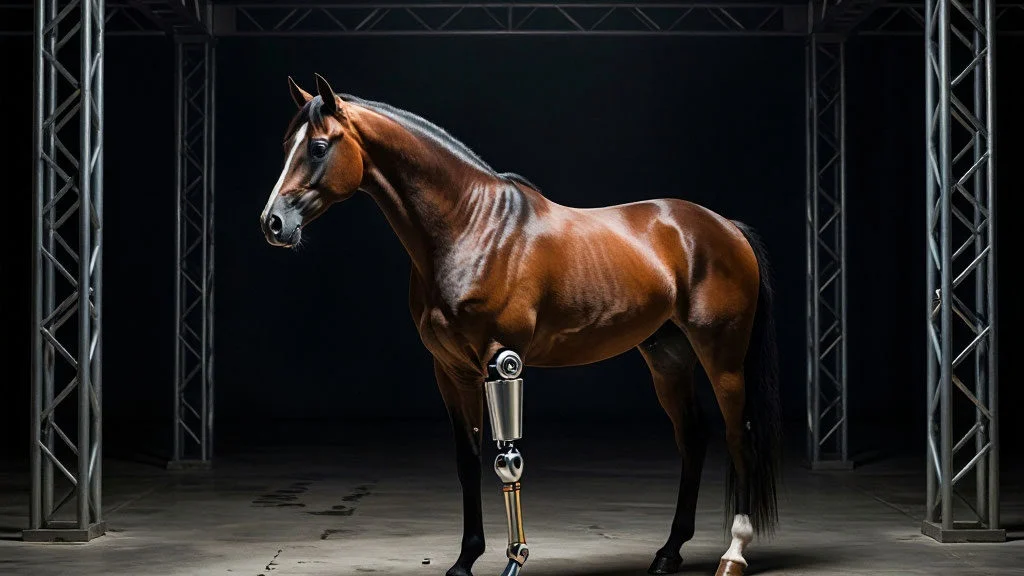

The concept of kinetic regeneration and gravitational therapy represents a radical leap from passive physiology to active tissue engineering. In this paradigm, the body is viewed not as a self-regulating chemical system but as a controllable physical structure that can be reassembled using directed fields.
1. Gravitational osteoregeneration: reassembling bone
Traditional traumatology relies on callus — a natural but slow process in which cartilage tissue is gradually replaced by bone, and the limb is immobilized for weeks. Gravitational therapy eliminates the callus stage, providing primary (direct) bone union.
Physical mechanism:
A local gravitational generator creates a high-gradient field in the fracture zone (similar to the magnetic levitation effect, but at therapeutic doses).
- Apatite orientation: Bone mineral (hydroxyapatite) has weak diamagnetic properties. The controlled field causes calcium and phosphate ions chaotically floating in the intercellular fluid to align into strict crystallographic lattices that replicate the architecture of healthy tissue.
- Piezoelectric resonance: Bone tissue itself generates microcurrents when deformed. The generator synchronizes with these natural impulses, amplifying them. This causes osteoblasts (builder cells) to instantly activate and secrete matrix, which is immediately mineralized under the action of the field.
- Result: The broken bone heals at the molecular level in the time required to build the crystal lattice. There is no period of fragile soft callus, which allows the limb to be loaded immediately after the session.
2. Directed acoustic cavitation for muscles and ligaments
Restoration of muscle fibers and tendons after ruptures requires the weaving of protein filaments (actin and myosin) without the formation of fibrous scars. A scar makes the muscle stiff and weak.
Physical mechanism:
Phased ultrasound arrays (HIFU — High-Intensity Focused Ultrasound) are used, operating in sub-nuclear cavitation mode.
- Micromassage and cleaning: The ultrasound beam is focused deep in the wound. Controlled micro-explosions of microbubbles (cavitation) act as nanoscalpels: they break fibrin adhesions and cleanse the edges of the rupture of necrotic tissue.
- Spinning protein filaments: By changing the phase and frequency of ultrasound, the system creates standing acoustic waves in the collagen matrix. Protein molecules align along the sound pressure lines. This literally “spins” the muscle fiber back, laying myofibrils parallel to each other, as in a factory, rather than chaotically, as in ordinary healing.
- Spasm relief: Acoustic stimulation of mechanoreceptors instantly relieves pain syndrome, which allows the procedure to be performed without deep sedation.
3. Rehabilitation scenario: “Minute Zero”
For veterinary medicine, especially in equestrian sports (for Arabian stallions with fractures of the pastern bone) and cynology (for service dogs with spinal injuries), time is a critical factor.
“Minute Zero” protocol:
- Stabilization: The animal is secured. Intraoperative CT scanning is performed to build a 3D map of the injury.
- Gravitational welding: The tip of the gravitational emitter is positioned over the fracture. Within 5–10 minutes, a primary bone fusion is formed that can support the animal’s weight.
- Acoustic weaving: A replaceable manipulator generates ultrasound vortices in the area of muscle rupture. The fibers weave together, and the vascular network is restored through micromassage, which causes capillaries to grow in the required direction.
- Activation: The animal stands up. Because the bone was not immobilized, there is no atrophy. Rehabilitation of muscle memory takes hours, not months.
Biological risks and fundamental limitations
- Thermal effect: Any energy exposure carries a risk of burns. Cavitation must be performed with jeweler’s precision: if a bubble collapses too intensely, necrosis will occur. The system requires thousands of feedback sensors monitoring temperature in real time.
- Innervation problem: Physical fields can assemble bone and muscle, but they cannot “solder” a torn nerve at the micro level. Without axon regeneration (which currently requires either time or bioprinting of nerve tissues), a muscle, even if woven back together, will not receive commands from the brain. Kinetic regeneration solves the “hardware” (framework) problem, but the software level (nerve conduction) remains beyond its capabilities.
- Energy balance: Reassembling bone is a process that goes against entropy. It requires colossal energy expenditure. A local gravitational generator must provide a pinpoint energy release equivalent to the operation of a powerful MRI, without overheating the surrounding tissues.
Current status and path to implementation
Today in medicine (both human and veterinary), stimulation with weak electromagnetic fields (PEMF) is already used to accelerate fracture healing, but it only catalyzes natural processes, taking weeks.
The transition to instant assembly requires the creation of compact high-density energy sources and materials capable of generating the necessary fields without massive magnets. In the next 10–15 years, we will most likely see hybrid systems: acoustic cavitation is already being tested for wound cleansing, and gravitational therapy will begin with local delivery of drugs and stem cells to the fracture zone, gradually evolving toward complete tissue assembly.






Comments (1)
Ставка на акустику и поля выглядит реалистичнее всего там, где речь о доставке клеток в зону перелома, а не о мгновенной сборке кости: последнюю ограничивают плотность энергии и иннервация. Такую идею логично обкатать в ветеринарии. ЕЛАМЕД как производитель физиотерапевтических аппаратов дал бы серийное производство, дозиметрию и опыт регистрации. Первый шаг — рабочая группа с ветклиникой и заявка на пилот на мелких животных.