

For centuries, the development of medical science resembled the evolution of mechanics. The human body was seen as a complex assembly-line mechanism. If a part wore out, doctors tried to repair it or replace it with an analogue taken from another person. Centuries of this “repair” practice produced enormous results: humanity defeated epidemics and learned to transplant hearts. Today, however, this old technological paradigm has reached a dead end.
Modern transplantology has stalled at a critical point. Waiting lists for organ transplants stretch for years, the donor shortage remains an insurmountable barrier, and transplant patients are forced to suppress their immune systems for life to avoid rejecting foreign flesh. The medicine of “patches and other people’s parts” has exhausted its development potential. A New Era is coming in its place — the era of biofabrication — which will completely overturn ideas about human biological possibilities.
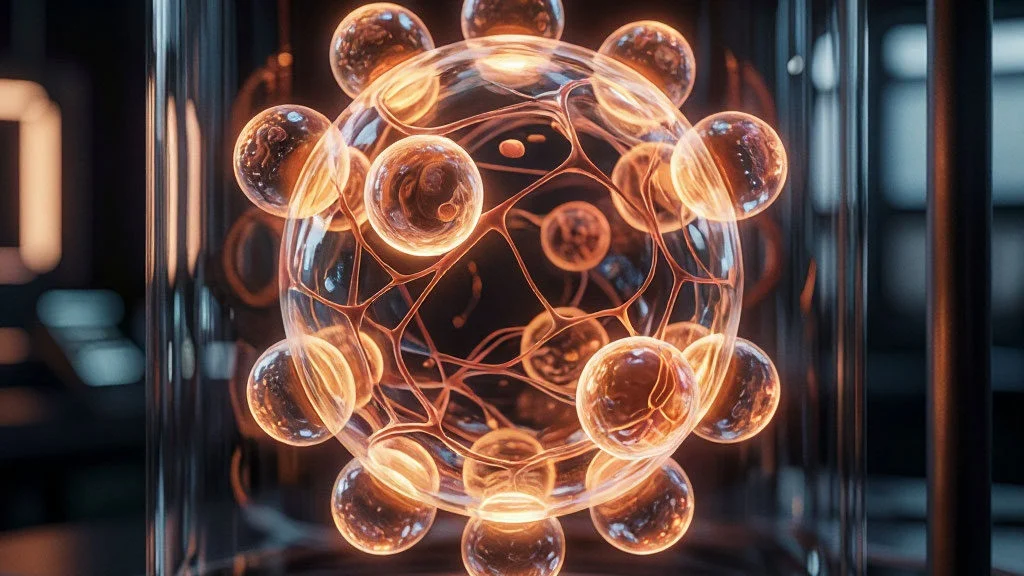
In 20–30 years, transplantation of lab-grown organs will become routine clinical practice. The problem of donor shortages will be gone forever. Instead of searching for compatible human material, doctors will use tissue-engineered constructs assembled from the patient’s own cells. This breakthrough is based on abandoning the rigid scalpel in favor of precise control of physical fields. Using magnetic levitation, scientists have learned to assemble three-dimensional structures from cell spheroids without contact. We no longer impose a crude shape on living matter — we merely create the right environmental conditions, set the magnetic field, and then the cells move into the required positions themselves and form tissue as nature intended.
This technological shift will permanently erase the boundary between engineering and the miracle of creation. The organism will appear to us as the highest form of self-organizing matter with a striving for balance. The medicine of the future will finally abandon the concept of “fixing breakdowns” and move to a strategy of tuning and regenerating natural processes. Its main goal will be preserving a high quality of life into advanced old age, turning the human body into a renewable source of strength.





Comments (3)
Мысль про среду вместо скальпеля убедительна, но сроки стоит привязать к проверяемым этапам: сосудистая сеть, плотность ткани, отдалённая безопасность. Тогда разговор про 20–30 лет станет не спором о вере, а последовательностью контрольных точек.
Автор предлагает интересную рамку — переход от «замены деталей» к настройке условий самоорганизации, и в этом есть сильная мысль: среда как инструмент точнее скальпеля. Но если оценивать проект критически, сроки «20–30 лет до рутины» выглядят скорее желаемым, чем выведенным из данных: между сборкой сфероидов и васкуляризированным органом лежит пропасть масштаба, а в тексте она не обозначена. Второе — не раскрыт контроль качества: если клетки «сами» занимают позиции, то как проверять однородность, риск онкогенной трансформации и воспроизводимость от партии к партии. Третье — экономика и регуляторика: персонализированное производство почти наверняка останется дорогим, и тогда вопрос дефицита сменится вопросом доступности, что для тезиса о «навсегда ушедшей проблеме доноров» существенно. Было бы интересно услышать, какие именно барьеры автор считает главными и какие метрики покажут, что гипотеза подтверждается.
Сильная сторона материала — ставка на управление средой, а не на механическую формовку: магнитная левитация снимает контактные носители, давая сфероидам собраться самим. До практики логичнее идти не к целому органу, а к сосудистому графту. Партнёром вижу BIOCAD: его GMP-производство, клеточные линии и регуляторный опыт помогут перейти от сфероидов к воспроизводимому продукту. Первый шаг — рабочая группа с НИИТФА и BIOCAD и пилот на одной партии клеток с проверкой прочности и биосовместимости.