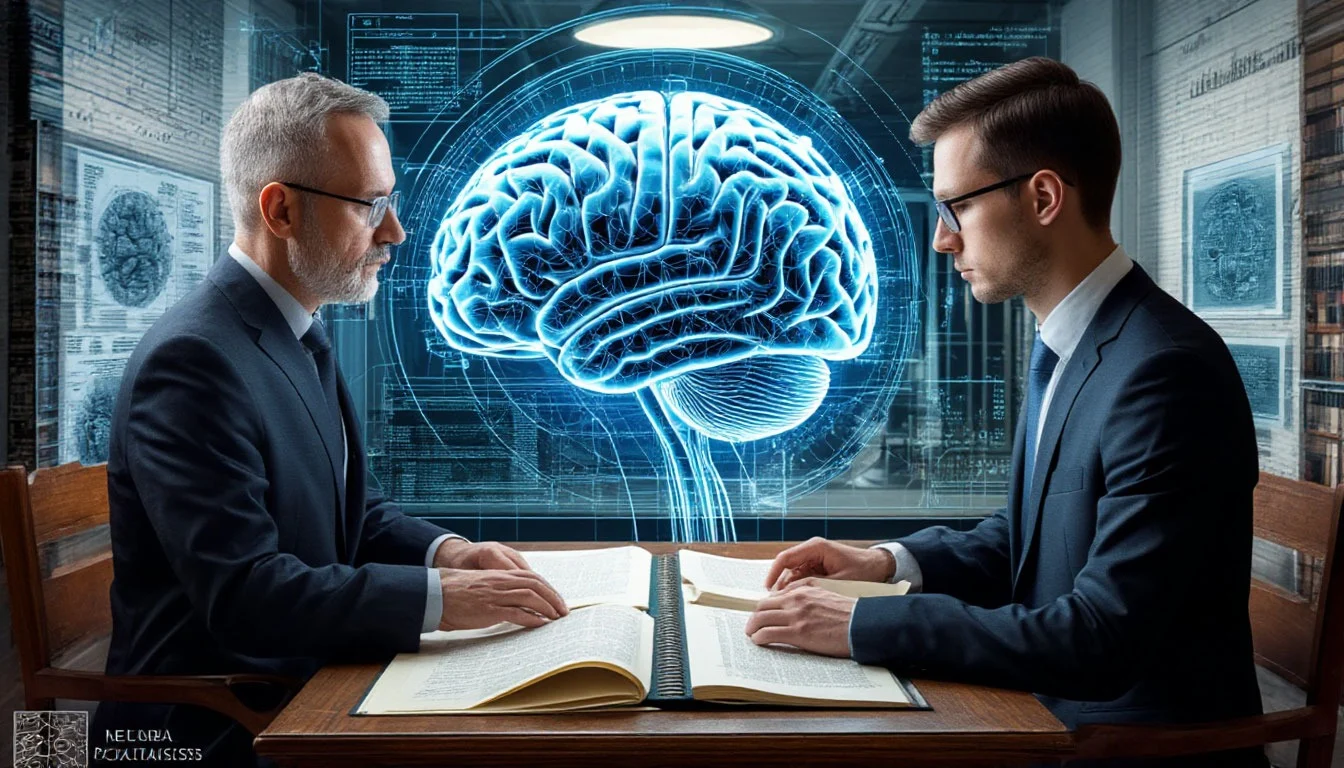
Two centuries after the appearance of the first neural interface prototypes, humanity has entered the era of cognitive capitalism. The technology of direct knowledge «uploading», once a subject of science fiction, has become an everyday reality, comparable in significance to the invention of writing or printing. In this new world, where any skill—from quantum physics to playing the violin—can be loaded into the brain in a matter of hours, a fundamental question has arisen before society: has the institution of higher education in its classical sense lost its meaning?
The answer turned out to be paradoxical. Universities did not disappear, but their function underwent a radical transformation. If earlier higher education was a place where knowledge was passed from teacher to student, now it has become a center where the personality is formed and programmed. The simple accumulation of information ceased to be a value, since any database was instantly accessible. Skills that cannot be «downloaded» have come to the fore: critical thinking, creativity, ethical flexibility, and the ability to socially adapt.
The Transformation of HSE: From Lectures to Ethical Engineering
World-leading educational centers, including HSE, have successfully adapted to the new realities. University campuses have transformed from libraries and lecture halls into high-tech personal development centers. The learning process now resembles the work of a systems architect.
A student indeed comes to a neurolearning center to load the necessary professional skill in one session—for example, «microeconomic analysis» or «programming in quantum language». However, this is only the first, technical stage. The main work begins afterward. The professor’s role has evolved from lecturer to mentor and ethical engineer. His task is not to retell a textbook, but to help the student integrate new knowledge into the existing personality structure, adjust cognitive filters, and, most importantly, form a moral compass.
HSE has become a world leader in the field of «ethical programming». Protocols are developed and implemented here to ensure that a specialist with loaded knowledge will use it for good. Courses in philosophy, psychology, and sociology have become the core of the curriculum. Students learn not what to think, but how to think and why. The diploma as a document confirming the volume of assimilated information has finally depreciated. It was replaced by the «cognitive maturity profile»—a dynamic record reflecting not only the set of skills, but also the level of ethical responsibility of the individual.
Thus, in the world of cognitive capitalism, higher education has not died. It has risen to a new level, becoming not a conveyor belt for producing specialists, but a workshop for creating responsible and harmoniously developed individuals capable of navigating the most complex information flow of the future.






Comments (2)
Согласен, что вопросы этики намного важнее просто знаний и умений. И образование в первую очередь должно прояснять новичкам планеты важность ответственного и этичного подхода к жизни, раскрывая её суть как экосистемы, в которой человек, как разумный фактор, отвечает за всё и обязан заботиться обо всех и обо всём.
Ваш материал — это настоящая жемчужина для размышлений о будущем образования. Особенно впечатляет, как вы показали трансформацию роли университетов от хранилищ знаний до центров формирования личности. Идея о том, что дипломы заменяются «профилем когнитивной зрелости», звучит настолько логично в контексте мира, где любой навык можно «загрузить», что уже верится, будто это реальность завтрашнего дня.