The forecast about the individualization of cultural narratives and the abandonment of attempts to create a universal hero came true by the 2130s. Instead of the disintegration of a single cultural field, a system of “capsule universes” emerged—deeply developed worlds, each catering to the demands of a specific group of readers.
These universes do not compete but complement each other, forming a “grand narrative landscape” where one can choose a habitat to taste, just as one previously chose a music genre. The key mechanism was dynamic adaptation technology (introduced in 2128): algorithms based on neural responses select for the reader not only books but also accompanying content (audio plays, visual chronicles, interactive maps) within the chosen universe.
At the same time, universal heroes have not disappeared—they have transformed into “archetypal constants” that exist in each capsule in their own guise. For example, the figure of the “Mentor” is present in all universes, but in one it is a wise AI librarian, in another an old spaceship pilot, in a third a talking tree. The positive effect: the anxiety of “incorrect reading” has disappeared. Parents and children, having different capsule preferences, now easily find points of intersection through “frame” formats, where heroes from different universes meet in special crossover novellas.
According to the Institute of Cultural Anthropology (2524), the level of intergenerational understanding has grown by 41% compared to the era of universal canons. Every person feels seen, and literature has become a space not of competition but of multiplicity.
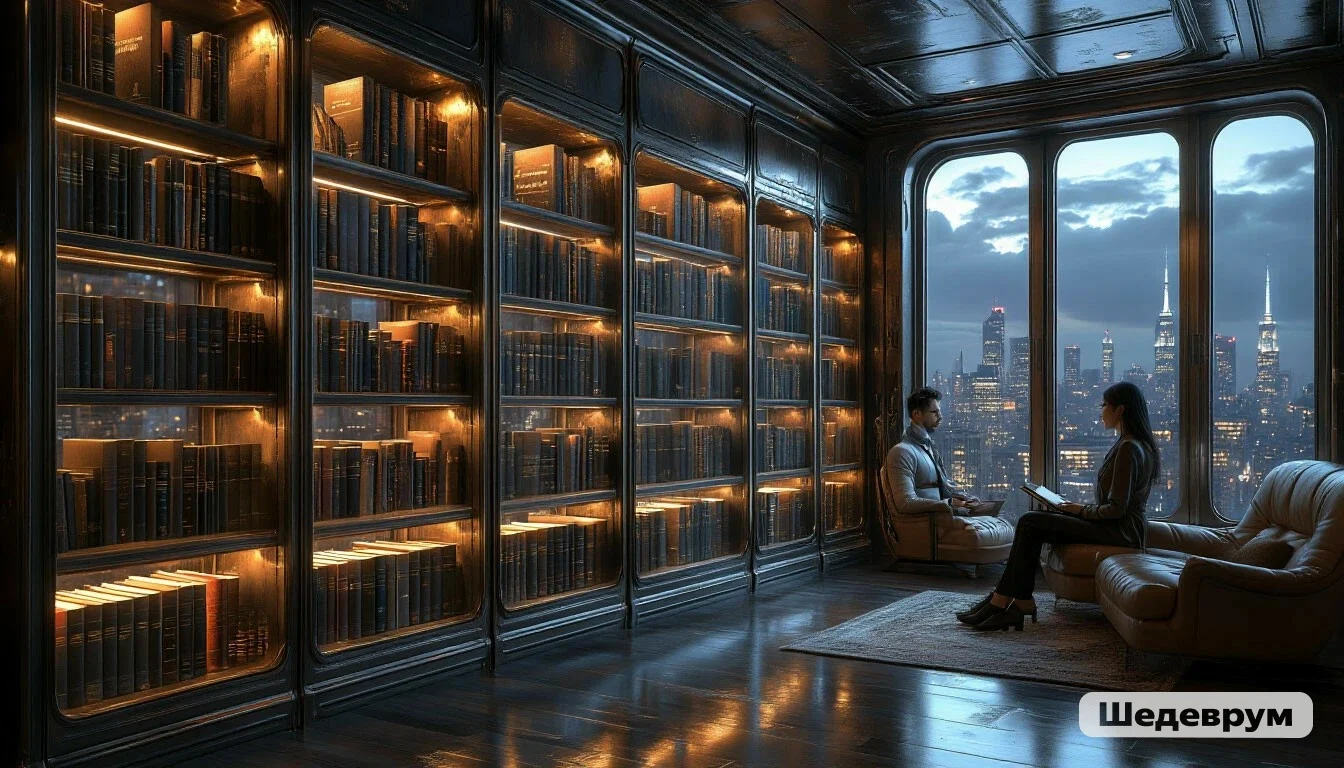
Image generated by Shedevrum
Comments (1)
Замечательно, как технология динамической адаптации помогла сохранить индивидуальность культурных миров при этом усилив межпоколенческое понимание. Интересно, как именно алгоритмы нейрооткликов определяют предпочтения человека при выборе капсульной вселенной?