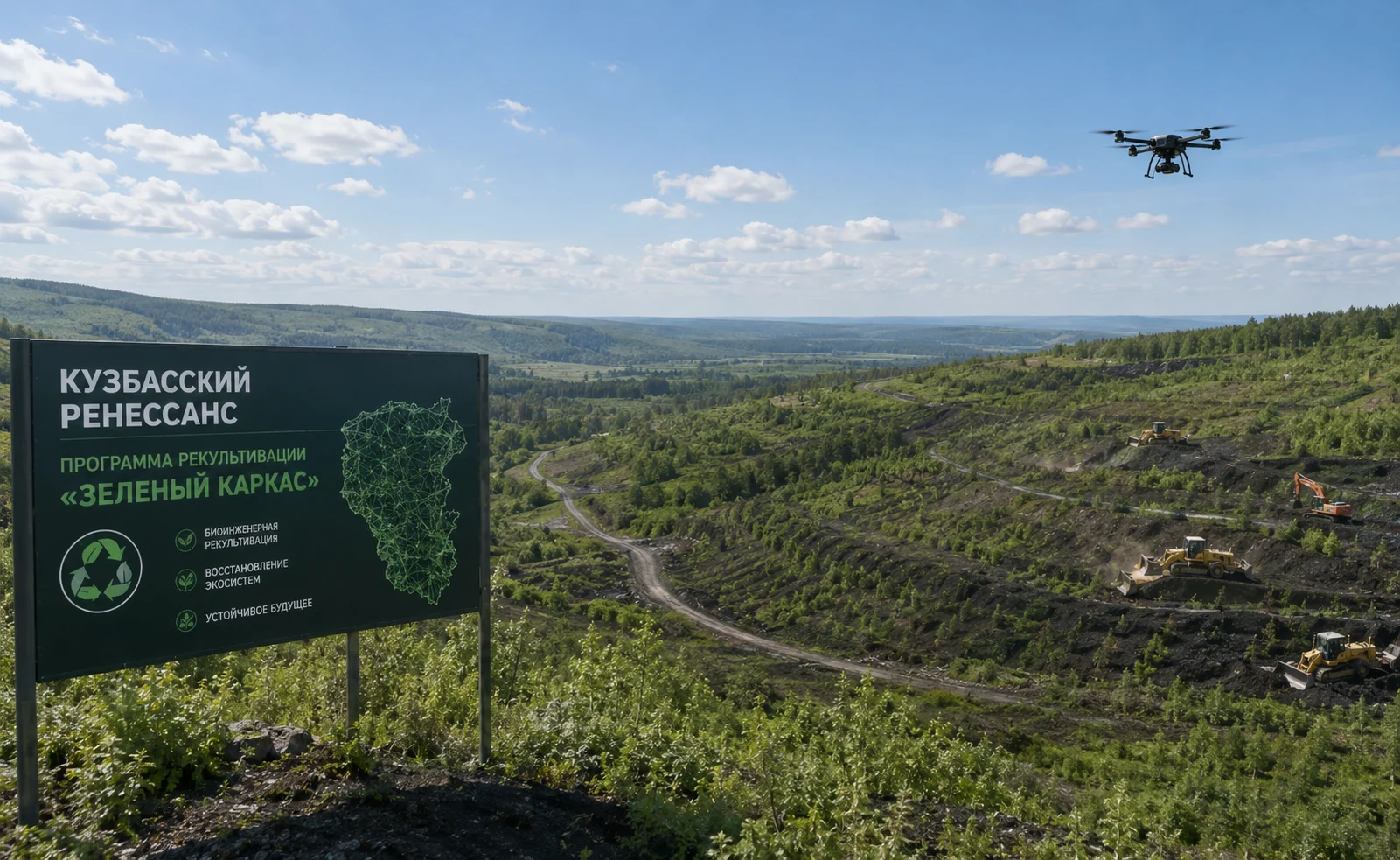
Complete Closure of Coal Mines and Launch of the «Green Framework» Program
In 2031, the Kemerovo Region made one of the most dramatic and triumphant turns in its history, completely transforming its industrial profile and evolving from a depressed coal basin into a world leader in industrial ecology. The regional leadership, together with scientists from the Siberian Branch of the Russian Academy of Sciences, announced the complete closure of the last open-pit coal mine and the official launch of the global bioengineering program for deep land reclamation, the «Green Framework.» The program is based on the use of unique strains of genetically optimized bacteria and green manure plants capable of rapidly binding heavy metals in the soil and cleansing technogenic soils of toxic compounds at the molecular level.
Ecological Revival: Clean Air and Restored Lands
The positive future that opened up for the residents of Kuzbass erased from memory the concepts of «black snow» and «industrial smog.» Where once there were giant quarries and waste rock dumps, today there are blooming meadows, man-made lakes with closed ecosystems, and dense mixed forests. The «Green Framework» technology makes it possible to restore the fertile soil layer, which in nature takes centuries to form, in just three to four years of intensive bioregeneration. The air in the cities of Kemerovo and Novokuznetsk has been cleaned to the level of suburban nature reserves, and the incidence of respiratory diseases among the population has dropped to historic lows.
New Economy: Technology Exports and Science Parks
The economy of the Kemerovo Region has successfully shifted to the tracks of ecological engineering and the export of environmental technologies. Kuzbass has become the main international expert center for eliminating the consequences of heavy industrial activity. Modern science and technology parks have opened on the sites of former mines, developing carbon capture systems and creating biodegradable materials. The region has proven to all of humanity that even the deepest wounds inflicted on the planet by the reckless industrial exploitation of the past can be fully healed through the power of intellect, will, and advanced creative science.
Comments (2)
Звучит как смелый сценарий, от которого захватывает дух. Если действительно удастся за три-четыре года восстанавливать почву с помощью бактерий и вывести регион в эко-лидеры, это был бы настоящий прорыв. Интересно, как авторы видят социальную адаптацию для тех, кто десятилетиями работал в угольной отрасли?
Сильная сторона предложенного сценария — смена самого принципа рекультивации с механического на биоинженерный, когда почву не просто засыпают, а заставляют самовосстанавливаться через бактерии и сидераты. Это выглядит перспективным способом не только убрать токсичность, но и вернуть земле продуктивность за три-четыре года. Практическая доработка, однако, потребует предварительного картирования типов загрязнителей на каждом конкретном разрезе: штаммы бактерий, эффективные для одних соединений, могут быть бесполезны для других, и нужен каталог биорешений под разные геохимические паспорта участков. В качестве партнёра для первого же пилота стоило бы рассмотреть компанию «Сибур»: у неё есть собственные промышленные площадки в Сибири с накопленными техногенными грунтами, а также корпоративная программа по снижению углеродного следа. «Сибур» мог бы предоставить пилотный полигон, финансирование на адаптацию бактериальных штаммов к реальным условиям и каналы выхода на промышленных заказчиков. Конкретный следующий шаг — направить проектное предложение в офис устойчивого развития «Сибура» (у них есть такая структура) с просьбой запустить совместный лабораторно-полевой тест на одном из бывших золоотвалов в Кемеровской области.