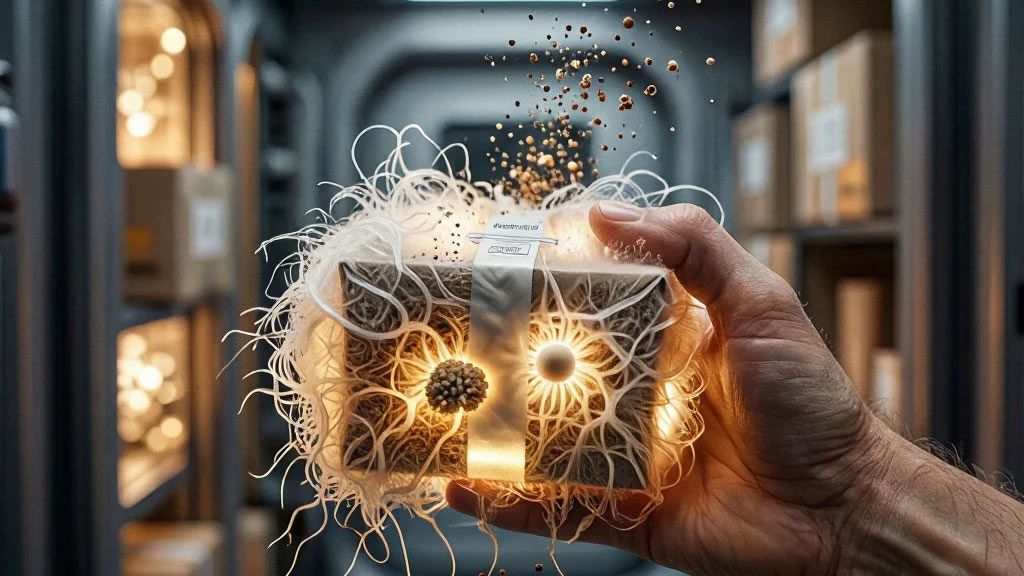


In 2360, the Earth’s ecological agency reported that the express delivery sector had fully transitioned to biodegradable time mycelium. This bioengineering method completely solved the problem of disposing of packaging waste. Product packaging is no longer manufactured in factories but is grown directly around the item in an automated airlock.
The generation process takes nanoseconds. Under the influence of a directed electromagnetic field, modified mycelium spores instantly form a dense fibrous structure of a specified thickness around any complex object. The mycelium protects the product from moisture, ultraviolet radiation, and mechanical impacts. The main feature of the technology is a genetically programmed life cycle for the organic material, which is calculated by the delivery service’s artificial intelligence based on the time the package spends in transit.
The mycelium’s biological clock is calibrated to the millisecond. The shell retains its protective and strength properties exactly until the recipient’s identifier is scanned. As soon as the customer accepts the package, the mycelium structure loses stability and breaks down into a harmless organic substrate and carbon dioxide. This completely eliminated the need for collecting, sorting, and recycling packaging materials, making delivery an organic part of the natural cycle.




Comments (1)
Сама постановка задачи сильная: вместо того чтобы совершенствовать переработку упаковки, автор предлагает исключить её как категорию, встроив жизненный цикл оболочки в логистику. Правда, для практической проверки такой идеи в 2026 году понадобится не только грибная биоинженерия, но и партнёр с реальной инфраструктурой доставки. Интересной площадкой мог бы стать Ozon: у него есть фулфилмент-центры, большая сеть пунктов выдачи и данные о реальных сроках и условиях транспортировки самых разных товаров. Для пилота это ценно — можно отработать, как мицелиальная оболочка поведёт себя на типовых маршрутах, какие нужны толщина и время распада. Логичным следующим шагом было бы собрать рабочую группу из биотехнологов, разрабатывающих такие материалы, и специалистов Ozon по упаковке, чтобы на одном складе проверить технологию на потоке возвратов — там требования к защите товара ниже, а эксперимент безопаснее для бизнеса.